


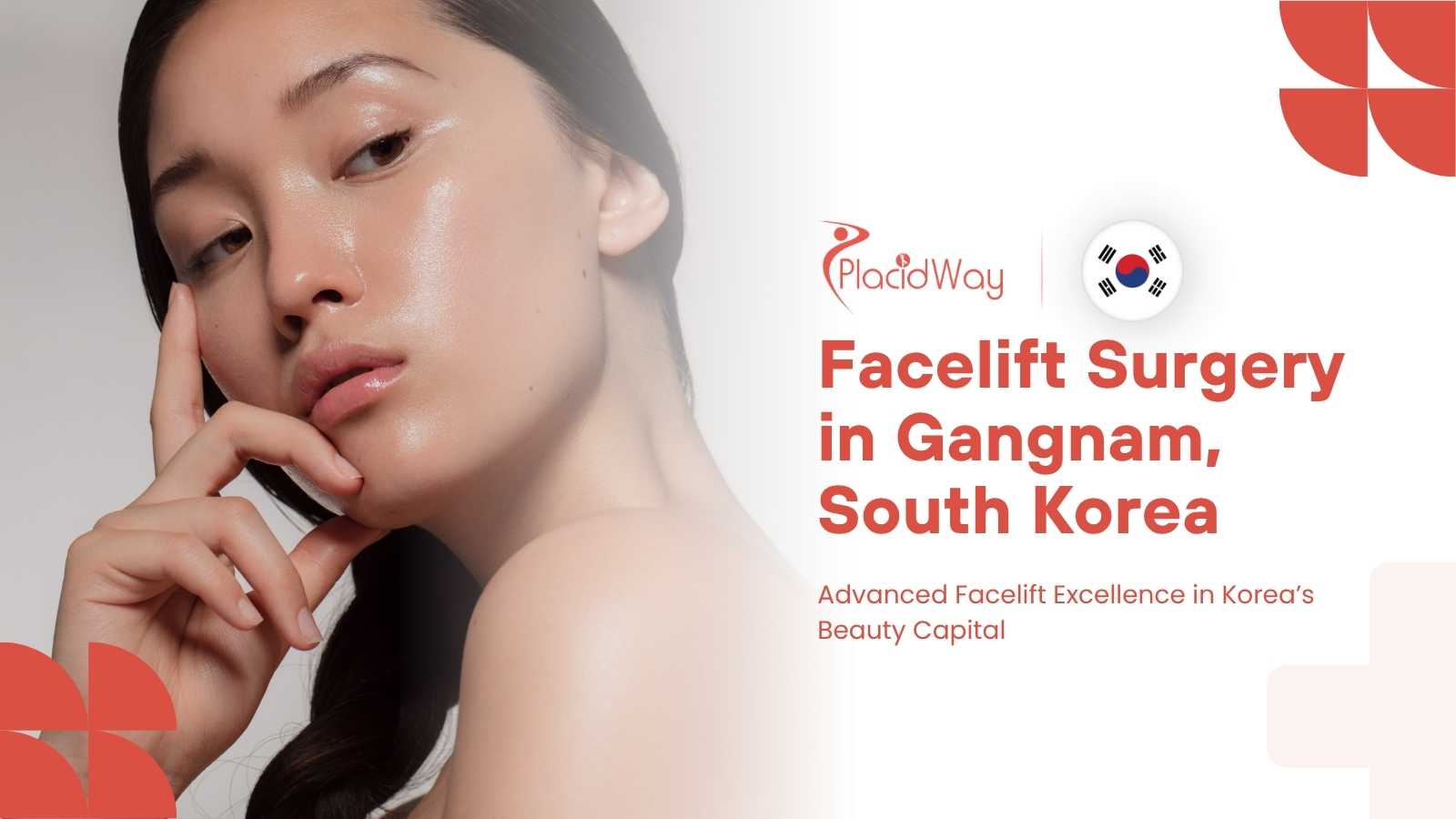
Facelift Surgery in Gangnam, South Korea
- Estimated cost: Roughly $6,000–$14,000 USD depending on technique, with deep plane and full face-and-neck lifts at the higher end.
- Safety overview: Clinics that legally treat foreign patients must register with Korea's Ministry of Health and Welfare and carry malpractice liability insurance. Safety depends heavily on choosing a board-certified surgeon.
- Ideal candidate: Generally healthy adults with moderate sagging of the mid-face, jowls, or neck who have realistic expectations and no uncontrolled medical conditions.
- Recovery time: Most people return to daily activities in about 10–14 days; swelling and bruising typically settle over 2–3 weeks, with final results developing over months.
- Why patients choose Gangnam?: A dense cluster of specialized plastic surgery clinics, high procedure volumes, advanced techniques, and competitive pricing versus the US and Europe.
- Important caution: A facelift is real surgery with real risks. Never choose a clinic on price alone, and always verify surgeon credentials and foreign-patient registration.
- Final verdict: Gangnam can be an excellent option for facial rejuvenation when you vet the surgeon carefully, ask the right questions, and plan for proper aftercare.
Why Patients Consider Facelift Surgery in Gangnam, South Korea?
Gangnam is one of the most concentrated cosmetic surgery districts in the world, and that concentration is a big part of why international patients travel there for a facelift. When many specialized clinics operate in a small area, surgeons often perform high volumes of facial procedures, refine their techniques, and invest in modern equipment.
You may be searching abroad for several reasons: pricing that can be meaningfully lower than in the US or Europe, access to surgeons who focus specifically on facial anti-aging, and structured aftercare programs designed for travelers. This guide is here to help you weigh those advantages against the real responsibilities of having surgery far from home—so you can decide what is right for you.
What Is Facelift Surgery? Who Needs It in South Korea?
A facelift, known medically as a rhytidectomy, is a surgical procedure that lifts and repositions the deeper tissues of the face and neck, tightens supporting layers, and removes excess skin to create a smoother, more youthful contour. It mainly improves the lower face and neck—the jowls, the folds running from the nose to the mouth, and loose skin under the chin.
It helps to understand what a facelift does not do. It typically does not erase fine surface wrinkles, sun damage, or changes in skin color, and it does not fundamentally change your appearance. Your face also continues to age afterward, so results are long-lasting rather than permanent.
Who May Be a Candidate for Facelift Surgery in South Korea?
You may be a suitable candidate if you are in generally good health, have moderate facial or neck sagging, do not smoke (or are willing to stop), and hold realistic expectations. Your surgeon will assess your skin quality, underlying facial structure, and medical history before recommending any approach.
Types of Facelift Procedures Available in Gangnam, South Korea
There is no single "facelift." Clinics in Gangnam offer a range of techniques, and the right one depends on your anatomy, the degree of sagging, and your goals. Even procedures with the same name can differ between clinics in how deeply the tissue is worked on.
| Technique | What It Targets | General Notes |
|---|---|---|
| Mini / MACS lift | Mild sagging, early aging in the mid-face | Smaller incisions; may suit younger patients or those with limited laxity |
| SMAS facelift | Moderate to advanced sagging | Tightens the deeper muscular layer for longer-lasting results |
| Deep plane facelift | Advanced sagging; foundational repositioning | Works at a deeper level; often chosen for natural, comprehensive results |
| Endoscopic facelift | Selected areas; camera-assisted | Uses small hidden incisions; may reduce visible scarring |
| Thread lift | Mild laxity; non-surgical | Temporary results; not a substitute for a surgical facelift |
Your surgeon may also suggest combining a facelift with a neck lift, eyelid surgery, or fat grafting. Because facial tissues are interconnected, combining procedures can sometimes create a more balanced result—but it should always be a clinical decision, not an upsell.
How Facelift Surgery Works, Step by Step, in South Korea?
Understanding the process can ease a lot of nervousness. While details vary by technique and clinic, a facelift generally follows a predictable path from consultation to recovery.
- Consultation and planning: The surgeon examines your face, discusses goals, reviews your health, and recommends a technique. Photographs may be taken for planning.
- Pre-operative preparation: You may need blood tests and a medical evaluation, and you may be asked to stop certain medications or supplements that increase bleeding.
- Anesthesia: Depending on the case, the procedure is done under general anesthesia or sedation with local anesthesia.
- The procedure: The surgeon makes incisions (often around the ears and hairline), repositions deeper tissues, tightens the supporting layer, and removes excess skin before closing.
- Immediate recovery: A light pressure dressing is usually applied to reduce swelling, and you are monitored before discharge.
Benefits of Choosing Facelift Surgery in Gangnam, South Korea
The main draw of Gangnam is the combination of specialized expertise and value. Many clinics focus heavily on facial aesthetics, and surgeons may perform these procedures frequently, which can support refined technique and consistent processes.
Potential Advantages
- Competitive pricing versus the US and Europe
- Surgeons who specialize in facial procedures
- Access to modern techniques and equipment
- Structured aftercare for international patients
- Multilingual coordinators at many clinics
Points to Weigh
- Surgery far from home complicates follow-up
- Language and cultural differences require planning
- Travel adds cost and recovery logistics
- Quality varies widely between clinics
- Revision care may require returning to Korea
Cost of Facelift Surgery in Gangnam, South Korea
The cost of a facelift in Gangnam depends on the technique, the surgeon's experience, the extent of the lift, and what the package includes. Prices vary widely, so treat the figures below as general ranges rather than fixed quotes. All amounts are in USD.
| Procedure Type | Typical Range (USD) | Best Suited For |
|---|---|---|
| Mini / MACS lift | ~$2,200 – $3,700 | Mild sagging, early aging |
| Endoscopic facelift | ~$5,000 – $9,200 | Selected areas, minimal scarring goals |
| SMAS facelift | ~$4,500 – $7,500 | Moderate to advanced sagging |
| Deep plane facelift | ~$8,000 – $14,000 | Advanced sagging, comprehensive lift |
| Thread lift (non-surgical) | ~$1,500 – $3,000 | Mild laxity, temporary results |
A deposit—often around 10% of the total—is commonly required to secure your surgery date. Some clinics offer all-inclusive packages, so it is important to know exactly what is and is not covered before you commit.
Cost Comparison: South Korea vs Other Countries
One reason patients travel is that facelift pricing in Korea can be considerably lower than in Western countries, where fees may exceed $25,000 with top specialists. The comparison below is a general guide only and does not reflect any specific clinic.
| Country | General Facelift Range (USD) |
|---|---|
| South Korea (Gangnam) | ~$6,000 – $14,000 |
| United States | Often $15,000 – $25,000+ |
| Western Europe | Frequently $12,000 – $20,000+ |
What Is and Is Not Included in the Package?
Often Included
- Surgeon's fee and the procedure itself
- Anesthesia and operating facility
- Pre-operative tests
- Some post-operative follow-up visits
- Interpreter or coordinator support
Often Not Included
- Flights and accommodation
- Some medications or aftercare kits
- Compression garments or facial bands
- Additional combined procedures
- Revision surgery, if needed
How to Choose the Right Facelift Surgeon and Clinic in South Korea?
Choosing the right surgeon is the single most important decision you will make, and it matters more than any other factor. In Korea, only medical institutions officially registered with the Ministry of Health and Welfare as foreign-patient-attracting institutions are legally allowed to treat international patients.
Credentials and Registration to Verify in South Korea
- Foreign-patient registration: Confirm the clinic holds the Ministry of Health and Welfare certificate for attracting foreign patients. Registered institutions are required to carry medical malpractice liability insurance.
- Board certification: Ask whether your surgeon is a board-certified plastic surgeon recognized by the relevant Korean specialty society, such as the Korean Society of Plastic and Reconstructive Surgeons.
- Accreditation: Facilities may hold accreditation through the Korea Institute for Healthcare Accreditation (KOIHA) or the KAHF program for hospitals serving foreign patients. International accreditation such as JCI may also apply, but its absence does not automatically make a clinic unsafe.
- Experience and volume: Ask how many facelifts of your specific type the surgeon performs, and how they manage complications.
A Practical Vetting Checklist
| What to Confirm? | Why It Matters? |
|---|---|
| MOHW foreign-patient registration | Legal requirement to treat international patients |
| Surgeon board certification | Confirms recognized specialist training |
| Revision policy in writing | Clarifies who bears cost if a touch-up is needed |
| Complication management plan | Shows the clinic is prepared for emergencies |
| Structured aftercare and follow-up schedule | Supports safe healing before you fly home |
| Itemized written quote | Prevents surprise charges |
Consultation, Tests, and Treatment Timeline for Facelift Surgery in South Korea
Good planning starts well before you travel. Many Gangnam clinics offer online photo or video consultations, which let you share your goals and medical history and receive an approximate treatment plan and quote before booking a trip.
Before You Travel to South Korea
Your surgeon may request tests and medical reports, and may ask you to adjust medications or stop supplements that increase bleeding risk. It is wise to begin your online consultation several weeks ahead to allow time for planning, appointment scheduling, and any visa steps.
How Long You May Need to Stay in South Korea?
Many clinics recommend staying around 7 to 14 days so they can monitor early healing, remove stitches, and review your progress before you fly. Arriving a day or two early to adjust to the time zone is a common suggestion. Always confirm the recommended stay with your specific surgeon, as it varies by procedure.
Recovery Timeline After Facelift Surgery in South Korea
Recovery unfolds in stages. The timeline below is a general guide; your actual healing depends on your technique, your body, and how closely you follow instructions. Keeping your head elevated, using cold compresses, and resting are commonly advised in the early days.
| Timeframe | Clinical Process | Patient Sensation | Activity Level | Action Required |
|---|---|---|---|---|
| Days 1–3 | Initial healing; swelling peaks | Tightness, mild discomfort | Rest, minimal movement | Keep head elevated; use cold compresses |
| Days 4–7 | Bruising develops; dressings reviewed | Bruising, reduced tightness | Light indoor activity | Attend follow-up; wear garments as advised |
| Days 7–14 | Stitches often removed | Swelling easing gradually | Many resume daily activities | Confirm fitness to travel home |
| Weeks 2–4 | Bruising and swelling subside | Feeling more like yourself | Gentle return to routine | Avoid strenuous activity; protect from sun |
| Months 1–6+ | Tissues settle; scars fade | Results become more natural | Full activity as cleared | Continue follow-up; ongoing skin care |
Expected Results After Facelift Surgery in South Korea
Facelift results typically last several years, and reported figures often cite roughly seven to ten years, though this varies by individual, technique, and lifestyle. Sun protection, not smoking, and good skin care can help you enjoy results longer. Because outcomes vary, avoid any clinic that promises a guaranteed or permanent result.
Risks and Safety of Facelift Surgery in South Korea
A facelift is major surgery, and while serious complications are uncommon, they are real. Being informed helps you spot warning signs early and choose a surgeon who takes safety seriously.
Across the medical literature, the most consistently reported early complication is hematoma, a collection of blood under the skin, which can affect healing and may require prompt treatment. Other reported risks include unfavorable scarring, temporary nerve weakness or altered sensation, seroma (fluid collection), infection, and, less commonly, facial nerve injury or skin healing problems. The most common source of dissatisfaction overall is an aesthetic result that does not match expectations, which is why honest consultation matters so much.
| Potential Risk | How Surgeons Aim to Reduce It |
|---|---|
| Hematoma | Careful blood-pressure control and meticulous technique; stopping bleeding-related medications beforehand |
| Unfavorable scarring | Incision placement in natural creases and the hairline |
| Nerve injury or numbness | Experienced surgical technique and anatomical care |
| Infection | Sterile facilities and post-operative care instructions |
| Dissatisfaction with results | Realistic expectation-setting during consultation |
When to See a Doctor After Facelift Surgery in South Korea?
Some swelling, bruising, and tightness is expected. However, contact your surgical team promptly if you notice signs that healing is not progressing normally, especially while you are still in Korea or shortly after returning home.
Emergency Warning Signs
- Sudden, rapidly increasing swelling or pain on one side of the face or neck
- Heavy or uncontrolled bleeding
- Fever, spreading redness, or discharge suggesting infection
- Significant difficulty breathing or swallowing
- New facial weakness or loss of movement
Before you travel home, confirm exactly how to reach your clinic in an emergency and whether it offers 24/7 support or hospital transfer arrangements. Ask what to do if a complication appears once you are back in your home country.
Travel, Visa, and Support for Facelift Patients in South Korea
Gangnam, Apgujeong, and Sinsa form the heart of Korea's medical tourism district, with many recovery-friendly hotels and apartments within walking distance of clinics. This makes follow-up visits during your first week much easier.
Visa and Entry Considerations
Depending on your nationality, you may enter Korea visa-free or under an electronic travel authorization for short stays, while some patients use a medical visa. Requirements change, so always verify current entry rules with official Korean government sources before booking. Using a designated medical tourism facilitator may simplify certain visa steps for some patients.
Follow-Up Care After Returning Home
Korea has introduced a legal framework allowing designated institutions to provide remote consultations to foreign patients, which may support online follow-up after you return home. Confirm with your clinic what telemedicine or remote monitoring options are available, and arrange a local doctor at home who can help if needed.
Red Flags to Avoid When Choosing a Facelift Clinic in South Korea
Most reputable clinics operate safely under national regulation, but a few warning signs should make you pause and reconsider.
- The clinic cannot show its foreign-patient registration certificate.
- You are pressured to book quickly or pay large sums with no written quote.
- Results or safety are described as guaranteed, permanent, or risk-free.
- The surgeon's board certification cannot be verified.
- There is no clear plan for complications, aftercare, or revisions.
- You are steered by an unregistered broker demanding high fees.
Frequently Asked Questions
How much does facelift surgery cost in Gangnam, South Korea?
Costs generally range from about $6,000 to $14,000 USD, depending on technique, surgeon experience, and package inclusions. Deep plane and full face-and-neck lifts tend to be at the higher end. Always get an itemized written quote.
Is a facelift in South Korea safe for foreign patients?
It can be, when you choose a registered clinic and a board-certified surgeon. Institutions treating foreign patients must register with the Ministry of Health and Welfare and carry malpractice liability insurance. Safety still depends heavily on your surgeon and aftercare.
How long should I stay in South Korea after a facelift?
Many clinics recommend around 7 to 14 days so they can remove stitches and monitor early healing before you fly. Confirm the exact recommended stay with your surgeon.
How long do facelift results last?
Results often last several years, with figures commonly cited around seven to ten years. This varies by individual, technique, and lifestyle. Your face continues to age naturally afterward.
What is the difference between SMAS and deep plane facelifts?
Both work on deeper layers rather than skin alone. Deep plane techniques reposition tissue at a foundational level and are often chosen for advanced sagging. Your surgeon will recommend the approach that fits your anatomy and goals.
Will I have visible scars after a facelift in Korea?
Incisions are usually placed in natural creases and the hairline so scars are inconspicuous over time. They may be visible initially and typically fade. Individual healing and scar quality vary.
Can I combine a facelift with other procedures?
Yes, surgeons may combine a facelift with a neck lift, eyelid surgery, or fat grafting when clinically appropriate. This should be a medical decision based on your needs, not a pressured add-on.
How do I verify a Gangnam clinic is legitimate?
Confirm the clinic's Ministry of Health and Welfare foreign-patient registration, check it in the official Medical Korea (KHIDI) database, and verify the surgeon's board certification. Ask to see the registration certificate directly.
What follow-up is available after I return home?
Korea has a legal framework allowing designated institutions to offer remote consultations to foreign patients, so some clinics provide online follow-up. Confirm the details and arrange a local doctor at home for support.
Does insurance cover a facelift in South Korea?
Most health insurance policies do not cover elective cosmetic procedures. Ask your clinic whether medical complications insurance options are available and always budget for travel and aftercare costs.
Explore Your Facelift Options in Gangnam With PlacidWay
PlacidWay can help you compare providers, understand treatment costs, ask the right questions, review your options, and request information directly from clinics—so you can make a confident, well-informed decision.
Request Free InformationDisclaimer: This information is for educational purposes only and does not replace professional medical advice. Always consult a qualified healthcare provider before making medical decisions.
References
- Facelift (Rhytidectomy): What Is It, Recovery & What to Expect – Cleveland Clinic
- Guide to Facelift (Rhytidectomy) – Columbia Surgery
- Cervicofacial Rhytidectomy – StatPearls, NCBI Bookshelf (NIH)
- A Systematic Review of Rhytidectomy Complications and Prevention Methods – PubMed
- Medical Tourism in South Korea – Wikipedia
- Registration System for Hospitals Serving Foreign Patients – Medical Korea (KHIDI)
.jpg)
.jpg)
.jpg)
.jpg)
.jpg)
.png)

.png)
.jpg)
.jpg)
.png)








Share this listing