
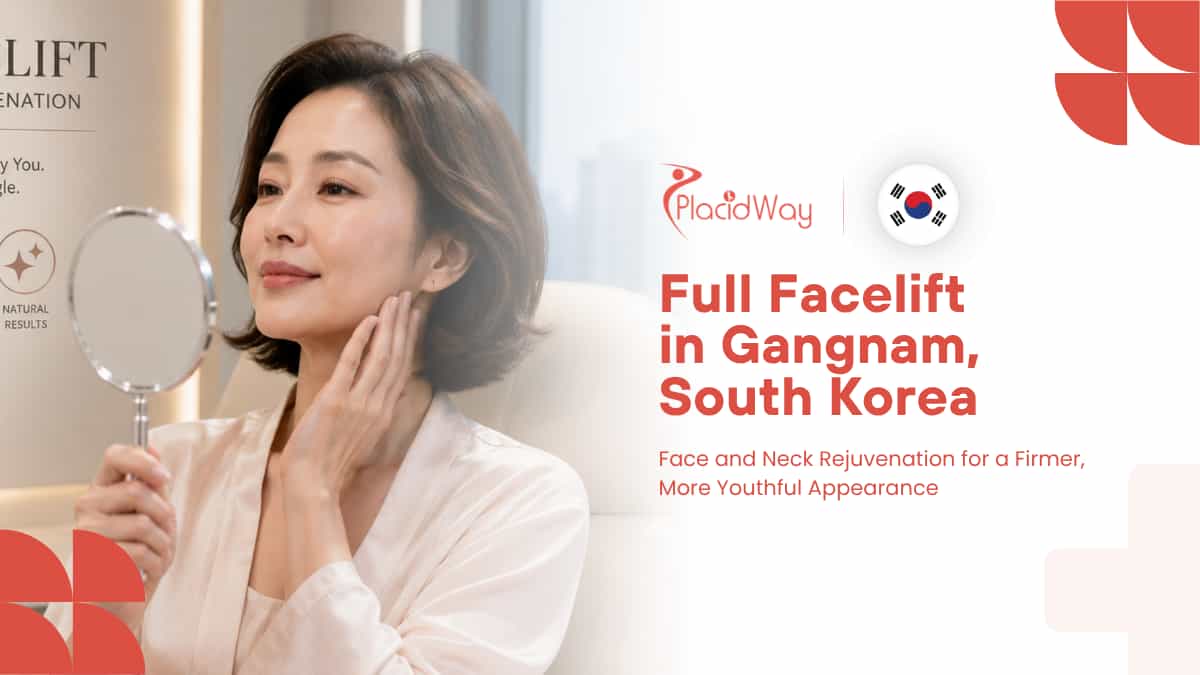
Let’s be real—gravity comes for us all, but in Gangnam, leading surgeons have mastered the art of politely asking it to back off. A full facelift and neck rejuvenation in South Korea's cosmetic capital combines advanced surgical precision with the signature K-Beauty philosophy of looking completely refreshed, not tightly pulled. Patients traveling from the United States, Singapore, Japan, Taiwan, and China are increasingly trading the over-done Western aesthetic for Gangnam's subtle, harmonized results. By focusing on the deeper muscle layers rather than just stretching the skin, this procedure whispers youth rather than shouting surgery.
At a Glance: Your Gangnam Rejuvenation Journey
- Package Investment: Comprehensive face and neck rejuvenation typically ranges between $3,500 and $9,000, offering exceptional value compared to North American and Southeast Asian healthcare hubs.
- Verified Safety Standards: Major Gangnam centers carry rigorous credentials, including JCI (Joint Commission International) and KAHF (Korean Accreditation Program for Healthcare Hospitals Serving Foreign Patients).
- The "Dong-an" Approach: South Korea's famed "baby face" trend prioritizes volume restoration and natural muscle lifting (SMAS layer) over traditional skin-tightening.
- Invisible Scarring Techniques: Incisions are meticulously hidden within the hairline and natural ear contours, a critical priority for patients who wear their hair up.
- Seamless Language Support: Dedicated in-house translators cater to English, Mandarin, and Japanese speakers, ensuring nothing gets lost in translation during medical consultations.
Why International Patients Choose Gangnam for Facelifts
Flying across the globe for a surgical procedure sounds like a plot from a jet-set novel, but for patients from the US, China, and Singapore, it is a highly calculated medical decision. Gangnam has transformed into a global nexus for facial contouring, offering surgical precision that is simply hard to match in local markets. The trend is shifting rapidly toward preventative and restorative lifting, drawing a diverse crowd eager for Korea's specialized anatomical expertise.
- American Precision Seeking: US patients willingly endure a 14-hour flight because Gangnam surgeons perform a significantly higher volume of facial surgeries, leading to refined techniques that avoid the "windblown" look.
- Singaporean Value: Singapore offers excellent medical care, but the cost of an intensive SMAS facelift locally is often prohibitive; Gangnam provides equal or higher surgical artistry at a fraction of the price.
- Japanese Subtlety: Japanese patients frequent Seoul for weekend surgical trips, favoring Korean surgeons who understand the delicate balance of enhancing youth without altering innate facial identity.
- Chinese and Taiwanese Trust: Patients from mainland China and Taiwan share cultural aesthetic goals with Korea and trust Gangnam's highly regulated, transparent hospital systems.
- Holistic Neck Integration: Rather than treating the face in isolation, Gangnam surgeons treat the neck and jawline as one continuous canvas, preventing the dreaded "young face, old neck" mismatch.
The K-Beauty Philosophy Behind Facial Rejuvenation
K-Beauty isn't just about ten-step skincare routines and sheet masks; it’s a deeply ingrained cultural philosophy that extends straight into the operating room. When it comes to full facelifts, the Korean trend is entirely focused on "Dong-an" (baby face) aesthetics. This means looking well-rested, naturally plump, and soft, rather than angular and aggressively contoured.
- SMAS Over Skin: Surgeons focus almost entirely on lifting the Superficial Musculoaponeurotic System (SMAS), the underlying muscle layer, which ensures long-lasting results without stressing the skin.
- Preserving Facial Volume: Instead of removing fat, Korean techniques often involve redistributing it or combining the lift with micro-fat grafting to restore youthful plumpness to hollow cheeks.
- Micro-Incision Mastery: The trend heavily favors minimal incisions, utilizing endoscopic tools to navigate under the skin, which drastically reduces visible scarring around the delicate ear area.
- Harmonized Jawlines: K-Beauty places immense value on a smooth, V-shaped or soft oval jawline; neck lifts are seamlessly integrated to remove jowls and redefine the chin profile.
- Aggressive Swelling Management: The Korean approach includes intensive post-operative deswelling treatments, such as oxygen therapy and specialized light therapies, to get patients camera-ready in record time.
Global Cost Comparison: Face and Neck Rejuvenation
Understanding your financial investment is just as important as understanding your medical journey. Please note: The costs presented below are estimated ranges. Final package pricing depends on an individualized medical assessment, the specific surgical techniques required (such as deep plane vs. SMAS), and your unique anatomical needs.
| Country / Region | Estimated Cost Range (USD) | Primary Market Driver |
|---|---|---|
| Gangnam, South Korea | $3,500 - $9,000 | High surgeon volume, competitive local market |
| United States | $12,000 - $25,000+ | High overhead, anesthesia and facility fees |
| Singapore | $15,000 - $20,000 | Premium private healthcare costs |
| Japan | $10,000 - $18,000 | High standard of living, luxury clinic fees |
| China (Tier 1 Cities) | $8,000 - $15,000 | Demand for imported surgical expertise |
Comprehensive Package Inclusions
Gangnam clinics are famous for their all-encompassing care. When you book a full facelift package, you aren't just paying for the time on the operating table; you are securing a complete rejuvenation pipeline.
- In-depth, 3D facial scanning and pre-surgical aesthetic consultation.
- Full facelift and neck lift surgical fees, including operating room use.
- Board-certified anesthesiologist fees (monitoring you throughout the entire procedure).
- Dedicated in-house language translator for all medical interactions.
- Standard post-operative medications (antibiotics, pain management, anti-inflammatory drugs).
- Post-op deswelling treatments (often including specialized LED light therapy or hyperbaric oxygen sessions).
- All scheduled follow-up appointments and stitch removal.
- Post-surgical compression garments for the face and neck.
What Is Not Included
To keep things transparent and avoid any surprises while you are recovering, it is important to know what elements fall outside the standard medical package.
- International airfare and travel insurance.
- Hotel accommodations (though many clinics offer corporate rates at nearby partner hotels).
- Pre-departure medical clearances required by your local doctor.
- Additional cosmetic procedures requested on-site (e.g., rhinoplasty or blepharoplasty).
- Personal expenses, meals, and local transportation.
- Treatment for unrelated medical emergencies or pre-existing conditions.
Required Medical Records for Preliminary Assessment
Before you even pack your bags for Seoul, your surgical team needs to know exactly what they are working with. Providing clear medical records ensures your safety and allows the surgeon to create a realistic surgical plan.
- Clear, unedited photographs of your face and neck from multiple angles (front, 45-degree, and 90-degree profiles).
- A comprehensive list of all current medications, including vitamins and herbal supplements (many of which thin the blood).
- Detailed records of any previous facial surgeries, fillers, or thread lifts you have had in the past ten years.
- Recent standard blood work (Complete Blood Count) to check for anemia or clotting issues.
- An Electrocardiogram (ECG/EKG) report, particularly for patients over the age of 50, to clear you for general anesthesia.
Bridging Eastern and Western Aesthetic Goals
A major concern for patients traveling from the US or Europe is whether a Korean surgeon understands non-Asian bone structure. The short answer is an absolute yes. Gangnam caters to a deeply diverse global clientele, and their surgical approach adapts beautifully across different ethnicities.
- Anatomical Adaptation: Surgeons adjust the vector (direction) of the lift based on bone prominence. Western faces often require a more vertical lift, while Asian faces may benefit from a diagonal pull to soften cheekbones.
- Skin Thickness Considerations: Asian skin tends to be thicker and heavier, which is why Korean surgeons are masters of deep SMAS techniques. This deep expertise effortlessly translates to treating thinner, sun-damaged Western skin.
- Custom Volume Distribution: US patients often want sharp, defined cheekbones restored, while Japanese and Taiwanese patients frequently request softer, flatter facial transitions.
- Scar Healing Factors: Melanin-rich skin requires specialized incision care to prevent hyperpigmentation. Surgeons utilize tension-free closure techniques to minimize scar widening regardless of ethnicity.
- Open Communication: Pre-surgical consultations are rigorous. You and your surgeon will analyze reference photos together to ensure your definition of "youthful" matches theirs.
Navigating Seoul: A Medical Tourist's Guide
Traveling for surgery requires a bit more planning than a standard vacation. Whether you are flying in from New York, Tokyo, or Singapore, the logistics of your stay in Gangnam are designed to be remarkably smooth.
- Visa Requirements: US, Japanese, Taiwanese, and Singaporean citizens generally enjoy visa-free entry to South Korea for short stays via the K-ETA system. Always verify current requirements before booking.
- Length of Stay: Plan to stay in Seoul for at least 10 to 14 days. This allows ample time for the surgery, initial recovery, stitch removal, and a final doctor's clearance before flying.
- Walkable Recovery: Gangnam is highly pedestrian-friendly. Light walking is encouraged post-surgery to reduce swelling, and the district is packed with quiet cafes and easy-to-navigate streets.
- The Language Barrier: Outside the clinic, English is moderately understood, but downloading a translation app (like Papago) and a local map app (Naver Maps or KakaoMap) will make your life significantly easier.
- Dietary Ease: You will need soft foods for the first few days. Seoul is a haven for nutrient-dense, soft soups (like abalone porridge or bone broth), readily available via delivery apps directly to your hotel.
Your Timeline for Healing in South Korea
Patience is your best friend when recovering from a full facelift. While the surgical techniques in Gangnam promote faster healing, your body still needs time to adjust. Here is what your recovery timeline generally looks like while in the country.
- Days 1-3 (The Peak Swelling Phase): Expect maximum swelling and mild discomfort. You will wear a compression garment and stick to resting, icing, and eating soft foods in your hotel.
- Days 4-6 (The Turning Point): Swelling begins to visibly reduce. You will likely return to the clinic for specialized deswelling therapies and mild cleansing of the incision sites.
- Days 7-10 (Stitch Removal): Most of the visible stitches around your ears and hairline are carefully removed. You will start looking and feeling significantly more like yourself.
- Days 11-14 (Flight Clearance): Bruising fades to a yellowish tint that can be covered with makeup. Your surgeon will do a final check to ensure it is safe for you to endure cabin pressure on your flight home.
- The "Pumpkin Juice" Secret: You will likely be given or advised to drink Hobak-즙 (Korean pumpkin extract), a traditional remedy celebrated for its rapid anti-swelling properties.
The Pre-Flight Preparation Guide
A successful surgery starts weeks before you step onto the airplane. Preparing your body and your suitcase correctly will take massive amounts of stress out of your medical journey.
- Pause the Supplements: Stop taking fish oil, Vitamin E, Ginkgo Biloba, aspirin, and any blood-thinning NSAIDs at least two weeks before your flight to prevent excessive bleeding.
- Quit Nicotine: Smoking or vaping severely restricts blood flow and can cause tissue necrosis. You must be completely nicotine-free for at least four weeks before and after surgery.
- Pack Button-Down Shirts: You will not be able to pull tight clothing over your head for several weeks. Pack loose, comfortable, button-down or zip-up tops for your trip.
- Hydrate Heavily: Long flights dehydrate the skin and body. Drink plenty of water leading up to your trip, but follow your surgeon's fasting instructions precisely the night before surgery.
- Prepare a Digital Medical File: Keep all your medical clearances, lab results, and list of medications saved on your phone and printed in a physical folder to hand to your surgical team upon arrival.
Frequently Asked Questions: Face & Neck Rejuvenation
1. How long do I need to stay in Seoul for a full facelift?
International patients are strongly advised to stay in South Korea for 10 to 14 days. This window covers the surgery, peak swelling periods, stitch removal, and a final safety clearance before taking a pressurized flight back to the US, Singapore, or elsewhere.
2. Is a SMAS facelift in Korea different from traditional facelifts?
Yes. Traditional facelifts often pull the skin tightly, resulting in an unnatural look. The SMAS (Superficial Musculoaponeurotic System) technique, heavily favored in Gangnam, lifts and secures the underlying muscle structure. The skin is then gently draped over the new foundation, resulting in a natural, long-lasting lift.
3. Will I have visible scars around my ears?
Scarring is inevitable with surgery, but Korean surgeons are renowned for their meticulous incision placements. Cuts are typically hidden within the hairline and seamlessly follow the natural creases in and around your ear. Once fully healed, they are generally imperceptible.
4. When can I safely fly back to my home country?
Most surgeons clear patients to fly 10 to 14 days post-operation. Flying too soon can increase swelling or the risk of deep vein thrombosis (DVT) due to changes in cabin pressure and prolonged sitting.
5. How do Gangnam surgeons handle different ethnicities?
Surgeons in global hubs like Gangnam have extensive experience with diverse bone structures and skin types. During consultations, they adapt their lifting vectors and fat redistribution techniques to honor your natural ethnic features rather than trying to fit a one-size-fits-all mold.
6. What is the typical downtime before I look "normal"?
You will feel comfortable running errands with sunglasses after about two weeks. However, it takes about 3 to 4 weeks to feel "restaurant ready" where you feel comfortable socializing without obvious signs of recent surgery. Full internal healing takes several months.
7. Is it safe to undergo general anesthesia in South Korea?
Yes, provided you choose a certified facility. Reputable clinics in Gangnam employ full-time, board-certified anesthesiologists who monitor you continuously. Ensure your chosen clinic is accredited by organizations like JCI or KAHF.
8. Can I combine a facelift with eyelid surgery?
Absolutely. Combining procedures like a full facelift, neck lift, and blepharoplasty (eyelid surgery) is very common. It requires only one session under anesthesia and allows you to consolidate your recovery time.
9. How long do the results of a Korean facelift last?
A well-executed SMAS or deep-plane facelift essentially turns back the clock by 10 to 15 years. While the surgery cannot stop the aging process completely, you will always look significantly younger than if you had never had the procedure.
10. What should I do if I need follow-up care in my home country?
Before leaving Korea, you will be given a comprehensive medical report detailing your procedure. While severe complications are rare, you can share these documents with a local, board-certified plastic surgeon or general practitioner in your home country for ongoing observation if needed.
Ready to Refresh Your Perspective?
Navigating international medical care doesn't have to be overwhelming. If you are curious about how a Gangnam surgical approach can address your specific goals, our team is here to help organize your consultation, clarify exact costs, and guide your journey from start to finish. Let’s start a relaxed, pressure-free conversation.
Request Free QuoteMedical Disclaimer
The content on this page is provided for general informational and educational purposes only and does not substitute for professional medical advice, diagnosis, or treatment. Always consult with a qualified, board-certified healthcare provider regarding any medical conditions, surgical risks, or before making decisions about cosmetic procedures.
Authoritative Sources and References
- National Center for Biotechnology Information (NCBI) - "Superficial Musculoaponeurotic System (SMAS) Facelift Techniques": https://www.ncbi.nlm.nih.gov/pmc/articles/PMC6053303/
- MedlinePlus (National Library of Medicine) - "Facelift Overview and Expectations": https://medlineplus.gov/ency/article/002988.htm
- American Society of Plastic Surgeons (ASPS) - "Facelift Safety and Risks": https://www.plasticsurgery.org/reconstructive-procedures/facelift/safety
- International Society of Aesthetic Plastic Surgery (ISAPS) - "Facelift Procedure Information for Patients": https://www.isaps.org/discover/patients/procedures/facial-surgery/facelift/
- World Health Organization (WHO) - "Patient Safety Information for Global Healthcare": https://www.who.int/news-room/fact-sheets/detail/patient-safety
.png)
.png)
.png)
.jpg)
.jpg)
.jpg)








Share this listing