
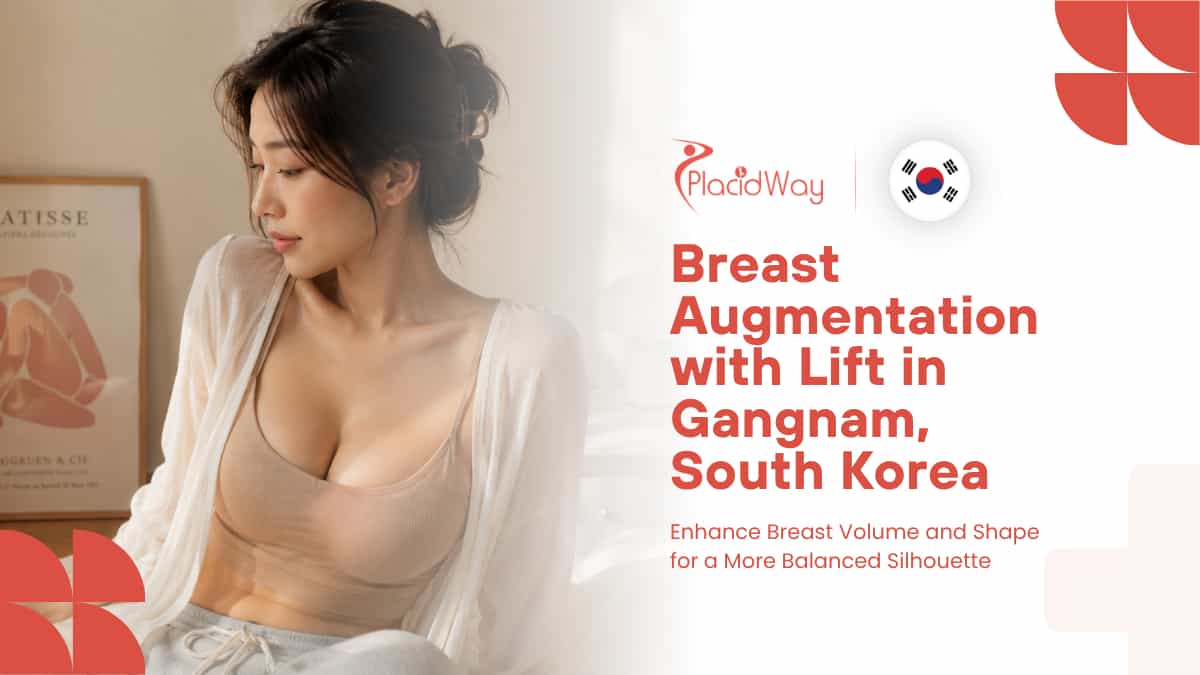
Getting your pre-pregnancy or youthful contour back shouldn’t mean choosing between perkiness and fullness. A breast augmentation with a lift in Gangnam combines precise surgical elevation with modern silicone volume, perfectly capturing the K-Beauty philosophy of balanced, genetic-looking results. Patients from the United States, Japan, Singapore, Taiwan, and China are increasingly flying to South Korea for this specialized dual-procedure because it delivers exceptional anatomical harmony without the outdated, over-filled aesthetic.
Key Procedure Insights
- Package Estimate: The combined procedure cost generally ranges from $6,200 to $9,400.
- Medical Credentials: Procedures are performed in Joint Commission International (JCI) accredited facilities by Korean Medical Association (KMA) board-certified surgeons.
- K-Beauty Aesthetic: Emphasizes the coveted "teardrop silhouette," prioritizing dynamic, natural movement over rigid roundness.
- Advanced Visualization: Utilizes 3D Crisalix and Vectra imaging technology to accurately map your postoperative results before you ever enter the operating room.
- Consolidated Recovery: Merges tissue lifting and volume enhancement into a single surgical event, minimizing overall downtime and anesthesia exposure.
- Specialized Aftercare: Features renowned Korean post-op protocols, including hyperbaric oxygen chambers and LED light therapy to drastically reduce swelling.
Why International Patients Choose Dual Breast Reshaping in Gangnam
Gangnam has evolved far beyond pop culture fame to become the global gold standard for intricate aesthetic surgeries. Combining an augmentation with a mastopexy (lift) requires an immense level of surgical artistry, which is exactly why international patients bypass local clinics to seek out Seoul’s elite medical infrastructure.
- High Demand from the US and Singapore: Western and Southeast Asian patients travel here specifically for the "stealth aesthetic"—results that look entirely natural rather than surgically altered.
- Micro-Scarring Techniques: Japanese and Taiwanese patients highly value the advanced incision techniques used in Gangnam, which are designed to leave barely-there, easily hidden scars.
- Asian Anatomy Expertise: Surgeons here have an unparalleled understanding of diverse tissue types, making them highly sought after by patients from China and Thailand looking for tailored anatomical care.
- Unmatched Safety Protocols: Clinics boast hospital-grade sterilization, zero-infection air shower systems, and in-house anesthesiologists dedicated to a single patient.
- Concierge Healthcare: The language and logistical barriers are eliminated through dedicated international departments providing in-house English, Mandarin, and Japanese translators.
How the K-Beauty Philosophy is Redefining Breast Surgery
The K-Beauty wave has officially moved from ten-step skincare routines directly into the operating room. In Seoul, the focus has drastically shifted away from merely increasing cup size toward achieving total anatomical harmony, ensuring the breasts fit the frame perfectly.
- The Y-Line Cleavage: Surgeons prioritize a natural, sloping "Y-line" in the cleavage area, avoiding the tightly pushed, unnatural "I-line" look of older augmentation styles.
- Dynamic Movement: The trend heavily favors ergonomic, nano-textured implants that naturally shift and flatten slightly when you lie down, mimicking real breast tissue.
- The Teardrop Silhouette: Instead of round, prominent upper poles, K-Beauty aesthetics focus on volume concentrated at the bottom, creating a delicate, teardrop profile.
- Dual-Plane Placement: Korean surgeons frequently utilize the dual-plane method, placing the implant partially under the muscle to provide a softer, undetectable transition at the top of the breast.
- Aggressive Deswelling Care: The Korean approach treats post-operative care as seriously as the surgery itself, incorporating high-frequency therapy and specialized diets (like pumpkin extract) to banish bruising rapidly.
Global Cost Comparison for Breast Augmentation with Lift
Combining these two complex surgeries generally results in high costs in Western and certain Asian markets. Patients traveling to South Korea often find they can access superior surgical technology and comprehensive aftercare for a fraction of the price at home.
| Country | Estimated Cost Range (USD) |
|---|---|
| United States | $12,000 - $18,000 |
| Singapore | $10,000 - $15,000 |
| Japan | $9,000 - $13,000 |
| China | $8,000 - $12,000 |
| Taiwan | $7,000 - $11,000 |
| Gangnam, South Korea | $6,200 - $9,400 |
Please note that this is an estimated cost pending a thorough medical assessment. Final pricing may shift slightly based on your unique anatomical needs, the specific lifting technique required, and your choice of implant brand.
What is Included in Your Treatment Package
- In-depth consultation and physical examination by a board-certified plastic surgeon.
- Pre-operative 3D virtual simulation to visualize your expected outcome.
- All surgical facility fees, operating room costs, and general anesthesia administration.
- Standard FDA- or KFDA-approved silicone cohesive gel breast implants.
- The complete mastopexy (breast lift) surgical procedure.
- One set of standard medical-grade post-operative compression garments (support bra).
- In-clinic post-operative care, including stitch removal and specialized deswelling treatments.
- Dedicated English-speaking (or Mandarin/Japanese) medical interpreter for all appointments.
What is Not Included (Exclusions)
- Upgrades to premium, smart, or ergonomic implant brands (which may carry an additional fee).
- Comprehensive pre-operative medical screening tests (such as specialized blood panels or EKG) if required on-site.
- International airfare, hotel accommodations, and local transportation.
- Extended hospitalization beyond the standard observation period, if requested by the patient.
- Discharge prescription medications, such as take-home antibiotics and pain relievers (typically obtained at a local pharmacy).
Required Medical Records for Pre-Evaluation
- Results of a recent mammogram or breast ultrasound (usually required within the last 6 months).
- A comprehensive blood work panel, including complete blood count (CBC) and basic metabolic panel.
- A recent Electrocardiogram (EKG) to ensure general anesthesia clearance.
- A detailed medical history document outlining previous surgeries, pregnancies, or breastfeeding history.
- A complete list of current daily medications, vitamins, and herbal supplements.
Seamless Travel and Logistics for International Patients
Flying into Seoul for a dual breast procedure is remarkably straightforward thanks to South Korea's robust medical tourism infrastructure. Planning your trip efficiently ensures you remain comfortable during those crucial first few days of recovery.
- Airport Access: Most patients fly into Incheon International Airport (ICN), which offers direct Limousine Bus routes straight to the Gangnam district.
- Accommodation Strategy: Book a hotel or recovery residence strictly within Gangnam-gu to ensure your follow-up clinic visits require minimal travel time.
- Visa Requirements: US, Japanese, and Singaporean citizens generally enjoy visa-free entry via the K-ETA system, while Chinese citizens may require a medical tourist visa (C-3-3 or G-1).
- Local Transport: Rely on premium taxi apps like KakaoT rather than navigating the subway system immediately after your chest surgery.
- Language Support: While clinics provide interpreters, having translation apps downloaded on your phone makes ordering room service or pharmacy items much easier.
Understanding Your Incision and Implant Options
Combining a lift with an augmentation requires precise surgical planning. Your doctor will tailor the type of incision and the style of implant to match your current tissue laxity and aesthetic goals.
- The Periareolar Lift (Donut Lift): Ideal for patients needing a mild lift, involving an incision solely around the areola to subtly raise the nipple.
- The Vertical Lift (Lollipop Lift): Best for moderate sagging, creating an incision around the areola and straight down to the breast crease to reshape the tissue.
- The Inverted-T Lift (Anchor Lift): Reserved for severe sagging, providing the most dramatic reshaping by adding a horizontal incision along the breast fold.
- Implant Textures: Gangnam clinics heavily favor nano-textured or smooth cohesive gel implants, which drastically reduce the risk of capsular contracture while feeling incredibly soft.
- Smart Implants: High-tech options featuring microchips (allowing doctors to scan the implant for warranty and spec info without surgery) are widely available.
What to Expect During Your Recovery Journey in Seoul
Because a lift involves adjusting the skin and tissue alongside placing an implant, the healing process requires a bit more patience than a standard augmentation. The first week is critical for ensuring the implants settle perfectly.
- Days 1-3 (Rest & Elevation): You will experience tightness and swelling. Sleeping propped up at a 45-degree angle is mandatory to reduce fluid buildup.
- Days 4-7 (Clinic Care): You will return to the clinic for incision checks, removal of surgical drains (if used), and specialized LED healing light sessions.
- Flying Home: Surgeons generally recommend staying in Seoul for 7 to 10 days before flying. Changes in cabin pressure are safe, but lifting heavy luggage is strictly prohibited.
- Week 2-3 (Returning to Routine): Desk work and light walking can resume, but you must continue wearing your surgical support bra 24/7.
- Months 3-6 (The "Fluff and Drop"): It takes several months for the implants to drop into their final pocket and for the lifted tissue to soften, revealing your final K-Beauty contour.
Essential Preparation Steps Before Flying for Surgery
Great surgical results start weeks before you board your flight to South Korea. Preparing your body and your suitcase properly will make your transition in and out of the operating room incredibly smooth.
- Pause Blood Thinners: Stop taking aspirin, ibuprofen, fish oil, and Vitamin E at least two weeks prior to surgery to minimize bleeding and bruising risks.
- Nicotine Cessation: Smoking drastically constricts blood vessels and can cause tissue death, especially during a breast lift. You must stop consuming nicotine one month prior.
- Pack Zip-Up Clothing: Raising your arms over your head will be impossible and painful for the first week. Pack only zip-up or button-down shirts and loose cardigans.
- Strengthen Your Core: Since you won't be able to use your chest or arm muscles to push yourself out of bed, a strong core will help you sit up safely during recovery.
- Hydrate and Nourish: Arrive in Seoul well-hydrated and nourished. A healthy body bounces back from general anesthesia much faster.
Frequently Asked Questions About Augmentation with Lift
What is the functional difference between an augmentation and a breast lift?
An augmentation is strictly designed to add volume using silicone or saline implants, making the breasts larger and fuller. A breast lift (mastopexy), on the other hand, removes excess stretched skin and repositions the nipple higher on the chest wall to fix sagging. When performed together, the lift corrects the position while the implant restores the lost internal volume, providing a comprehensive anti-aging result.
Will a breast lift affect my ability to breastfeed in the future?
It is possible that a breast lift can impact future milk production, though it largely depends on the incision technique used. Procedures that detach and reposition the nipple-areola complex may sever some milk ducts and nerves. If you are planning on having more children and breastfeeding, it is highly recommended to discuss this with your surgeon so they can utilize gland-preserving surgical techniques.
How long do I need to stay in South Korea after the surgery?
For a combined augmentation and lift, surgeons generally mandate a minimum stay of 7 to 10 days in Seoul. This timeframe allows the medical team to monitor your initial healing, safely remove any surgical drains or external stitches, and ensure you are cleared for the physical stress of travel. Flying too soon can increase swelling and elevate the risk of deep vein thrombosis (DVT).
Are the scars from a breast lift very noticeable?
Scarring is unavoidable with a breast lift, but Gangnam surgeons are renowned for their meticulous, tension-free suturing techniques designed to minimize scar widening. Scars will appear red and raised for the first few months, but gradually fade to thin, white lines over the course of a year. With proper scar gel application and laser therapies (often recommended post-op), they can become easily concealable under most bathing suits and lingerie.
Can I choose any implant size I want with a lift?
While you certainly have input, choosing an oversized implant during a lift is generally discouraged. A lift removes skin to tighten the breast; placing a massive implant places excessive tension on those fresh healing incisions, which can lead to delayed healing or stretched scars. Your surgeon will calculate the maximum safe volume that your newly tightened skin envelope can comfortably support.
Is it safe to fly back home with new implants?
Yes, it is entirely safe to fly in a pressurized commercial cabin with modern silicone or cohesive gel implants. The altitude and cabin pressure will not cause the implants to expand or rupture. However, the physical act of traveling—navigating airports, sitting for long hours, and managing luggage—requires care, which is why airport assistance and roller bags are strictly advised.
Will I lose nipple sensation after the procedure?
Temporary changes in nipple sensation are incredibly common; you may experience numbness, hypersensitivity, or tingling in the weeks following surgery as the nerves recover. For the vast majority of patients, normal sensation returns within three to six months. Permanent loss of sensation is a known risk but is relatively rare when the procedure is performed by an experienced board-certified specialist.
What happens if I gain or lose weight after the surgery?
Significant weight fluctuations can alter your surgical results. While the silicone implant itself will not change size, the natural breast tissue surrounding it will expand or shrink with weight changes. Gaining weight can make the breasts appear larger, while significant weight loss can lead to deflated tissue and a recurrence of sagging, potentially requiring a revision lift in the future.
Do breast implants need to be replaced every 10 years?
Modern implants are not given a strict 10-year expiration date, and they do not automatically need to be removed if they are fully intact and causing no issues. However, they are not considered lifetime devices. The chance of natural wear, shell rupture, or capsular contracture increases over time, meaning many patients choose to replace or remove them 10 to 15 years down the line for peace of mind.
Ready to Reclaim Your Contour?
Navigating international surgery doesn't have to be overwhelming. Let us connect you with leading board-certified specialists in Gangnam to map out a customized surgical plan tailored to your body.
Request Free QuoteMedical Disclaimer: The content provided on this page is for general informational and educational purposes only. It is not intended as a substitute for professional medical advice, diagnosis, or treatment; always seek the guidance of a qualified healthcare provider regarding any medical condition or planned surgical procedure.
.png)
.png)
.jpg)
.jpg)
.jpg)
.png)








Share this listing