
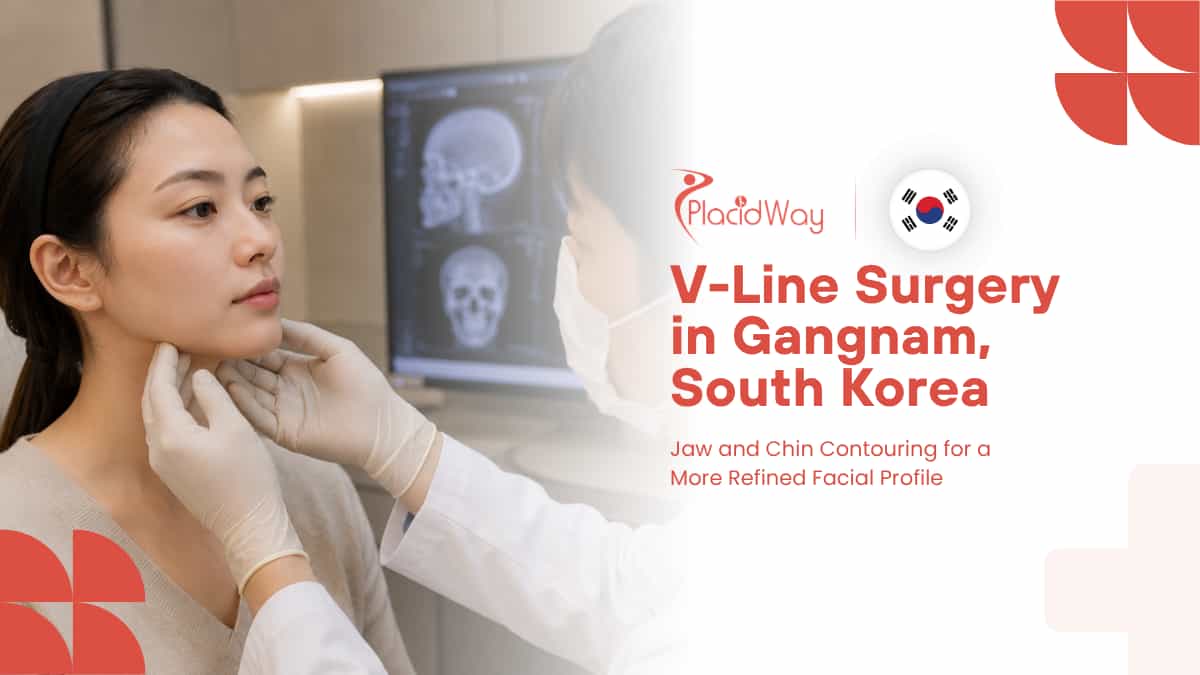
Want that sleek, sculpted jawline that seems to be the secret of every K-drama star? V-Line surgery in Gangnam, South Korea, combines advanced bone-contouring techniques with the global K-Beauty trend to reshape square or prominent jaws into a smooth, refined "V" shape. Patients from the United States, Japan, Singapore, China, and Taiwan are flocking to Gangnam because of its unmatched concentration of specialized maxillofacial surgeons who deeply understand diverse facial anatomies. If you are looking for natural harmony rather than a cookie-cutter look, you are in exactly the right place.
Essential Package Insights
- ✓ Estimated Cost: $5,500 - $10,000 USD, depending on surgical complexity and customized bone contouring plans.
- ✓ Hospital Accreditations: Facilities proudly hold Joint Commission International (JCI) and Korean Accreditation Program for Healthcares Hospitals Serving Foreign Patients (KAHF) certifications.
- ✓ The K-Beauty Trend: The pursuit of the delicate, youthful "V-shaped" face drives continuous innovation in South Korean minimally invasive cutting tools and rapid recovery protocols.
- ✓ Safety and Anesthesia: Procedures are strictly performed under general anesthesia administered and monitored by in-house, board-certified anesthesiologists.
- ✓ Precision Planning: Every surgery is preceded by high-resolution 3D CT nerve mapping and computer simulations to ensure absolute precision and safety.
- ✓ Time Commitment: Requires a 1 to 2-night inpatient hospital stay, with a recommended 10 to 14 days total in Seoul for complete follow-up and stitch removal.
Why Choose Gangnam for Jaw and Chin Contouring?
Gangnam isn't just a catchy song reference; it is widely recognized as the global capital of facial contouring. Here is why international patients consistently make the trip for their jaw and chin refinement.
- Unmatched Maxillofacial Expertise: Surgeons in Gangnam perform thousands of jaw surgeries annually. This high volume translates to an extraordinary level of hands-on experience and surgical finesse that is hard to find elsewhere.
- Advanced 3D Nerve Mapping: Clinics utilize state-of-the-art 3D CT scans to meticulously map facial nerves and bone structures. This technology significantly minimizes the risk of nerve damage and ensures highly accurate bone reduction.
- Demographic Understanding: Patients from Japan, China, and Taiwan often seek a classic, delicate Asian aesthetic, while US and Singaporean patients usually look for customized, natural-looking refinements. Gangnam surgeons excel at tailoring the procedure to these specific cultural aesthetic goals.
- An Organized Recovery Ecosystem: Post-surgery recovery is integrated into the neighborhood. Clinics provide proprietary de-swelling treatments like LED light therapy, and local pharmacies are fully stocked with recovery aids like pumpkin juice and specialized soft-food diets.
- Strict Regulatory Standards: The Korean Ministry of Health and Welfare rigorously monitors medical centers that cater to foreigners. This oversight ensures that international patients receive care that meets exceptional hygiene, safety, and operational protocols.
The K-Beauty Phenomenon: Defining the V-Shape Aesthetic
The K-Beauty philosophy is centered around harmony, facial balance, and an effortlessly youthful glow. The V-Line procedure sits at the very heart of this modern aesthetic movement.
- The Soft Aesthetic Appeal: A slender, V-shaped jawline helps to soften wide or angular facial features. This creates a more delicate, approachable, and noticeably youthful appearance that aligns with modern beauty standards.
- Pop Culture's Global Influence: The massive worldwide explosion of K-Pop and K-dramas has popularized the soft, contoured jawline. It is no longer just a regional preference but an internationally recognized and desired aesthetic.
- Pioneering Surgical Innovation: The intense demand for K-Beauty looks has pushed surgical techniques forward. Surgeons now use advanced micro-saws to create smaller incisions, reducing trauma to surrounding tissues and speeding up recovery.
- Moving Away from "Cookie-Cutter" Looks: The latest trend in K-Beauty focuses heavily on customization. Modern contouring preserves the patient's unique facial proportions while gently refining the angles, ensuring the final result looks naturally born, not surgically made.
- A Hyper-Focus on Aftercare: In the K-Beauty world, surgery is only half the battle. Clinics employ rapid recovery protocols involving specialized cooling masks, oxygen therapy, and lymphatic drainage massages to get patients camera-ready in record time.
International Cost Comparison for Jaw Contouring
Please note that the pricing for V-line surgery in Gangnam provided here is an estimated cost pending a full medical assessment. Your final price may vary based on your unique bone density, the complexity of the contouring required, and the specific surgical techniques recommended by your medical team.
| Country | Estimated Cost Range (USD) |
|---|---|
| United States | $15,000 - $25,000+ |
| Singapore | $12,000 - $18,000 |
| Japan | $10,000 - $16,000 |
| China | $8,000 - $14,000 |
| South Korea (Gangnam) | $5,500 - $10,000 |
What is Included in Your Package
- Comprehensive pre-operative consultations with the lead maxillofacial surgeon.
- High-resolution 3D CT facial scanning, X-rays, and computer simulation modeling.
- The complete V-Line surgery (mandible reduction and customized chin contouring).
- General anesthesia administered by an in-house, board-certified anesthesiologist.
- 1 to 2 nights of inpatient hospital stay with dedicated 24-hour nursing care.
- Standard post-operative medications (antibiotics, anti-inflammatories, painkillers) for the first week.
- Post-operative de-swelling treatments, such as LED light therapy and ultrasound massages.
- English-speaking patient coordination and in-clinic medical translation services.
- All scheduled follow-up appointments, wound dressing changes, and stitch removal.
What is Excluded
- International airfare and travel/medical complication insurance.
- Hotel accommodations for the remainder of your stay outside the hospital.
- Daily meals, groceries, and personal expenses while staying in Seoul.
- Clearances for pre-existing conditions or specialized blood panels not related to standard pre-op protocol.
- Airport transfers to and from the clinic (unless specifically negotiated as a VIP add-on service).
- Additional aesthetic procedures (like fat grafting or rhinoplasty) decided upon after arrival.
Required Medical Records for Preliminary Assessment
To ensure your safety and provide an accurate surgical plan before you fly, our medical team requires a few key pieces of information. Gathering these early will streamline your consultation process.
- Clear Facial Photographs: Well-lit, makeup-free photos of your face from the front, both full side profiles, and 45-degree angles.
- Radiology Imaging: Panoramic dental X-rays or recent 3D facial CT scans, if you have access to them from your local dentist.
- Blood Work: Recent comprehensive blood test results (including CBC and clotting factors like PT/PTT) if requested by the surgeon.
- Medication List: A complete, detailed list of all current prescription medications, herbal supplements, and known drug allergies.
- Detailed Medical History: Information regarding any previous facial surgeries, dental implants, jaw issues (TMJ), or extensive orthodontic work.
Navigating Your Medical Journey from the US and Singapore
Traveling halfway across the world for surgery sounds daunting, but Gangnam’s advanced medical tourism infrastructure makes it surprisingly smooth. Here is what you need to know when flying in from North America or Southeast Asia.
- Flight Logistics and Visas: Direct flights into Incheon International Airport (ICN) are plentiful. US and Singaporean citizens generally enjoy visa-free entry but must complete the simple K-ETA (Electronic Travel Authorization) online before departure.
- Seamless Language Support: You will not be left to rely on translation apps. Top Gangnam clinics provide dedicated, fluent English-speaking coordinators who shadow you during consultations, surgery prep, and aftercare.
- Flexible Payment Methods: Clinics are accustomed to international clients and readily accept major credit cards (Visa, Mastercard, Amex), wire transfers, and sometimes cash in USD or SGD. Always notify your bank of your travel plans to prevent card blocks.
- Appropriate Recovery Time: Do not book a flight home for day three. You must remain in Seoul for at least 10 to 14 days to monitor healing, manage peak swelling, and have your intra-oral stitches safely removed.
- Navigating the City: Seoul’s subway system is immaculate and English-friendly. After your initial 48 hours of rest, gentle walking around the city is actually encouraged to help reduce facial swelling.
Tailoring the Procedure for Japanese, Chinese, and Taiwanese Patients
East Asian patients often share specific structural characteristics, such as a wider mandibular angle or prominent masseter muscles. The surgical approach in Gangnam is highly customized for these regional anatomical nuances.
- Cortical Bone Excision: For patients with thicker jawbones, surgeons often shave down the outer layer of the bone (the cortex). This slims the face dramatically from the front without compromising the structural integrity of the jaw.
- The T-Osteotomy Technique: Very popular among East Asian patients, this technique involves cutting the chin bone into a "T" shape, removing the middle segment, and pushing the remaining bone together to create a narrower, sharper chin profile.
- Masseter Muscle Reduction: A wide lower face is not always just about bone. Surgeons often combine bone contouring with partial masseter muscle removal or Botox to address muscular bulkiness simultaneously.
- Respecting Cultural Aesthetics: While some patients want a dramatic, sharp V-shape, others prefer a subtle, elegant U-shape. Korean surgeons excel at balancing your specific cultural beauty preferences with what realistically fits your anatomy.
- Convenient Proximity: For patients from Japan, China, and Taiwan, the short flight time makes medical tourism incredibly practical, allowing for easier return trips if long-term follow-up or additional skin treatments are desired.
The Surgical Techniques: How We Achieve the V-Line
The term "V-Line" actually encompasses a combination of sophisticated surgical techniques designed to harmonize the lower third of your face. Here is a peek behind the surgical curtain to understand what actually happens.
- Mandible Angle Reduction: This is the removal of the angular, square bone at the back of the jaw (near the ears). Surgeons make incisions inside the mouth to hide all scars, smoothly curving the bone down toward the chin.
- Advanced Chin Genioplasty: Depending on whether your chin is too long, short, or recessed, surgeons will use sliding techniques or T-osteotomies to reposition the bone forward or shorten it, perfectly blending it with the new jawline.
- Strict Nerve Preservation: The inferior alveolar nerve runs right through the jawbone. Advanced 3D imaging allows surgeons to see exactly where this nerve is, ensuring they cut safely away from it to prevent loss of sensation.
- Titanium Fixation: When chin bones are repositioned, tiny medical-grade titanium plates and screws are used to hold the new structure in place. These are completely biocompatible and safely integrate with the body.
- Addressing Soft Tissue: Because reducing bone volume can sometimes leave excess skin, surgeons may proactively combine the V-line surgery with facial liposuction or lifting procedures to ensure the skin remains tight and youthful.
Your Recovery Timeline in Seoul: What to Really Expect
Healing from bone-contouring surgery is a marathon, not a sprint. Knowing exactly what the first two weeks in Seoul look like will help you plan your medical vacation effectively and manage your expectations.
- Days 1 to 3 (Peak Swelling): This is the most uncomfortable phase. Swelling and bruising will peak around day three. You will wear a compression garment and consume only clear liquids, relying on prescribed pain management.
- Days 4 to 7 (The Transition): Swelling begins to slowly subside. You can graduate to soft, non-chewable foods like porridge, mashed potatoes, and smoothies. Gentle daily walks are highly encouraged to promote blood circulation and reduce facial edema.
- Oral Hygiene is Critical: Because the incisions are inside your mouth, meticulous oral hygiene is mandatory. You will be provided with a special medical mouthwash to use after every meal to prevent infection.
- Days 10 to 14 (Stitch Removal): You will return to the clinic for a final check-up and the removal of your intra-oral stitches. At this point, you will be medically cleared to fly back to your home country.
- The Long Game (3 to 6 Months): While you will look "presentable" enough to return to work after 2 to 3 weeks, minor residual swelling will take months to completely resolve. The final, chiseled V-line result is usually visible around the 6-month mark.
Frequently Asked Questions About V-Line Surgery
1. How painful is V-line surgery?
Surprisingly, bone itself does not have many pain receptors. Patients report that the discomfort feels more like severe pressure, stiffness, and the nuisance of a sore throat (from the anesthesia breathing tube) rather than sharp pain. Medication manages this effectively.
2. Will I have visible facial scars after jaw contouring?
No. All incisions for V-line surgery are made intra-orally (inside the mouth) along the gumline. This means there are absolutely no visible scars on the outside of your face or neck.
3. Is there a risk of permanent nerve damage?
Temporary numbness in the chin and lower lip is very common and usually resolves within a few weeks to months. Permanent nerve damage is a serious but rare risk, which is why choosing a highly experienced surgeon who utilizes 3D CT nerve mapping is crucial.
4. How long do I need to stay in South Korea?
You must plan to stay in Seoul for at least 10 to 14 days post-surgery. This allows the medical team to monitor your healing through the critical early stages and safely remove your intra-oral stitches before you board a long flight.
5. When can I eat solid foods again?
You will be on a liquid diet for the first few days, followed by soft foods (soups, porridge) for about two weeks. You can gradually introduce normal, soft solid foods by week three, but you should avoid hard, crunchy, or chewy foods (like steak or nuts) for at least 8 to 12 weeks.
6. Can I combine V-Line surgery with a nose job (rhinoplasty)?
Yes, many international patients combine jaw contouring with rhinoplasty to completely harmonize their facial profile in one trip. Combining procedures means you only undergo general anesthesia once and consolidate your recovery time.
7. Will my skin sag after the bone is reduced?
It depends on your age, skin elasticity, and the amount of bone removed. Younger patients' skin naturally shrinks to fit the new bone structure. Older patients, or those requiring significant bone reduction, might be recommended a simultaneous lifting procedure to prevent sagging.
8. Are the titanium plates permanent? Do they set off airport alarms?
The medical-grade titanium pins and plates can be left in permanently without issue, and they are too small to set off airport metal detectors. However, if you prefer, they can be removed in a minor secondary procedure after 6 to 12 months once the bone has fully healed.
9. How long does it take to see the final results?
While you will see a noticeable change once the major swelling subsides at around 4 weeks, the absolute final, refined result takes about 6 to 12 months to show as the soft tissues settle entirely over the new bone structure.
10. Do I need braces before or after V-Line surgery?
Unlike orthognathic (double jaw) surgery, which alters your bite and often requires braces, V-line surgery strictly focuses on the aesthetic contouring of the jawline and chin. Therefore, orthodontic treatment is generally not required.
Take the Next Step Toward Your Confidence
Ready to explore what a personalized facial contouring plan looks like for you? We are here to answer your questions and guide you through the process, entirely at your own pace and without any pressure.
Request Free QuoteMedical Disclaimer: The information provided on this page is for general informational and educational purposes only. It is not intended as a substitute for professional medical advice, diagnosis, or treatment. Always seek the advice of your physician or qualified healthcare provider with any questions you may have regarding a medical condition.
Scientific and Medical References
- National Center for Biotechnology Information (NCBI) - Evolution of Mandibular Angle Reduction Techniques
- Plastic and Reconstructive Surgery Journal - V-Line Osteotomy Clinical Insights
- International Society of Aesthetic Plastic Surgery (ISAPS) - Global Guidelines on Facial Contouring Safety
- Mayo Clinic - Patient Guide on Risks and Recovery for Jaw Procedures
- Korean Society of Plastic and Reconstructive Surgeons (KSPRS) - Board Certification and Educational Standards
.png)
.jpg)
.png)
.jpg)
.jpg)








Share this listing