


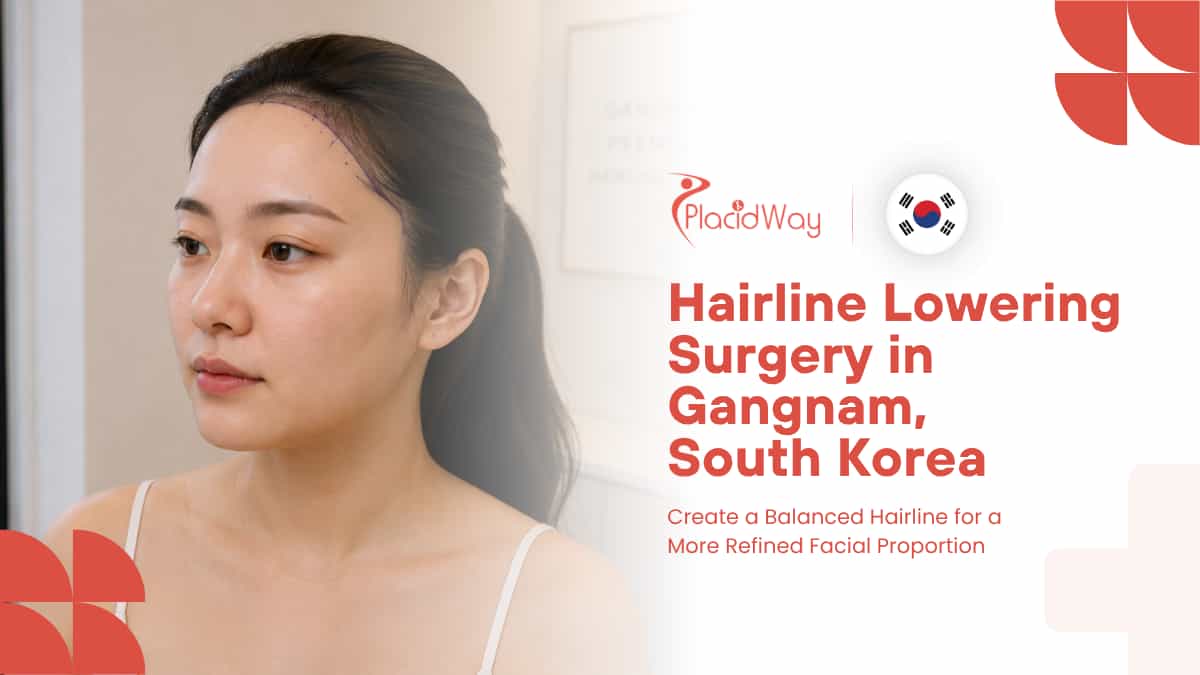
If your forehead seems to enter the room a few seconds before you do, Gangnam’s hairline lowering surgery offers a beautifully permanent way to rebalance your facial proportions without shaving a single hair. This highly specialized K-Beauty procedure, officially known as forehead reduction, strategically removes a small strip of forehead skin to pull the hairline forward, creating a softer, perfectly framed face based on the celebrated "golden ratio." International patients from the United States, Japan, China, Taiwan, and Singapore are flocking to South Korea for this package because Gangnam's surgeons have perfected the art of the micro-beveled zig-zag incision, allowing delicate baby hairs to grow directly through the scar for a virtually undetectable, naturally youthful finish.
Quick Insights: Gangnam Hairline Lowering Package
- Investment Range: $3,000 to $8,500 USD, tailored to scalp laxity, reduction distance, and hairline design complexity.
- Verified Safety: Procedures are conducted in facilities accredited by the Korean Accreditation Program for Hospitals Serving Foreign Patients (KAHF).
- The K-Beauty Edge: Utilizes dual-plane dissection and endotine fixation techniques to reduce tension, preventing unwanted scar stretching while shrinking the visual size of the face.
- Reduction Capability: Safely lowers the hairline by 1.5 cm to 3 cm in a single session, depending on your individual scalp elasticity.
- Recovery Timeline: Outpatient procedure lasting 1.5 to 2 hours; most patients comfortably resume remote work and light socializing within 3 to 5 days.
- Anesthesia Method: Typically performed under local anesthesia with conscious twilight sedation for a pain-free, comfortable experience without general anesthesia risks.
Why International Patients Choose Gangnam for Forehead Reduction
Choosing to reshape your upper face is a major decision, and discerning patients know that surgeon technique dictates the final aesthetic. Gangnam has become the global epicenter for hairline design because local surgeons treat the procedure as an art form, not just a tissue-removal exercise.
- High-Volume Expertise: Surgeons in Gangnam perform hundreds of these specific procedures annually, mastering the nuances of follicle preservation better than general plastic surgeons abroad.
- Scar-Camouflage Mastery: Patients from the US and Singapore travel specifically for the "trichophytic" (beveled) incision, a Korean specialty where the blade is angled to allow hair to sprout directly through the healing tissue.
- Short-Haul Convenience: For patients arriving from Japan, Taiwan, and China, Seoul offers a quick, affordable flight, making it easy to pop over for surgery and return for stitch removal a week later.
- Tension-Free Healing: Gangnam clinics frequently utilize dissolvable endotine devices (small anchors) beneath the scalp to hold the tissue in place, removing tension from the surface incision and resulting in pencil-thin, invisible scars.
- Holistic Facial Harmony: Rather than just dragging a straight line down, Korean specialists design asymmetrical, wavy hairlines that mimic nature and complement your specific cheekbone and jaw structure.
The K-Beauty Philosophy Behind Perfect Hairline Proportions
The K-Beauty trend isn't just about glowing skin; it's heavily focused on the geometry of the face. In South Korea, a smaller, well-proportioned face is considered the pinnacle of youth and vitality, making hairline design a foundational cosmetic step.
- The 1:1:0.8 Golden Ratio: K-Beauty dictates that the ideal face is divided into thirds (forehead to brow, brow to nose base, nose base to chin). Hairline lowering corrects an oversized upper third to achieve this coveted balance.
- Facial Contouring Without Bone Surgery: A well-designed, lower hairline creates an optical illusion that makes the entire face look narrower and smaller, mimicking the results of jaw contouring without touching the bone.
- Baby Hair Preservation: K-Beauty aesthetics abhor a harsh, drawn-on hairline. Surgeons meticulously work around and protect fine vellus hairs (baby hairs) to keep the border looking soft and naturally unkempt.
- The "M-Shape" Correction: The trend heavily targets receding corners (the M-shape), rounding them out to create a gentle, feminine oval or a strong, clean masculine square, depending on the patient's identity.
- Youthful Roundness: By slightly bringing down the temporal peaks (the sides of the forehead), the face gains a subtle roundness that instantly shaves years off the patient's appearance.
Global Cost Comparison: Hairline Lowering Surgery Estimates
When evaluating your options, South Korea offers top-tier surgical artistry at highly competitive rates compared to Western and neighboring Asian healthcare systems. Please note that this is an estimated cost pending medical assessment. Final pricing depends on your required reduction amount, scalp elasticity, and specific surgical techniques used.
| Country | Estimated Cost Range (USD) | Market Context |
|---|---|---|
| South Korea (Gangnam) | $3,000 - $8,500 | Premium K-Beauty techniques, trichophytic incisions, high-volume expertise. |
| United States | $9,000 - $15,000 | High facility fees; surgeons often perform this procedure less frequently. |
| Singapore | $8,000 - $12,000 | Excellent safety standards but significantly higher cost of living and clinic fees. |
| Japan | $7,000 - $10,000 | Precision-focused, but local patients often travel to Seoul for better pricing. |
| Taiwan | $5,000 - $8,000 | Emerging market for hairline surgery, steadily adopting Korean techniques. |
| China | $4,500 - $7,500 | Varies widely by city; many top-tier patients prefer the aesthetic style of Gangnam. |
What’s Included in Your Gangnam Hairline Design Experience
This medical package is designed to provide international patients with a seamless, end-to-end clinical experience. The baseline surgical fee generally covers the following:
- Comprehensive pre-operative consultation, including 1:1 facial ratio analysis and physical hairline drawing.
- The forehead reduction surgery performed by a board-certified specialist.
- Local anesthesia and twilight sedation administered and monitored by qualified clinical staff.
- Operating room fees, specialized surgical instruments, and standard medical supplies.
- Dissolvable endotine devices (if your specific surgical plan requires them for tissue fixation).
- Post-operative care pack, including prescription medications (antibiotics, pain relievers), anti-swelling pumpkin juice, and sterile dressings.
- Follow-up appointments for wound checking, scar laser therapy (often included in premium packages), and stitch removal (typically 7-10 days post-op).
- In-clinic medical translation services (English, Mandarin, or Japanese) to ensure clear communication.
Out-of-Pocket Expenses: What to Budget For
To help you plan your medical journey accurately, please note that the following travel and personal items are not included in the standard clinic package:
- International round-trip airfare and required travel visas.
- Accommodation (hotels or recovery houses) for the duration of your stay in Seoul.
- Airport transfers and daily local transportation (taxis, subway) within Gangnam.
- Pre-operative health screenings (blood tests, EKGs) if you choose to have them done in your home country prior to arrival.
- Daily meals, personal expenses, and tourism activities.
- Additional procedures, such as simultaneous hair transplants (to fill in extremely receded temples) or brow lifts.
Preparing for Your Consultation: Essential Medical Records
To secure an accurate remote assessment and ensure you are a safe candidate for surgery, you will need to provide a few basic health details before flying to South Korea.
- Clear, well-lit photographs of your face and hairline (front, both sides, and hair pulled back completely).
- A comprehensive list of current medications, especially blood thinners, vitamins, or herbal supplements, which must be stopped prior to surgery.
- Disclosure of any prior facial surgeries, previous hair transplants, or forehead botox/fillers.
- Standard blood test results (CBC, coagulation profile, infectious disease screening) usually completed within 30 days of the procedure.
- Information regarding pre-existing conditions like high blood pressure, diabetes, or keloid scarring tendencies.
Seamless Travel to Seoul: A Guide for International Patients
Planning a medical trip can feel overwhelming, but Seoul’s infrastructure is incredibly accommodating to foreign patients. Here is what travelers from our top origin countries need to know.
- Short Flights for Asian Neighbors: Patients from Japan, Taiwan, and coastal China enjoy flight times of under 3 hours, allowing for convenient weekend consultations or short medical leaves.
- Visa Considerations: US, Japanese, Taiwanese, and Singaporean citizens generally enjoy visa-free entry (K-ETA may be required), while patients from China should secure a medical tourism visa (C-3-3 or G-1-10) well in advance.
- Stay Duration: You must plan to stay in Seoul for at least 7 to 10 days to allow for safe stitch removal and final surgeon clearance before flying home.
- Navigating Gangnam: Gangnam is a highly walkable, safe district with a robust subway system (Line 2 and Line 9). Most major clinics are situated just steps away from subway exits.
- Language Accessibility: English is widely spoken in the medical and hospitality sectors of Gangnam. Major clinics provide dedicated in-house coordinators for Japanese, Mandarin, and English speakers.
The Art of the Zig-Zag Incision: Why Technique Matters
The biggest fear patients have regarding hairline lowering is a visible, shiny white scar across their forehead. Korean surgeons have engineered a specific methodology to prevent this exact issue.
- Irregularity is Key: Rather than a straight cut, surgeons use a micro zig-zag or wavy pattern. Straight lines catch the human eye instantly; irregular patterns blend seamlessly into natural hair growth.
- Trichophytic Beveling: The scalpel is angled precisely to slice through the hair follicle bulb rather than removing it entirely. As the incision heals, hair actually grows *through* the scar tissue, burying it.
- Dual-Plane Undermining: Surgeons carefully separate the scalp from the skull far back to the crown. This loosens the scalp enough to pull it forward without tightly stretching the skin at the incision line.
- Internal Anchoring: By using deep sutures or dissolving endotines anchored to the bone, the heavy lifting is done beneath the skin. The surface skin is closed with zero tension, preventing wide, stretched scars.
- Preserving the Fine Hairs: The incision is placed just slightly behind the absolute front row of soft vellus hairs, ensuring the harsh transition of thick terminal hairs is hidden.
Recovery Realities: Your Timeline for Healing
Forehead reduction boasts a surprisingly mild recovery compared to facial bone contouring or rhinoplasty. Knowing what to expect helps you manage your downtime effectively.
- Days 1-3: The Swelling Phase. You will wear a soft head bandage for the first 24-48 hours. Swelling may descend into your upper eyelids, but pain is typically minimal and managed with oral medication.
- Days 4-7: Returning to Normal. Swelling subsides significantly. You can gently wash your hair (following clinic instructions) and comfortably wear a loose hat to venture out for coffee or sightseeing in Seoul.
- Day 7-10: Suture Removal. Your stitches will be removed at the clinic. The incision will look like a pink, slightly raised line. You are now cleared to fly home.
- Weeks 2-6: Shock Loss. It is completely normal for some hairs along the incision to temporarily shed due to surgical trauma. Do not panic; these follicles are resting and will regrow.
- Months 3-6: The Final Result. Numbness at the front of the scalp begins to resolve as nerves reconnect. The scar fades to a pale color, and new hair growth thoroughly camouflages the incision line.
Cultural Aesthetics: Customizing Hairlines for Diverse Bone Structures
A "one-size-fits-all" hairline simply does not exist. Gangnam’s surgeons are highly sought after because they understand how to adapt their techniques for varied ethnic backgrounds and bone structures.
- Asian Bone Structures: Patients from China, Japan, and Taiwan often present with wider, flatter upper faces. Surgeons focus on rounding the temporal peaks to create a softer, more oval "peach-like" shape.
- Caucasian Bone Structures: Patients from the US often have more pronounced brow ridges and narrower skulls. The goal here is usually a lower, slightly flatter horizontal line to balance prominent features without looking artificial.
- Masculine vs. Feminine Framing: Men generally require flatter, slightly recessed temporal corners to maintain a masculine aesthetic, while women benefit from rounded, closed temples that emit a delicate vibe.
- Scalp Laxity Variations: Surgeons assess tissue elasticity. Caucasian hair and skin types sometimes exhibit different stretch capacities compared to Asian hair types, dictating exactly how many centimeters the hairline can safely drop.
- Hybrid Approaches: For patients with extreme receding corners (deep M-shapes), surgeons may combine forehead reduction to drop the center and simultaneous FUE hair transplants to fill in the side gaps.
Frequently Asked Questions About Forehead Reduction
How much can my hairline actually be lowered?
Most patients safely achieve a reduction of 1.5 cm to 2.5 cm. In cases where the patient has exceptional scalp elasticity, a 3 cm reduction is possible. Pushing beyond your scalp's natural limits risks severe scarring and hair loss, which reputable surgeons will not do.
Does the surgery hurt?
The procedure is completely pain-free as you will be under local anesthesia and twilight sedation. Post-surgery, patients usually report a feeling of tightness and mild throbbing rather than sharp pain, which is easily controlled with over-the-counter painkillers for a few days.
Will I have a permanent numb spot on my head?
Temporary numbness behind the incision line is universally expected because tiny sensory nerves are disrupted during the cut. Sensation typically returns gradually over 3 to 6 months as the nerves naturally regenerate. Permanent, total numbness is quite rare.
Can I wear my hair pulled back in a ponytail?
Yes! In fact, giving you the confidence to wear your hair up is the primary goal. Because Korean surgeons use the trichophytic zig-zag method, baby hairs grow through the scar, making it virtually invisible once fully healed (usually 6-9 months post-op).
What is "shock loss" and will I go bald?
Shock loss is a temporary shedding of hair near the incision caused by the trauma of surgery and reduced blood flow. It happens in roughly 20-30% of patients between weeks 2 and 6. The hair follicles are not dead; they simply reset and regrow new hairs within a few months.
Is hairline lowering better than a hair transplant?
They serve different purposes. Hairline lowering provides immediate results with dense, natural hair at the new front line. Hair transplants take 12-18 months to grow in and may not achieve the same density. However, transplants are better for deep, receding side corners. Many patients actually benefit from combining both.
Are endotines safe to leave in my head?
Yes, absolutely. Endotines are tiny, medical-grade fixation devices made of biodegradable material. They dissolve and are naturally absorbed by your body over 6 to 12 months, doing their job to prevent scar stretching before disappearing entirely.
When can I fly home after surgery?
You must wait until your stitches are removed, which happens on day 7 to 10 post-surgery. Flying immediately with fresh incisions and trapped cabin pressure can increase swelling and bleeding risks. Plan your medical trip to Seoul for at least 8 to 10 days.
Will people know I had surgery?
During the first month, the incision line will be pink and visible upon close inspection, so you may want to wear bangs or lightly brush your hair forward. Once the redness fades and hair grows through the scar, it is exceptionally difficult for anyone to tell you had surgery.
Ready to Frame Your Face with Confidence?
Take the first step toward perfect facial harmony. Connect with our dedicated patient coordinators to receive a personalized assessment, discuss your specific hairline goals, and build a tailored medical itinerary for your trip to Gangnam.
Request Free QuoteMedical Disclaimer: The content provided in this package overview is for general informational and educational purposes only. It is not intended as a substitute for professional medical advice, diagnosis, or treatment. Always seek the advice of a qualified healthcare provider with any questions you may have regarding a medical condition or surgical procedure.
References & Clinical Resources
- National Center for Biotechnology Information (NCBI) - Surgical Techniques in Forehead Reduction and Hairline Lowering
- PubMed - Trichophytic Incisions and Scar Camouflage Outcomes
- NCBI - The "Golden Ratio" and Facial Proportions in Aesthetic Surgery
- MedlinePlus - Safe Use of Local Anesthesia and Sedation in Cosmetic Procedures
- PubMed - Complications and Management of Scalp Advancement and Forehead Reduction
.png)

.jpg)
.jpg)
.jpg)

.png)
.png)
.png)
.png)








Share this listing