


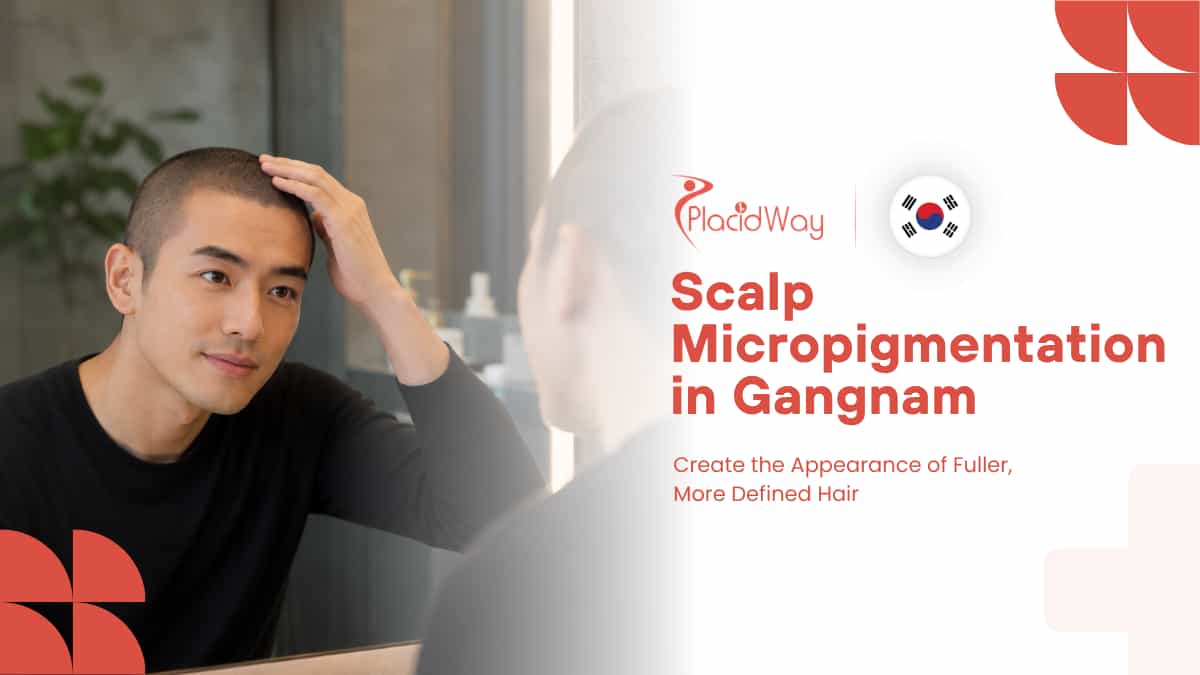
Scalp Micropigmentation (SMP) in Gangnam, South Korea, offers a non-surgical solution to enhance hair density appearance by seamlessly blending advanced K-Beauty micro-precision with medical-grade pigments. Let’s be honest—hats are great for a bad hair day, but they shouldn't be a permanent lifestyle choice just because your hairline is playing hide-and-seek. Patients from the United States, Japan, Singapore, Taiwan, and China are trading in their messy hair powders and flying straight to Seoul because South Korean practitioners treat scalp pigmentation like high-definition 3D art rather than a simple tattoo. This procedure captures the essence of the modern K-Beauty trend: achieving results so meticulously detailed and natural that people just assume you have great genetics.
Essential Insights About Your Gangnam SMP Experience
- Investment Range: Packages generally range from $300 for minor hairline touch-ups to $2,000 for extensive crown and density coverage.
- Safety & Accreditation: Clinics in Gangnam operate under stringent Korean Ministry of Food and Drug Safety (MFDS) guidelines, utilizing only approved, hypoallergenic medical-grade pigments.
- The K-Beauty Edge: South Korean technicians use ultra-fine nano-needles designed to replicate the exact diameter of Asian and Caucasian hair follicles for an undetectable finish.
- No Downtime Required: Unlike surgical transplants, SMP allows you to walk out of the clinic and immediately enjoy the vibrant cafes and shopping streets of Seoul.
- Customized Color Matching: Technicians mix bespoke pigment shades tailored to your natural hair color and skin undertone, preventing the dreaded "blue/green" fade over time.
- Multi-Session Perfection: True density is built through layers, meaning the package covers the initial session plus critical follow-up density building.
Why International Travelers Choose Gangnam for Scalp Micropigmentation
There is a very specific reason why the waiting rooms in Gangnam’s aesthetic clinics sound like an international airport lounge. Visitors from Japan, Taiwan, China, Singapore, and the US aren't just traveling for vacation; they are specifically seeking out the unrivaled precision of Korean semi-permanent makeup artistry. Scalp Micropigmentation here isn’t treated as a side service at a tattoo parlor; it’s a dedicated, clinical art form designed to restore confidence.
- Ultra-Fine Nano Needle Technology: Gangnam clinics utilize specialized needles that are significantly smaller than traditional tattoo needles, creating micro-dots that look exactly like natural hair follicles.
- The Masterful "Dotting" Technique: Instead of stamping uniform dots, Korean technicians use varying pressures and angles to mimic the natural, slightly irregular growth pattern of real hair.
- High Demand from Asian Markets: Patients from Japan, Taiwan, and Singapore travel here because Korean technicians have mastered the specific color theory required for darker Asian hair, avoiding the harsh, unnatural contrasts sometimes seen elsewhere.
- Cost-to-Quality Ratio for US Patients: Americans find that even with the cost of a round-trip flight to Seoul, they receive superior, hyper-realistic results for a fraction of the cost they would pay in New York or Los Angeles.
- A Culture of Perfectionism: In South Korea’s highly competitive aesthetic market, only clinics that deliver absolutely flawless, undetectable results survive, guaranteeing you the highest standard of care.
The K-Beauty Philosophy Behind Thicker-Looking Hair
You’ve likely heard of the "glass skin" trend, but K-Beauty has quietly revolutionized hair restoration, too. The modern Korean aesthetic philosophy dictates that beauty enhancements should be completely invisible to the naked eye. The goal isn’t to look like you've had a procedure done; the goal is to make your friends wonder if you've been eating more vitamins or using a really great new shampoo.
- The "Shadowing" Effect: K-Beauty SMP focuses on creating a soft, natural shadow on the scalp that reduces the contrast between the skin and the hair, making thinning areas look incredibly dense.
- Gradient Hairlines: Say goodbye to sharp, artificial-looking "helmet" hairlines. Korean technicians use a feathered gradient approach, making the front hairline look entirely organic and soft.
- Integration with Skincare: Scalp health is treated like facial skincare in Korea. SMP treatments often incorporate scalp soothing and barrier-repairing aftercare, aligning with K-Beauty's holistic approach.
- Gender-Inclusive Aesthetics: The trend has exploded among women dealing with part-line widening and postpartum hair loss, shifting SMP away from being an exclusively "male pattern baldness" solution.
- Semi-Permanent Evolution: Unlike old-school permanent ink that blurred over time, modern K-Beauty pigments are designed to fade gracefully, allowing you to adjust your hairline as your facial structure ages.
Global Cost Comparison for Scalp Micropigmentation
Please note: The pricing outlined below represents an estimated cost range based on industry averages. Your final package price in Gangnam is pending a personalized medical assessment, as the exact cost depends on the size of the treatment area and the number of sessions required to achieve your desired density.
| Country / Region | Estimated Cost Range (USD) | Typical Number of Sessions Included |
|---|---|---|
| United States | $2,500 - $5,000+ | 2 to 4 sessions |
| Singapore | $1,800 - $3,500 | 2 to 3 sessions |
| Japan | $2,000 - $4,000 | 2 to 3 sessions |
| Gangnam, South Korea | $300 - $2,000 | 1 to 3 sessions (Customized) |
Package Inclusions
- Comprehensive initial scalp and hair density consultation.
- Custom pigment color matching and hairline design session.
- Application of medical-grade topical numbing cream.
- The primary Scalp Micropigmentation session using nano-needle technology.
- Follow-up density-building sessions (number dependent on the specific package tier).
- Standard post-treatment aftercare kit (soothing gel, instructions).
- English translation services during clinical appointments.
Package Exclusions
- International flights and local airport transfers.
- Hotel accommodation in Seoul.
- Prescription medications (if required for rare skin sensitivities).
- Future touch-up sessions beyond the 12-month package window.
- Additional cosmetic or dermatology treatments not related to SMP.
- Travel insurance and medical complication insurance.
Documents Needed for Your Preliminary Virtual Assessment
Before you book that flight to Incheon International Airport, Gangnam clinics prefer to conduct a thorough virtual evaluation. This ensures that SMP is the right path for your specific type of hair loss and that accurate pricing can be established. Be prepared to gather the following:
- Clear, well-lit photographs: Front, top (crown), back, and both sides of your scalp under natural lighting, without the use of hair fibers or powders.
- Dermatology history: Records of any chronic scalp conditions such as psoriasis, severe seborrheic dermatitis, or active eczema.
- Previous hair restoration records: Details of any past hair transplant surgeries (FUE/FUT), as SMP is often used to camouflage surgical scars.
- Allergy documentation: A list of known allergies, particularly any historical reactions to tattoo inks, dyes, or topical anesthetics like lidocaine.
- Current medication list: Information regarding blood thinners, Accutane (isotretinoin), or topical hair loss treatments (like Minoxidil) you are currently using.
Navigating Seoul: Seamless Logistics for International Patients
Planning a medical trip can feel overwhelming, but traveling to Gangnam for an aesthetic procedure is a well-oiled machine. Patients from the US, Taiwan, Japan, and Singapore will find that Seoul’s medical tourism infrastructure is designed to make your stay as smooth as possible.
- Visa Requirements: Many countries, including the US, Japan, and Singapore, enjoy visa-free entry or require a simple K-ETA (Electronic Travel Authorization) for short-term stays in South Korea.
- Strategic Accommodation: Book your hotel in Gangnam-gu or Seocho-gu. Staying on subway Line 2 or Line 9 keeps you within walking distance of top-tier clinics and excellent dining.
- Session Timelines: A complete SMP package usually requires 2 to 3 sessions spaced a few days to a week apart. Plan for a 7 to 10-day trip to comfortably complete your primary and density-building sessions.
- Language Support: Most reputable aesthetic clinics in Gangnam cater to a global clientele and provide in-house English, Mandarin, and Japanese interpreters at no extra charge.
- Getting Around: Download the Kakao T app for easy taxi hailing and Naver Map for walking directions, as Google Maps has limited functionality in South Korea.
The Complex Science of Pigment Color Matching
One of the biggest fears people have about scalp pigmentation is ending up with a blue or green-tinted scalp. This happens when unqualified practitioners use cheap tattoo ink or misunderstand skin undertones. Gangnam clinics excel specifically because they understand the complex color theory required for diverse international patients.
- Carbon-Based Medical Pigments: Korean clinics use specialized, carbon-based pigments that do not break down into secondary colors (like blue or green) when exposed to UV light or the body's immune system.
- Understanding Asian Hair Undertones: For patients from China, Japan, and Taiwan, technicians mix warm undertones into black/brown pigments to counteract the natural cool tones of the scalp, ensuring a warm, realistic charcoal finish.
- Adapting for Lighter Hair: For Caucasian patients from the US with lighter or greying hair, customized dilution techniques are used to match ash-blonde, light brown, or silver follicles perfectly.
- Skin Type Considerations: Oily skin tends to blur pigments slightly over time. Korean specialists adjust their needle depth and pigment viscosity based on your specific sebum production levels.
- The Melanin Factor: Technicians meticulously evaluate how much natural melanin you have in your scalp to predict exactly how the pigment will heal and settle after the scabbing phase.
SMP vs. Hair Transplants: Making the Right Choice for Your Scalp
While both procedures aim to tackle hair loss, they serve entirely different purposes. Choosing between a hair transplant and SMP—or combining both—depends heavily on your age, the progression of your hair loss, and your lifestyle preferences.
- Creating the Illusion of Density: If you have thinning hair but don't want surgery, SMP darkens the scalp to remove the contrast between pale skin and dark hair, making your existing hair look twice as thick.
- The Buzz-Cut Aesthetic: For those with advanced baldness lacking enough donor hair for a transplant, SMP perfectly replicates the look of a freshly shaved "buzz cut."
- Scar Camouflage: Many patients travel to Seoul specifically to use SMP to hide linear FUT scars or the dot-like FUE scars from previous hair transplant surgeries.
- Immediate Gratification: While a hair transplant takes 9 to 12 months to show full results and involves significant downtime, SMP provides visible results immediately after the first session.
- The Perfect Combination: It isn’t always an either/or choice. Many top clinics recommend getting a hair transplant first to restore physical hair, followed by SMP a year later to maximize the visual density.
Post-Treatment Seoul Itinerary: What You Can and Cannot Do
One of the best parts about getting SMP in Gangnam is that you aren't confined to a hotel bed for recovery. However, protecting your newly pigmented scalp is crucial for the final result. Here is how to balance your post-treatment care with enjoying the vibrant city of Seoul.
- Skip the Jjimjilbangs (Korean Saunas): Heavy sweating and steam will push the pigment out of your skin before it heals. Avoid saunas, steam rooms, and intense gym workouts for at least 7 to 10 days.
- Embrace Cafe Culture: Since you can't sweat profusely, it’s the perfect time to explore Seoul’s world-famous cafe scene. Enjoying a matcha latte in Seongsu-dong is completely SMP-safe.
- Sun Protection is Non-Negotiable: UV rays are the biggest enemy of fresh pigment. Wear a loose-fitting, clean baseball cap or bucket hat when walking around the sunny streets of Myeongdong or Hongdae.
- Hold Off on the K-BBQ Smoke: While you can definitely eat Korean BBQ, try to avoid sitting directly in thick plumes of grill smoke for the first 48 hours, as you want to keep the micro-wounds clean and free from airborne grease.
- Gentle Washing Only: You will be advised not to wash your scalp for the first 3 to 4 days. After that, you must use a gentle, sulfate-free baby shampoo rather than harsh hotel toiletries.
Frequently Asked Questions by International Patients
1. Does Scalp Micropigmentation hurt?
Most patients describe the sensation as a light scratch or a mild, annoying vibration rather than outright pain. The scalp is less sensitive than other parts of the body, and clinics in Gangnam apply high-quality topical numbing creams before and during the procedure to keep you comfortable. It is significantly less painful than a traditional tattoo.
2. How long will the SMP results actually last?
SMP is considered semi-permanent. Depending on your immune system, sun exposure, and skin type (oily skin fades faster), the results generally last between 3 to 5 years before you might want a light touch-up to restore crispness and color vibrancy.
3. Do I have to shave my head completely to get this procedure?
Not necessarily. If you are getting SMP to create the "buzz-cut" look due to extensive baldness, you will need to keep your hair shaved. However, if you are undergoing a "density fill" to hide a thinning crown or a wide hair parting, you do not need to shave your head. The technician will simply part your existing hair and work between the follicles.
4. Will getting SMP damage my existing hair follicles?
No. The human hair follicle sits deep within the dermis layer of the skin. SMP needles only penetrate the uppermost layer (the upper dermis/epidermis) to deposit pigment. It does not go deep enough to injure your hair roots or prevent future hair growth.
5. Why can't I just get this done in one single session?
Building realistic hair density requires layering. In the first session, the technician lays down a foundational layer of lighter dots spaced apart to see how your skin heals and holds the pigment. The second and third sessions fill in the gaps with slightly darker pigments to create a realistic 3D shadowing effect. Doing it all at once risks the dots blurring together into an unnatural block of color.
6. Is it safe for individuals with sensitive skin or dermatitis?
Medical-grade pigments are hypoallergenic, making them safe for most skin types. However, if you have an active flare-up of psoriasis, severe seborrheic dermatitis, or eczema on your scalp, you must wait until the condition is fully managed and cleared before undergoing SMP, as working on inflamed skin can cause pigment rejection.
7. How soon after the procedure can I fly back home?
You can technically fly the very next day. The cabin pressure and dry air on airplanes do not negatively affect SMP. Just remember to wear a clean, loose hat in the airport to protect your scalp from bright lights and casual touches.
8. Can I use Minoxidil (Rogaine) after getting SMP?
You must pause the use of topical Minoxidil for at least a week before your session and abstain from using it for about two to three weeks post-treatment. Minoxidil contains alcohol and chemicals that can severely irritate healing skin and cause the fresh pigment to bleed or fade prematurely.
9. What makes the Korean K-Beauty technique better than western clinics?
It comes down to needle size, technique, and aesthetic philosophy. Korean technicians typically use ultra-nano needles for smaller, more precise dots that closely match Asian and fine Caucasian hair. Their aesthetic focus is on extreme subtlety—creating soft, feathered hairlines rather than the sharp, overly defined, artificial-looking hairlines sometimes popularized in western markets.
Ready to Redefine Your Confidence?
Taking the first step toward a fuller, natural-looking hairline is just a click away. Reach out to our specialized care team for a complimentary virtual assessment, and let us help you map out your personalized journey to Gangnam.
Request Your Free QuoteMedical Disclaimer: The information provided on this page is for general informational and educational purposes only and is not intended to substitute for professional medical advice, diagnosis, or treatment. Always consult with a qualified healthcare provider or board-certified practitioner regarding any medical condition or before deciding to undergo any aesthetic or medical procedure.
Verified Medical & Scientific References:
- National Center for Biotechnology Information (NCBI) - Scalp Micropigmentation: A Concealer for Hair and Scalp Deformities
- American Academy of Dermatology (AAD) - Hair Loss: Who gets and causes
- MedlinePlus (National Library of Medicine) - Hair Loss Information and Treatment Options
- PubMed - Scalp Micropigmentation: Indications, Outcomes, and Complications
- DermNet NZ - Understanding Alopecia and Non-Surgical Concealment Methods
.png)

.png)
.jpg)
.jpg)
.jpg)
.jpg)

.png)
.png)
.png)
.png)








Share this listing