
What treatment
20+ Most Frequently Asked Questions About Hair Transplantation
Find Clear and Concise Answers to Common Questions About Hair Transplantation
Trusted Medical Tourism Platform Since 2007

Scalp Micropigmentation in Gangnam, South Korea: Hairline and Density Illusion
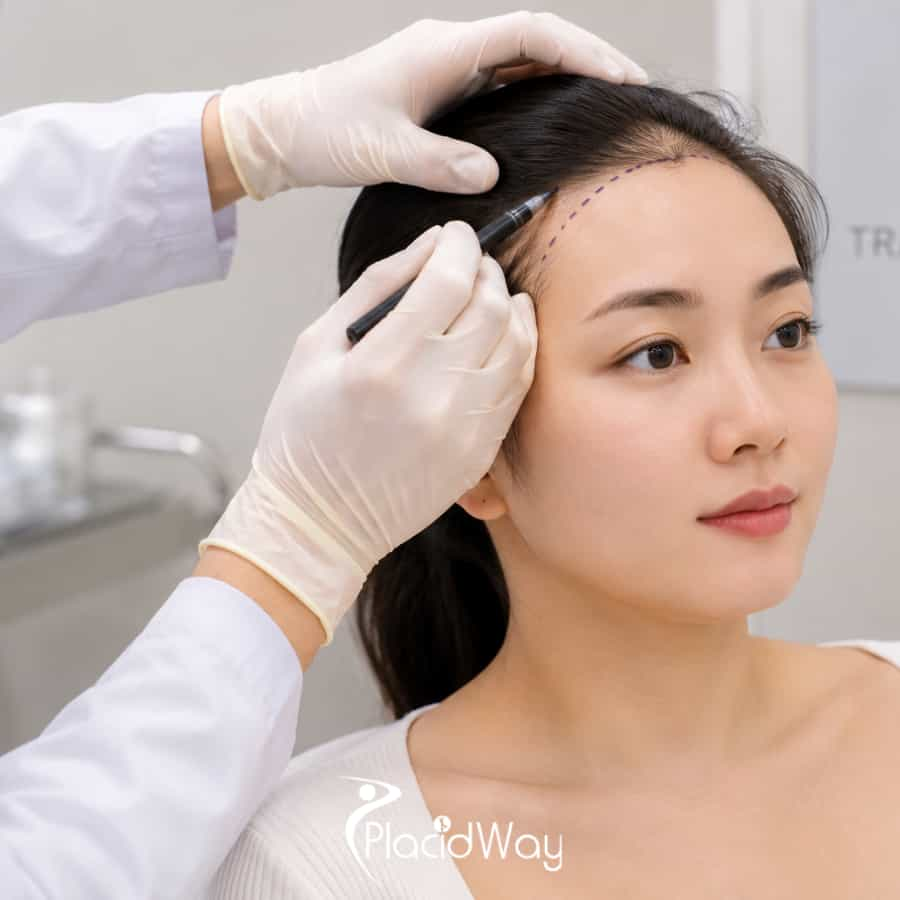
For years, the morning routine might have involved careful styling, specialized powders, or tinted sprays designed to hide the visible scalp. You learn exactly which bathroom lighting makes the thinning most obvious and which physical angles provide the best temporary camouflage. Most people fear that scalp micropigmentation in Gangnam will look artificial, like a painted-on helmet rather than a natural head of hair. The tension in making this decision lies in understanding the immense difference between traditional body art and a meticulous cosmetic illusion. Evaluating the Transition from Camouflage to Clinic The core question: Are you looking for a permanent physical hair replacement, or are you trying to strategically reduce the visible contrast on your scalp? The central fear: Will the ink shift color over time, leaving an unnatural blue or green shadow along the delicate hairline? The technical necessity: How does a provider precisely balance pigment composition, exact needle depth, and your natural facial structure? Defining the Micro-Illusion: Anatomy and Mechanism At its core, scalp micropigmentation is an exercise in applied human biology and visual trickery. When hair thins, the light-colored scalp tissue reflects light upward, creating a stark visual contrast against the remaining dark hair follicles. SMP deposits microscopic droplets of specialized pigment into the skin to mimic the appearance of a closely shaved hair shaft, neutralizing that reflective contrast. To achieve this seamlessly, the practitioner must navigate the highly specific microscopic architecture of scalp skin. The outermost layer, the epidermis, constantly sheds dead skin cells and replaces them. If the pigment is deposited exclusively in this superficial layer, the artificial dots will simply flake away and disappear within a matter of weeks. Navigating the Dermal Layers Conversely, beneath the epidermis lies the dermis, which contains blood vessels, nerves, and looser cellular connective tissue. If the needle penetrates too deeply into the lower reticular dermis, the pigment enters an area without strict structural boundaries. Once there, the ink spreads outward, causing the crisp micro-dot to blur into a muddy, larger shadow. The Precision of the Papillary Dermis Clinical histological studies demonstrate that the exact target for SMP is the upper papillary dermis, located approximately 1.5 millimeters beneath the surface. Hitting this specific depth requires immense manual precision and an intimate understanding of varying skin resistance, as the scalp's thickness changes significantly across the crown, temples, and frontal hairline. Diagnostic Fork: SMP vs. Surgical Hair Transplantation Many individuals exploring scalp micropigmentation initially set out to research hair transplant surgery. The assumption is often that surgery is the gold standard for hair restoration, and a cosmetic tattoo is merely a fallback option for those who cannot afford it. In reality, these two procedures serve entirely different diagnostic profiles, and comparing them directly requires understanding your own physiological limits. Hair transplantation requires a robust supply of healthy donor hair at the back of the head, which is surgically moved to the thinning areas. If you suffer from severe diffuse thinning across the entire scalp, you may simply lack the mathematical density required to cover the top of your head effectively. In these cases, moving a limited number of follicles only creates a sparse, unnatural distribution that fails to block light. Bypassing the Donor Limit SMP does not create new physical hairs, but it completely bypasses the reliance on a healthy donor supply. It is a purely optical intervention designed for environments where biological limits have been reached. For some advanced patients, the ideal solution involves combining both approaches, utilizing a smaller hair transplant to create physical texture, followed by SMP to create the underlying shadow of dense coverage. Decision Factor Follicular Unit Extraction (FUE) Scalp Micropigmentation (SMP) Physical Texture Provides actual biological hair shafts that can grow, be cut, and be styled. Provides zero physical texture; relies entirely on a two-dimensional optical illusion. Donor Dependency Strictly limited by the amount of healthy donor hair remaining on the back of the head. Requires no donor hair; suitable for completely depleted donor zones or extensive baldness. Clinical Impact Involves surgical incisions, local anesthesia, mild physical scarring, and cellular healing. Non-surgical micro-punctures, surface redness, and rapid epidermal recovery over a few days. Result Timeline Takes 9 to 12 months for transplanted follicles to fully mature and generate visible growth. Immediate visual difference after the first session, refining and softening over several weeks. Why Gangnam? The Medicalization of Tattooing When geography enters the decision, South Korea presents a uniquely regulated environment for scalp micropigmentation. Under South Korean law, tattooing is legally classified as a medical act, meaning it must be performed by or under the direct supervision of a licensed physician. This strict legal framework forces clinics in Gangnam to approach SMP—often labeled locally as Scalp Medical Tattooing (SMT)—with clinical rigor rather than just artistic interpretation. For an international patient, this regulatory environment completely changes the nature of the consultation. In many global markets, SMP is performed in commercial tattoo parlors or beauty salons by technicians with limited anatomical training. In Seoul, you are highly likely to consult with a dermatologist or a specialized hair restoration surgeon who integrates the tattoo process into a broader dermatological assessment of your scalp health. Advanced Mapping and Diagnosis These scalp micropigmentation clinics in Gangnam frequently utilize advanced diagnostic tools, such as trichoscopy, to accurately map the exact density, thickness, and health of your remaining hair follicles before a single drop of ink is placed. This medicalized approach minimizes the risks of improper depth penetration, deep tissue infections, and undiagnosed scalp conditions that could quietly interfere with the healing process. The Travel Continuity Challenge Traveling to Gangnam for SMP introduces a highly specific logistical hurdle: the procedure is never completed safely in a single day. A natural, high-quality result requires building the density slowly over time to assess how your skin absorbs the ink. The Multi-Session Reality: Standard medical protocols require two to four separate sessions, usually spaced seven to fourteen days apart, allowing the skin to heal completely between passes. Accommodation Strategy: International patients must either plan an extended stay in Seoul (typically two to three weeks) or prepare to take multiple international flights to complete the process properly. Remote Follow-Up: You must establish clearly how the treating South Korean physician will evaluate your fading and visual integration once you return to your home country. The Art of the Hairline: Age, Proportion, and Aesthetics The most critical moment of the entire process occurs before any pigment is applied: the manual design of the hairline. A common mistake among inexperienced practitioners is drawing a sharp, perfectly straight hairline that belongs on a teenager, rather than one that respects the natural, gradual recession of an adult face. A low, rigid, densely packed hairline immediately signals to observers that the hair is entirely artificial. Natural hairlines are inherently asymmetrical, slightly scattered, and intentionally faded at the very front edges. The most skilled clinical providers spend significant time sketching the boundaries, checking the mathematical proportions against your brow bone, and evaluating how the line shifts dynamically when you raise your eyebrows or smile. The ultimate goal is to frame the face naturally without drawing any undue attention to the border itself. The Risk of Low Initial Placement If the hairline is placed too low initially, it cannot easily be removed without resorting to laser tattoo removal, which introduces severe new risks of physical scarring and permanent skin discoloration. It is always safer to start with a conservative, slightly receded line during the first session. Additional density and lower borders can always be added in subsequent visits, but they cannot be seamlessly subtracted once placed. Matching Technical Execution to Your Diagnosis The Shaved Look (Full Alopecia): Requires comprehensive scalp coverage and a meticulously crafted hairline. The patient must commit to shaving their remaining natural hair every few days to match the two-dimensional length of the tattoo. Density Fill (Diffuse Thinning): Focuses primarily on the crown and mid-scalp. The provider deposits pigment between existing long hairs, reducing the glare of the underlying scalp without radically altering the natural front hairline. Scar Camouflage (Post-Surgical or Trauma): Specialized techniques are used to deposit ink into scar tissue, which often lacks normal blood flow and can absorb or reject pigment in highly unpredictable ways. Pigment Science and the Reality of Fading One of the most persistent fears surrounding SMP is the horror story of the "blue helmet," where an old scalp tattoo degrades over a decade into a muddy, unnatural shade of navy or green. This phenomenon is almost always the result of using traditional body tattoo inks, which are comprised of complex, multi-color formulas. When the human body breaks down the lighter colors in those heavy inks, the dominant blue or green structural undertones are left behind permanently. Medical-grade SMP pigments are formulated in a fundamentally different way. They are typically pure carbon-based or utilize specialized iron oxides designed specifically for the unique environment of the scalp. These proprietary pigments do not separate into secondary colors; instead, they slowly lighten over time, maintaining their strict grayscale integrity. The formulation is intentionally designed to be semi-permanent, acknowledging that the face and remaining hair will age. The Biological Response to Pigment The human immune system actively works against the pigment from the exact moment it is injected. Macrophage cells identify the ink particles as foreign bodies, engulfing them and slowly carrying them away through the lymphatic system. Combined with the degrading effects of ultraviolet sunlight, this natural biological process ensures that the micro-dots gradually soften and lighten over the course of several years. Fading is a Feature, Not a Flaw If SMP were truly permanent, it would look disastrous as you age. As your natural hair inevitably turns gray or white, a permanent pitch-black shadow would highlight the artificiality of the procedure. The gradual fading process allows your provider to adjust the color, soften the density, and refine the hairline during future touch-up sessions, ensuring the aesthetic evolves seamlessly alongside your chronological age. Navigating the Phased Healing Process Because SMP is explicitly built in deliberate layers, understanding the healing timeline helps manage the deep anxiety that often accompanies the days between clinic sessions. During the first appointment, the provider lays down a sparse, widely spaced foundational framework. Looking in the mirror immediately afterward, you may feel entirely underwhelmed or worry that the coverage is too light, but this conservative approach is a strictly necessary clinical precaution. Over the next three to five days, microscopic scabs will form over each tiny puncture mark on the scalp. As these scabs heal and naturally flake off, they take a very small amount of excess pigment with them. This leads to the well-known "ghosting" phase, where the dots may temporarily appear incredibly faint as the new epidermal skin layer heals entirely over the deposited ink. Building Three-Dimensional Density By the second and third sessions, the provider assesses exactly how your unique immune system and skin texture have retained that initial framework layer. They can then safely adjust the depth, pigment concentration, and dot spacing to build the necessary three-dimensional density. Attempting to recklessly rush this process into a single day drastically increases the risk of macrocystic blurring and wildly uneven color retention. The Week-by-Week Recovery Reality Days 1–3 (Inflammation): The scalp will appear red and slightly inflamed. The pigment dots will look darker and larger than their final healed state. Strict avoidance of running water, excessive sweating, and direct sunlight is absolutely required. Days 4–7 (Flaking): Mild flaking and itching begin. It is crucial not to scratch the scalp, as pulling a scab off prematurely can extract the settled pigment beneath it, leaving a noticeable blank space. Weeks 2–4 (Settling): The initial redness fully subsides, and the remaining pigment settles into its permanent shade in the upper dermis. The provider evaluates this settled state during the next scheduled clinic session. The Partner’s Perspective: Designing the Illusion Together If you are traveling to South Korea with a partner or companion, their outside perspective can be highly valuable during the initial consultation and design phase. Hair loss is deeply personal, and we often view our own hairlines with intense scrutiny, focusing heavily on microscopic details that no casual observer would ever notice. A partner can provide a grounded, objective view of what actually looks natural on your specific face. During the delicate hairline drafting process, a companion can help ensure that the chosen shape aligns with how you look in everyday life, rather than how you appear under harsh, direct clinical lighting. They can also assist closely with the practical aspects of recovery, such as carefully checking the top of your scalp for unexpected redness, swelling, or signs of irritation that you cannot easily see yourself. Logistical Support in Seoul Furthermore, managing the complex travel logistics in Gangnam—navigating between the hotel, the medical clinic, and local pharmacies—is often much easier with a dedicated companion. If you experience mild discomfort or simply want to rest in your room after a long pigmentation session, having someone to handle meals and transportation allows you to focus entirely on protecting your healing scalp during those critical first forty-eight hours. Making the Decision: Is the Illusion Enough? Deciding to pursue scalp micropigmentation requires accepting a fundamental, unchangeable truth: you are actively choosing to manage the appearance of hair loss rather than biologically reversing it. For those who deeply want the physical sensation of running their hands through thick hair, SMP will never truly satisfy that desire. If the main goal, however, is to look in the mirror and no longer see a shining scalp reflecting the bathroom light, the illusion can be incredibly effective. When speaking with medical clinics in Gangnam, your priority should be evaluating their clinical rigor over their marketing prowess. A beautiful portfolio of immediate post-procedure photos is a nice starting point, but it does not replace a detailed discussion about needle size, depth control, and long-term pigment safety. The most reputable providers will be entirely transparent about the limits of the procedure, clearly explaining what will happen if your natural hair loss progresses behind the tattooed zone. The Long-Term Maintenance Commitment Take the time to evaluate your own ongoing willingness to maintain the results after you return home. SMP requires a firm commitment to sun protection, occasional touch-ups every few years, and, if you are treating full baldness, a lifelong dedication to shaving your remaining hair to the exact appropriate length. If you are fully prepared for that specific routine, the procedure can offer a profound shift in daily confidence and cognitive freedom. Final Questions Before Committing Am I mentally prepared to transition away from hiding my scalp to maintaining a deliberate, closely-shaved aesthetic indefinitely? Does the South Korean clinic utilize advanced diagnostic mapping, such as trichoscopy, to evaluate my scalp before proceeding with ink? How will I practically manage the strict multi-session timeline if I am traveling internationally to Seoul? What is the explicit, agreed-upon plan if my natural hair continues to recede aggressively behind the newly pigmented area? By bringing these exact questions to your consultation, you shift from being a passive recipient of a cosmetic service to an informed patient managing a clinical outcome. Whether you ultimately decide to proceed in Gangnam, seek an alternative surgical treatment, or fully embrace your natural appearance without intervention, the decision should be rooted in a clear, grounded understanding of the reality of the illusion. Frequently Asked Questions Does scalp micropigmentation look fake in bright sunlight? When performed correctly in the upper papillary dermis, the micro-dots mimic the size and shadow of natural follicles, making the illusion highly convincing even in bright sunlight. However, if the pigment is deposited too deeply or densely, harsh lighting can expose a blocky, unnatural undertone, emphasizing the absolute need for skilled depth control. Will I still need to take hair loss medication after SMP? Scalp micropigmentation does not stop biological hair loss; it only camouflages the scalp visually. If you have diffuse thinning and rely on surrounding natural hair to blend with the pigment, your provider may recommend continuing medications to preserve your remaining density and prevent a visual gap from forming as your hairline recedes. Can SMP be removed if I change my mind? Because SMP uses different pigment formulations and is placed shallower than traditional body tattoos, it can typically be lightened or removed using standard Q-switched or picosecond lasers. However, laser removal involves multiple sessions, potential discomfort, and a severe risk of slight skin discoloration, meaning the procedure should initially be approached as a permanent commitment. Why do clinics in South Korea call it Scalp Medical Tattooing (SMT)? Under South Korean regulations, tattooing is legally classified as a medical procedure that must be performed or strictly supervised by licensed medical professionals. As a result, many clinics in Gangnam integrate the procedure into their dermatology or hair restoration departments, utilizing clinical terminology to properly reflect this regulated medical environment. How often will I need to return for touch-up sessions? The human immune system and exposure to ultraviolet light naturally degrade the pigment slowly over time. Most patients find that they need a brief touch-up session every two to four years to refresh the color and maintain the illusion of density, though individual fading rates vary heavily based on skin type and sun exposure. Explore Your Hair Restoration Options If you are considering scalp micropigmentation and want to understand how clinical providers in Seoul approach hairline design and density, reviewing your specific diagnosis is the next crucial step. Requesting more information allows you to compare protocols, evaluate continuity of care, and determine if this optical illusion aligns completely with your long-term aesthetic goals. Request Information References https://www.ncbi.nlm.nih.gov/pmc/articles/PMC4382144/ https://pubmed.ncbi.nlm.nih.gov/33181616/ https://www.ncbi.nlm.nih.gov/pmc/articles/PMC5447336/ https://pubmed.ncbi.nlm.nih.gov/24510009/ https://pubmed.ncbi.nlm.nih.gov/24054045/ https://pubmed.ncbi.nlm.nih.gov/38823292/ This content is for educational purposes only and is not medical advice. Diagnosis, treatment suitability, risks, recovery, travel timing and outcomes vary by individual and procedure. Decisions should be made with appropriately qualified healthcare professionals after an individual assessment. PlacidWay provides healthcare information and facilitation services and is not the treating physician, clinic or hospital....
Read more details

Unlock the Best Hair Transplantation Packages Just for You
Discover the ultimate Hair Transplantation packages designed to meet your health and wellness goals. Choose the perfect fit for your journey.
Price starting from $3,000
Hair Transplant Package in Gangnam, South Korea – Hair Restoration
PlacidWay Gangnam Medical Tourism
- Hair Transplantation
Gangnam, South Korea

Price starting from $3,900
Hair Transplant Package in Seoul, South Korea by VG Plastic Surgery
VG Plastic Surgery
- Cosmetic/Plastic Surgery
Seoul, South Korea

Price starting from $4,300
FUT Hair Transplant in Seoul, Korea by MOAMAN Hair Clinic
MOAMAN Hair Transplant Aesthetic Restoration Clinic
- Hair Transplantation
Seoul, South Korea
Hair Transplantation Solutions Near You: Explore Top Medical Centers
Discover how Hair Transplantation is transforming lives at leading medical centers in , . Dive into center profile, specialties, doctors, reviews, etc. and explore the best options tailored to your needs in this region.

PlacidWay Gangnam Medical Tourism
Gangnam, South Korea

MOAMAN Hair Transplant Aesthetic Restoration Clinic
Seoul, South Korea

JK Plastic Surgery Korea Aesthetic Surgery Clinic
Seoul, South Korea

VG Plastic Surgery
Seoul, South Korea








