
What Is an Aqua Peel in Gangnam?
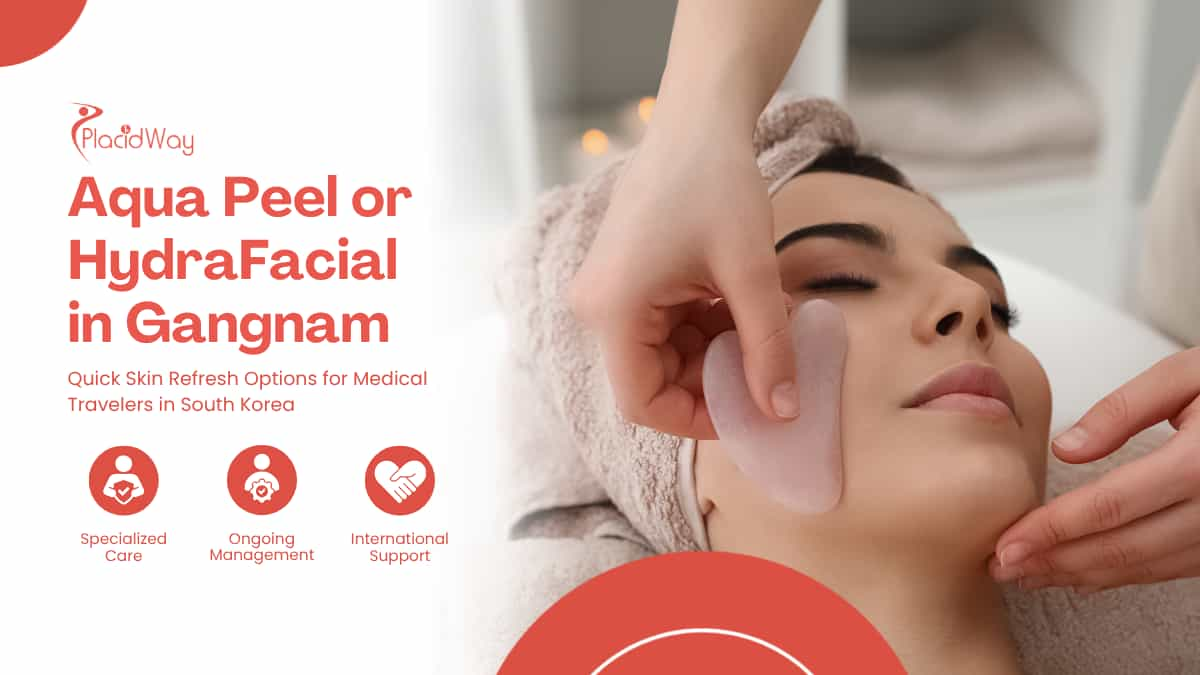
After a long-haul flight, abrupt changes in humidity, and the disruption of a standard travel schedule, skin rarely looks or feels its best. Many visitors arrive in South Korea hoping to tap into the country's famous aesthetic dermatology culture, seeking the clear, intensely hydrated complexion often associated with Seoul. However, stepping into a busy, fast-paced clinic in the Gangnam district presents an immediate challenge: the treatment menus are vast, highly technical, and completely overwhelming for a first-time patient.
For travelers seeking a noticeable refresh without significant downtime, the choice often comes down to two popular options: an Aqua Peel or HydraFacial. Aqua Peel in Gangnam is a common Korean clinic treatment, while HydraFacial offers a globally recognized alternative. Understanding how each treatment works can help you choose the right option for your itinerary.
The Impact of Travel on the Skin Barrier
Traveling to South Korea typically involves long-haul aviation where airplane cabin humidity can drop to extremely arid levels. This artificial environment rapidly accelerates transepidermal water loss, a physiological process where the skin’s natural moisture evaporates into the dry surrounding air. As the skin loses its essential water content, the protective barrier function becomes compromised, leading to a microscopic buildup of dead skin cells as the body desperately tries to defend its underlying tissue.
By the time travelers arrive in Gangnam and settle into their accommodations, they are often dealing with a frustrating combination of severe dehydration and an overproduction of surface sebum, which the skin pumps out to compensate for the dryness. Attempting to fix this sudden imbalance with heavy hotel moisturizers usually only traps the dead cells and oxidized sebum, leading to breakouts and a dull texture. This specific cascade of travel-induced skin stress is exactly why seeking out a professional, medical-grade exfoliation treatment becomes a high priority for so many international visitors.
- Transepidermal Water Loss (TEWL): The rapid depletion of moisture from the outermost skin layers due to dry airplane cabins, leaving the face feeling tight and structurally fragile.
- Compensatory Sebum Production: The sebaceous glands overreact to the dry environment by producing excess oil, which becomes trapped under dehydrated dead skin cells.
- Micro-pollution Accumulation: Exposure to new urban environments, including seasonal fine dust (PM2.5) in Seoul, which settles deeply into the pores and accelerates free radical damage.
- Circadian Disruption: Jet lag interrupts the skin's natural overnight regenerative cycle, significantly slowing down the cellular turnover required for a glowing, healthy complexion.
What is Hydradermabrasion? The Shift from Scrubbing to Suction
Historically, dermatological exfoliation relied heavily on aggressive mechanical scrubbing to smooth the skin's surface. Older microdermabrasion techniques utilized a wand coated in crushed diamond dust or a high-pressure stream of aluminum oxide crystals to physically sand away the top layer of dead skin. While effective for some resilient skin types, this dry, abrasive approach often triggered unwanted inflammation, microscopic epidermal tears, and post-procedure redness—which is the absolute last thing a traveler wants when they have a full itinerary of sightseeing and photography.
Hydradermabrasion represents a major, sophisticated evolutionary step in aesthetic clinical technology. Instead of relying on dry friction, it uses fluid dynamics and localized vacuum pressure to achieve a deeper but substantially gentler cleanse. The motorized handpiece acts as a tightly controlled closed-loop system; it shoots a targeted stream of medicated liquid onto the skin while simultaneously vacuuming it back up along with the loosened debris. This constant fluid buffer softens the stratum corneum, allowing the suction to extract hardened sebum from the pores without dragging, pulling, or scratching the delicate facial tissue.
Clinical Evidence: Epidermal Changes and Hydradermabrasion
The structural benefits of hydradermabrasion are well-documented in peer-reviewed dermatological literature. A 2024 study utilizing Line-Field Confocal Optical Coherence Tomography (LC-OCT)—an advanced, non-invasive imaging technique—demonstrated that hydradermabrasion causes immediate, measurable improvements to the skin's anatomy.
Researchers noted an initial healthy decrease in the thickness of the dead cellular layer, followed by an overall improvement in the homogenization of the stratum corneum and a visible reduction in epidermal undulations. Furthermore, earlier foundational studies emphasize that the pneumatic serum application actively increases the skin's polyphenolic antioxidant levels, validating it as a true nonablative rejuvenation therapy.
The Biochemical Engine: AHAs and BHAs
The mechanical suction of a hydradermabrasion device is only half of the functional equation. The real clinical efficacy comes from the highly specific chemical solutions that are pumped through the device and onto the skin. These chemical exfoliants do the heavy lifting of breaking down cellular debris before the vacuum ever attempts to extract it, ensuring the process remains frictionless.
- Alpha-Hydroxy Acids (AHAs): Ingredients like lactic acid and glycolic acid are water-soluble molecules that operate entirely on the skin's surface. They chemically dissolve the desmosomes—the microscopic bonds that hold dull, dead skin cells together—allowing them to be swept away easily to reveal a brighter tone.
- Beta-Hydroxy Acids (BHAs): Salicylic acid is the most common BHA utilized in these treatments and is unique because it is oil-soluble. This critical feature allows the molecule to bypass the skin's surface lipids and dive directly into the sebaceous glands to break down hardened sebum and stubborn blackheads.
- Nutrient Infusion: Once the pores are completely cleared of physical and chemical blockages, the skin becomes highly receptive to topical nutrients. The final step of the protocol floods the newly cleared tissue with concentrated hyaluronic acid, firming peptides, and calming botanical extracts to lock in moisture.
The Gangnam Clinic Experience: Efficiency and Technology
For a traveler experiencing a South Korean dermatology clinic for the first time, the operational style and atmosphere can be quite surprising. Western spa facials generally focus heavily on relaxation, featuring prolonged manual massages, dim ambient lighting, and a slow, leisurely pace. In stark contrast, dermatology clinics in Gangnam operate on a highly streamlined medical-aesthetic model that prioritizes clinical safety, advanced technological precision, and extreme time efficiency.
When you walk into a reputable clinic in Seoul, you are entering an environment explicitly designed for busy local professionals and tightly scheduled international visitors. You will typically consult with an English-speaking coordinator or a board-certified dermatologist who will assess your current barrier health and recommend the appropriate device-driven protocol. The treatment itself is performed in a brilliantly lit, pristine clinical room, and the provider's focus is entirely on delivering active ingredients into the skin as effectively as possible so that you can immediately return to your day.
Traveler Reality: The Self-Cleansing Powder Room
One highly unique aspect of the Gangnam clinic experience is the widespread use of the self-cleansing room. Unlike a traditional Western spa where an aesthetician removes your makeup and sunscreen while you recline on the treatment bed, many Korean clinics feature a dedicated, beautifully appointed powder room.
Patients are expected to wash their own faces using a selection of clinic-provided, medical-grade cleansers, safely store their belongings in a digital locker, and proceed to the treatment room with a bare face. This method drastically streamlines the clinic's workflow and ensures that your paid clinical time is spent entirely on the active hydradermabrasion procedure itself, rather than basic makeup removal.
The Local Staple: Understanding the Aqua Peel
The Aqua Peel is deeply and permanently ingrained in South Korean daily skincare culture. It is offered in nearly every dermatology and aesthetic clinic across the country, from ultra-luxurious centers in Cheongdam to fast-paced, high-volume clinics near Gangnam Station. Because the underlying technology is not strictly tied to a single international patent, these clinics utilize various high-quality hydradermabrasion devices manufactured by specialized domestic Korean medical companies.
This lack of exclusive brand-name licensing is precisely why the Aqua Peel remains so financially accessible for both locals and tourists. The exfoliating solutions used during the treatment are formulated by advanced Korean cosmetic chemistry laboratories, utilizing the exact same core AHA and BHA scientific principles. For local Seoul residents, the Aqua Peel is rarely viewed as a special luxury event; rather, it is a routine, essential maintenance step performed every few weeks to manage urban pollution buildup and optimally prepare the skin for heavier interventions like ultrasound lifting.
The Global Standard: Understanding the HydraFacial
While the Aqua Peel perfectly represents local Korean efficiency, the HydraFacial represents strict, unwavering global standardization. The HydraFacial Company is a specific corporate entity that holds international patents on its highly recognizable "Vortex-Fusion" tip technology. When a clinic in Gangnam proudly offers a HydraFacial, they have imported the exact same mechanical device and the exact same single-use proprietary serum vials that are utilized by top dermatologists in Beverly Hills, London, or Dubai.
The powerful appeal of the HydraFacial for an anxious traveler lies in its absolute, undeniable predictability. If you have a highly reactive or sensitive skin barrier, and you already know for a fact that your face tolerates the HydraFacial's specific patented blend of glucosamine, lactic acid, and proprietary antioxidants, you can confidently book the treatment abroad without fear of an unexpected reaction. You are knowingly paying a financial premium for the profound peace of mind that the clinical protocol will not deviate in the slightest from what you have safely experienced back home.
| Feature Focus | The Aqua Peel | The HydraFacial |
|---|---|---|
| Technology Source | Various domestic South Korean medical device manufacturers. | One patented, globally standardized device from The HydraFacial Company. |
| Tip Design | Standard rotating or radial suction tips optimized for fluid delivery. | Patented "Vortex-Fusion" spiral tip designed to create a specific fluid vortex. |
| Serum Formulations | Customizable AHA/BHA blends sourced from Korean cosmetic labs. | Proprietary, pre-packaged vials (Activ-4™, Beta-HD™, Antiox+™). |
| Predictability | Results depend slightly on the specific clinic's chosen machine and serum brand. | Identical experience and formula regardless of what country you are in. |
Deconstructing the Price Range: $150 to $500
When researching aesthetic clinics in Gangnam, international patients will quickly notice a surprisingly wide pricing spectrum for hydradermabrasion services. The lower end of this scale, hovering around $150, typically covers a standard, standalone Aqua Peel procedure without any additional clinical bells and whistles. However, as the quoted price moves closer to the $500 mark, it often indicates that the treatment has been substantially upgraded into a comprehensive, multi-step dermatological package, or that the patient has specifically chosen the premium-priced HydraFacial.
| Country | Typical Price (USD) | Why Patients Travel From Here |
|---|---|---|
| South Korea (Gangnam) | $150 – $500 | The baseline price referenced throughout this article. |
| Japan | $200 – $650 | A common single-session add-on for Japanese patients already in Korea for other dermatology or cosmetic treatments. |
| China | $180 – $600 | Widely available in China at a moderate premium over Korea's clinic pricing. |
| Taiwan | $180 – $580 | Popular as a quick refresh treatment among Taiwanese short-stay medical travelers. |
Figures are general market ranges compiled from multiple clinics and medical-travel sources as of 2026; individual quotes vary by clinic, technique, and case complexity.
Clinics in South Korea rarely prefer to perform just the basic suction step and immediately send a patient home. They culturally and clinically excel at "stacking" complementary treatments to dramatically calm the skin and maximize the final glowing effect. If you are quoted a price in the higher range, you should absolutely ask the clinic coordinator or your translator exactly what additional restorative modalities are included in the session before agreeing to the cost.
- LDM (Local Dynamic Micro-massage): A highly popular dual-frequency ultrasound device that visibly reduces inflammation, stimulates deep collagen production, and painlessly pushes hydrating serums deeper into the dermis than topical application alone.
- Cryocell Therapy: An advanced electromigration device that utilizes freezing temperatures to rapidly soothe freshly exfoliated skin, constrict superficial blood vessels to reduce redness, and securely lock in the active ampoules applied after the peeling step.
- LED Phototherapy: The application of medical-grade light panels that utilize specific, targeted wavelengths—usually blue light to target acne-causing bacteria or red light to speed up cellular healing—while the patient rests comfortably on the treatment bed.
- Modeling Masks: The definitive, highly anticipated end to almost every Korean clinical facial treatment. This thick, algae-based powder is mixed with water to form a dense, rubbery paste that drastically cools the face, creating an occlusive barrier that forces all underlying serums deep into the skin.
The Travel Companion: Navigating the Clinic Together
If you are traveling through Seoul with a partner, friend, or family member who is not receiving a major surgical procedure, scheduling a hydradermabrasion appointment is incredibly easy to seamlessly accommodate. Because the treatment involves absolutely zero sedation, relies purely on topical solutions, and requires no physical recovery support whatsoever, your companion's day will not be heavily disrupted or burdened by your clinic visit.
Most major dermatology clinics operating in Gangnam feature large, highly comfortable waiting lounges equipped with high-speed Wi-Fi, complimentary beverages, and charging stations. Because an Aqua Peel or HydraFacial typically takes well under an hour from start to finish, your companion can comfortably relax in the lobby and plan the rest of the day's itinerary. Alternatively, because these specific treatments are strictly non-invasive and relatively quick, many travel companions end up spontaneously booking a session for themselves once they observe the affordable local pricing and the minimal time commitment required.
Companion Planning Questions
- Can we book treatments at the same time? Yes, volume-based clinics in Gangnam typically have multiple devices and practitioners available, making simultaneous companion bookings very common if requested in advance.
- Is there any immediate post-care required from the companion? None at all. The patient will walk out of the clinic fully capable of navigating the subway, carrying bags, and continuing with normal travel activities immediately.
- Should the companion hold onto passports and payment? The patient will have access to a secure digital locker for their belongings during the treatment, so the companion does not need to act as a secure bag-holder.
Post-Treatment Reality: Protecting the Results in Seoul
One of the greatest, most celebrated benefits of any form of hydradermabrasion is the complete lack of clinical downtime required. You typically will not experience the severe peeling, crusting scabs, or intense persistent redness that is frequently associated with more aggressive dermatological lasers. You can apply your normal makeup immediately in the clinic's powder room and confidently walk right out the front door to a crowded cafe or a busy shopping mall without drawing any unusual attention.
However, it is crucial to remember that your skin barrier is temporarily thinner and devoid of its usual protective layer of dead cells, which means it requires careful, deliberate management as you navigate the city. The two biggest environmental threats to your freshly exfoliated, vulnerable skin in Seoul are direct ultraviolet light exposure and intense urban pollution. Because your pores have just been deeply cleaned and chemically exfoliated, exposing them to city smog without a robust protective layer of skincare can easily lead to immediate congestion and irritation, entirely defeating the purpose of your appointment.
Travel Precaution: Sun Exposure and Active Ingredients
AHAs and BHAs inherently increase the skin's photosensitivity. If your immediate travel itinerary involves visiting the expansive Gyeongbokgung Palace, walking through the sunlit Bukchon Hanok Village, or spending several hours exploring outdoor markets, high-quality sun protection is strictly non-negotiable.
You must apply a broad-spectrum SPF 30 or higher and diligently reapply it throughout the day. Furthermore, you must purposefully pause any prescription retinoids, acne-focused benzoyl peroxide, or strong vitamin C serums stored in your travel toiletry bag for at least three to five days post-treatment. Applying these aggressive actives over newly exfoliated skin can trigger chemical burns or severe barrier irritation.
Making the Final Decision
Choosing between an Aqua Peel and a HydraFacial during your visit to Seoul ultimately comes down to an honest assessment of your personal travel priorities and your existing familiarity with the treatments. Neither option is inherently superior or clinically deficient; they simply cater to entirely different preferences regarding budget flexibility, outcome predictability, and the desire for a localized cultural experience. Both systems brilliantly utilize the proven dermatological mechanism of hydradermabrasion to swiftly clear travel congestion and actively infuse much-needed moisture back into a depleted barrier.
If your primary priority is experiencing authentic South Korean clinical culture, effectively stretching your travel budget, and enjoying customized add-ons like modeling masks and soothing ultrasound therapy, the Aqua Peel is an exceptionally smart choice. It reliably delivers the essential mechanical and chemical exfoliation required to rapidly clear travel-congested skin. If, however, you deeply value global brand consistency, have a history of highly reactive skin, and want the exact patented serum infusions you implicitly trust from your home country, investing the extra money in a HydraFacial provides unwavering certainty. Either way, thoughtfully integrating this low-risk, high-reward aesthetic treatment into your Gangnam itinerary is a highly effective method to restore your skin's health and secure a luminous result for the remainder of your travels.
Frequently Asked Questions
How long do the results of an Aqua Peel or HydraFacial last?
The immediate glow and intense hydration typically last for 5 to 7 days, making it ideal for event preparation or refreshing travel-weary skin. Long-term improvements in pore congestion and texture require consistent treatments every 3 to 4 weeks.
Can I fly immediately after receiving hydradermabrasion?
Yes, it is entirely safe to board a flight immediately after either treatment. However, because airplane cabins are extremely dry, you should apply a heavy ceramide-based moisturizer or sleep mask during the flight to lock in the serums infused during your clinic visit.
Will these treatments help with active, inflamed acne?
Hydradermabrasion is excellent for clearing blackheads and mild congestion. However, if you have severe, active cystic acne, the mechanical suction may irritate the inflamed lesions. A dermatologist in Gangnam will evaluate your skin and may suggest a milder chemical peel or laser therapy instead.
Is an Aqua Peel painful compared to traditional extractions?
No, it is significantly less painful. Traditional manual extractions involve forcefully pinching the skin, whereas the Aqua Peel relies on chemical softeners and gentle, continuous fluid vacuum pressure. Most patients describe it as a light scratching or tugging sensation.
Do I need to stop using retinol before my clinic appointment in Seoul?
Yes, it is highly recommended to pause any prescription retinoids or strong over-the-counter retinol serums prior to your clinic appointment. Stopping these actives at least three to five days before your hydradermabrasion treatment helps prevent excessive barrier sensitivity and potential irritation.
Ready to Plan Your Skincare Journey?
Connect with dermatology clinics in Gangnam to clarify treatment protocols, compare package options, and find the right fit for your travel itinerary.
Request InformationReferences
https://pubmed.ncbi.nlm.nih.gov/38558475/
https://pubmed.ncbi.nlm.nih.gov/36569524/
https://pubmed.ncbi.nlm.nih.gov/19146604/
This content is for educational purposes only and is not medical advice. Diagnosis, treatment suitability, risks, recovery, travel timing and outcomes vary by individual and procedure. Decisions should be made with appropriately qualified healthcare professionals after an individual assessment. PlacidWay provides healthcare information and facilitation services and is not the treating physician, clinic or hospital.












Share this listing