
What Are the Main Lifting and Tightening Options in Gangnam?
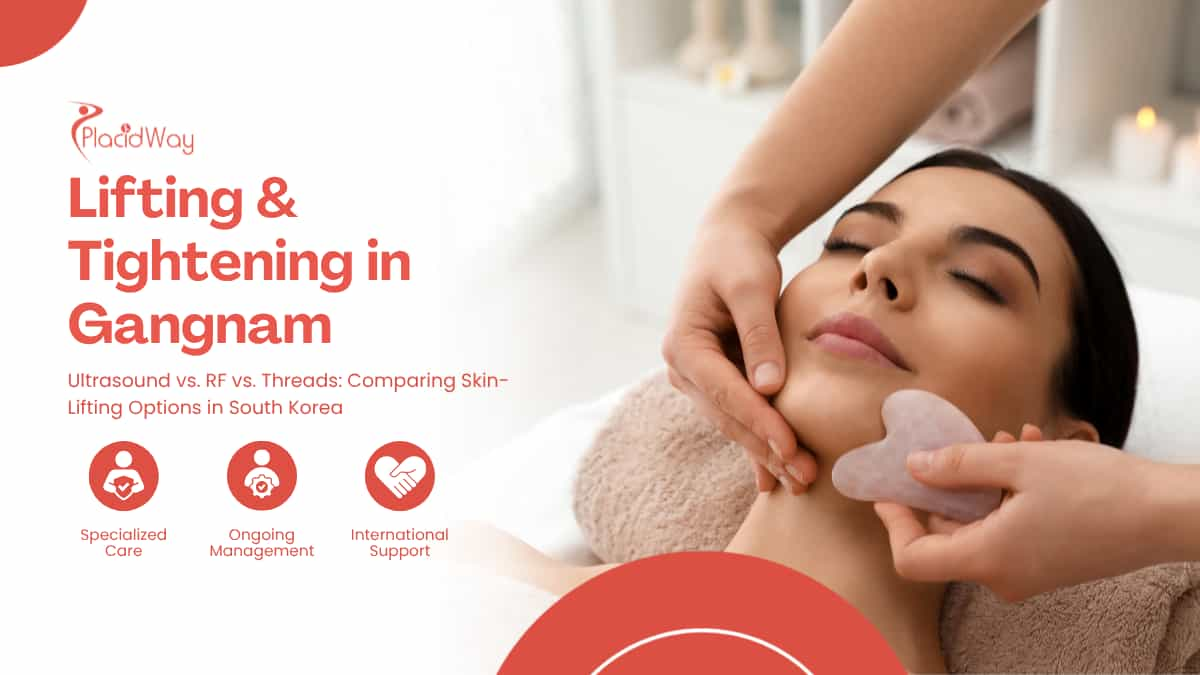
Most people do not wake up one morning and decide they need a medical intervention for facial aging. The shift usually happens quietly in front of a mirror, when you pull the skin near your jawline back just a quarter of an inch and realize that the issue is no longer about fine lines or surface texture. The real concern has become a matter of gravity and structural descent.
Topical skincare eventually reaches its biological limit, while a surgical facelift may feel too aggressive. This is where the search for lifting and tightening in Gangnam begins, often revealing a complex menu of energy devices, ultrasound treatments, radiofrequency, and threads that promise lifting without a scalpel.
The Paradox of Aesthetic Choice
You are likely looking for a way to anchor tissue that feels like it is slipping, or to tighten skin that feels suddenly thin and crepey. You want to look rested and structurally supported, not stretched or artificially inflated. But as you begin researching the options, the boundaries between lasers, ultrasound, radiofrequency, and threads begin to blur into an incomprehensible medical alphabet soup.
The central challenge is no longer finding a clinic that offers these treatments, but figuring out which technology actually matches the realities of your anatomy. Choosing the wrong modality does not just waste money; it can lead to unintended volume loss, visible internal scarring, or an unnatural, pulled appearance that is incredibly difficult to correct once the damage is done.
Evidence Context: The Limits of Non-Surgical Lifting
Medical evidence consistently shows that non-surgical tightening devices produce mild to moderate improvements rather than surgical-level transformations. While they can effectively stimulate collagen and improve skin quality, no energy device or dissolving thread can remove excess skin or replicate the long-term anatomical repositioning of a surgical facelift.
The Architecture of Facial Aging
To understand why ultrasound, radiofrequency, and threads produce entirely different results, you first have to understand what is failing beneath the surface of your skin. Facial aging is not a superficial process; it is a complex, multidimensional structural collapse that involves bone resorption, fat pad migration, and ligament weakening. Treating the surface without addressing the structure is akin to painting a house with a crumbling foundation.
Beneath the visible epidermis lies the dermis, the thick layer that houses your collagen and elastin, which gives the skin its bounce and resilience. Deeper still is a critical fibrous network called the Superficial Musculoaponeurotic System (SMAS), which connects your facial muscles to your skin and keeps deep fat pads suspended in their proper, youthful positions.
- The Epidermis and Dermis: These superficial layers thin over time, leading to crepey texture, fine lines, and a loss of surface elasticity.
- The Superficial and Deep Fat Pads: Facial fat naturally deflates and migrates downward with age, creating hollows under the eyes while forming heavy jowls along the jawline.
- The SMAS Layer: This fascial layer loses its tensile strength, causing the entire lower face to droop and the neck to lose its sharp contour.
When you evaluate non-surgical treatments, you are essentially deciding which of these distinct layers requires intervention. Modalities are engineered to reach specific depths, and applying a surface treatment to a deep structural problem will inevitably lead to disappointment. The success of a procedure depends entirely on matching the technology's depth to your specific pattern of anatomical aging.
Ultrasound (HIFU): Anchoring the Deep Tissue
High-Intensity Focused Ultrasound (HIFU) is the technology most frequently recommended when the primary concern is structural sagging, such as the formation of jowls or a dropping brow line. Devices in this category, including Ultherapy and Korean alternatives like Shurink or Ultraformer, are designed to bypass the surface of the skin entirely. They target the deeper architecture where real lifting needs to occur.
Instead of applying bulk heat to the outside, HIFU delivers concentrated pulses of ultrasound energy directly into the SMAS layer and the lower dermis. This highly focused energy creates tiny, controlled micro-injuries at specific depths—typically 1.5mm, 3.0mm, and 4.5mm. Your body responds to these perceived thermal wounds by contracting the tissue and initiating a months-long cascade of new collagen production.
The Sensation and the Structural Trade-Offs
Because HIFU targets the deeper fascial planes near the bone, the treatment is notorious for causing a distinct, deep aching sensation during the procedure. In Gangnam, clinics manage this discomfort with a variety of protocols ranging from topical numbing creams and oral analgesics to light intravenous sedation, depending on the clinic's philosophy and the patient's anxiety level.
The most critical trade-off with ultrasound technology is that it is highly operator-dependent and carries a specific risk if performed aggressively. If the ultrasound energy is delivered too deeply or at inappropriately high settings, it can inadvertently target and damage superficial facial fat. For patients already experiencing age-related volume loss, this can lead to an unwanted hollowing effect that defeats the purpose of the treatment.
The Role of Visualization in Ultrasound
A major distinction between devices is whether they offer real-time visualization. Ultherapy allows the provider to see the layers of tissue on a screen to ensure the energy hits the SMAS and avoids the bone or fat pads. Many alternative HIFU devices operate "blind," relying entirely on the practitioner's anatomical knowledge and tactile feedback to gauge the depth.
Radiofrequency (RF): Shrink-Wrapping the Dermis
While ultrasound goes deep to anchor the underlying structure, radiofrequency (RF) operates closer to the surface to address the quality, bounce, and tightness of the skin itself. Devices like Thermage FLX, or highly popular Korean equivalents such as Oligio, utilize monopolar RF energy to deliver uniform, volumetric heat directly into the dermal layer. This approach focuses on tissue refinement rather than deep fascial lifting.
- Volumetric Heating: RF delivers sustained thermal energy that essentially shrink-wraps existing collagen fibers, providing a subtle, immediate tightening effect.
- Collagen Remodeling: The controlled thermal trauma triggers a long-term healing response that thickens the skin and smooths out fine crepey lines over three to six months.
Because HIFU and RF target entirely different layers, they are not mutually exclusive; they simply solve different halves of the aging equation. The success of an RF treatment lies in its ability to dramatically improve surface elasticity rather than reposition falling fat pads.
Choosing RF Over Ultrasound
Radiofrequency is often the preferred choice for individuals who have thin, fragile skin that has lost its snap, but who do not yet suffer from heavy structural descent or pronounced jowling. It is particularly valued for treating delicate areas like the upper eyelids, the neck, and the cheeks, as it focuses on collagen remodeling without the same risk of melting underlying fat pads associated with deep ultrasound.
The physical sensation of RF is entirely different from the deep bone ache of HIFU. Patients typically describe it as intense, brief bursts of heat on the surface of the skin, followed immediately by a cooling cryogen spray from the device tip to protect the epidermis.
Thread Lifting: The Physical Scaffold
If ultrasound and radiofrequency rely on your body's delayed biological response to create a gradual lift, thread lifting provides immediate, mechanical repositioning of the facial tissue. This minimally invasive procedure involves inserting specialized, dissolving sutures underneath the skin to physically grab sagging fat pads and pull them upward against gravity.
These threads are typically manufactured from biocompatible materials like Polydioxanone (PDO), Poly-L-Lactic Acid (PLLA), or Polycaprolactone (PCL), which eventually break down and are safely absorbed by the body. The lifting threads feature microscopic barbs, cogs, or cones that hook into the subcutaneous tissue, acting as a temporary structural scaffold while your body responds by building fibrous collagen along the path of the thread.
The Reality of the Immediate Recovery
The primary appeal of a thread lift is instant gratification; you walk out of the clinic with visibly elevated cheeks and a sharper jawline. However, this immediate structural change comes with a heavily restrictive recovery period compared to non-invasive energy devices.
- Tension and Tenderness: The face often feels incredibly tight and fragile for two to three weeks, making it painful to chew tough foods or laugh forcefully.
- Visible Dimpling: Patients commonly experience temporary skin dimpling, puckering at the insertion sites, or slight asymmetry as the tissue settles over the threads.
- Sleep Constraints: You must strictly modify your sleeping position, usually remaining on your back, to avoid crushing or displacing the threads on one side of your face.
The Question of Longevity
The most common source of dissatisfaction with thread lifts is their fleeting duration. Clinical studies indicate that the mechanical lifting effect is notoriously short-lived, often fading entirely within six to twelve months as the sutures dissolve and gravity takes over again. While some residual collagen remains, the dramatic initial lift cannot be permanently sustained by dissolving threads alone.
The Modality Matrix: Comparing the Interventions
Making an informed decision requires looking past clinic marketing to compare exactly how these treatments interact with your anatomy. Understanding the differences in target depth, mechanism of action, and expected downtime is essential before committing to any non-surgical intervention.
| Modality | Primary Mechanism | Target Layer | Visual Results | Primary Risk |
|---|---|---|---|---|
| Ultrasound (HIFU) Ultherapy, Shurink |
Thermal micro-wounds | Deep SMAS & fascia | Gradual (3-6 months) | Unwanted fat loss/hollowing |
| Radiofrequency (RF) Thermage, Oligio |
Bulk tissue heating | Superficial & deep dermis | Gradual (3-6 months) | Surface burns or blistering |
| Thread Lift PDO, PLLA, PCL |
Mechanical tissue suspension | Subcutaneous fat layer | Immediate (fades quickly) | Dimpling, extrusion, migration |
This structural matrix highlights why single treatments often fail to meet high expectations. If you have deep jowling and choose radiofrequency, your skin may improve in texture, but the jowls will remain. Conversely, if you have thin, crepey skin and choose a heavy thread lift, the threads may visibly show through the skin, causing severe aesthetic distress.
The Reality of Gangnam: Layering and Consultation
South Korea, and specifically the Gangnam district in Seoul, frequently enters the aesthetic research phase for a very distinct reason. It is not simply that treatments are widely available there, but that the local medical culture approaches aging differently. In many Western clinics, high-end energy devices are treated as standalone, expensive events performed once a year or less.
In Seoul, these technologies are generally viewed as routine maintenance tools, meant to be aggressively layered, combined, and repeated as part of a continuous skin-management protocol. The sheer density of technology in Gangnam means you have access to almost every major global device, alongside domestic Korean equivalents, operating within a highly competitive ecosystem.
The High-Speed Consultation
When you walk into a high-volume Gangnam clinic, the pace of the consultation can be jarring. Facilities operate with immense efficiency, often relying heavily on in-house medical translators to bridge the communication gap. Because the aesthetic philosophy favors multimodal treatments, it is rare to be recommended just one device.
A standard recommendation might involve combining HIFU for the deep tissue with RF for the surface—often marketed under portmanteaus like "Ulmage" (Ultherapy + Thermage)—followed by injectable skin boosters. While this comprehensive layering can produce excellent synergistic results, the fast-paced nature of the consultation means you must be prepared to advocate for your boundaries and clearly state your tolerance for downtime.
Interpreting the $750 to $2,500 Price Range
The cost of non-surgical lifting in Seoul is a primary driver for medical travelers, with procedure packages typically ranging from $750 to $2,500 depending on the exact modalities utilized. However, comparing these prices directly to quotes from your home country requires a nuanced understanding of what you are actually purchasing in the Korean market.
| Country | Typical Price (USD) | Why Patients Travel From Here |
|---|---|---|
| South Korea (Gangnam) | $750 – $2,500 | The baseline price referenced throughout this article. |
| Japan | $1,100 – $3,600 | Ultrasound and RF lifting treatments are priced notably higher in Japan than in Korea for the same equipment and brand-name devices. |
| China | $950 – $3,200 | A fast-growing category among Chinese patients seeking non-surgical lifting; domestic pricing runs above Korea's. |
| Taiwan | $950 – $3,000 | Thread lifting and RF tightening are frequently bundled with other anti-aging treatments among Taiwanese patients visiting Korea. |
Figures are general market ranges compiled from multiple clinics and medical-travel sources as of 2026; individual quotes vary by clinic, technique, and case complexity.
A $750 quote might cover a standard session using a domestic Korean HIFU device like Shurink or Ultraformer, performed by a junior dermatologist without sedation. In contrast, a $2,500 package is more likely to include premium global devices like authentic Ultherapy paired with Thermage FLX, utilizing a higher number of energy "lines" or "shots," and performed by a senior clinic director.
- Device Origin: Korean-manufactured devices are significantly cheaper to operate locally than imported global devices, which pass heavy licensing fees onto the patient.
- Energy Density: Prices are strictly determined by the exact number of ultrasound lines or radiofrequency pulses delivered to the tissue.
- Provider Seniority: In Korea's tiered medical system, having a procedure performed by a representative head doctor costs a premium compared to a newer associate.
The "Buffet" Trap
When treatments are highly affordable, there is a strong psychological temptation to purchase the maximum number of energy shots or to insert the highest number of threads possible while you are in the country. Over-treating the face with heat can lead to sustained inflammation, unexpected fat necrosis, or severe, prolonged swelling. A responsible clinic will tell you when you have reached the clinical limit for your skin thickness, even if you are willing to pay for more.
Recovery, Travel, and the Flight Home
The physical toll of these procedures varies wildly, and planning your travel itinerary around your recovery is crucial. Patients who undergo energy treatments like ultrasound or RF generally experience mild to moderate swelling and some redness, but they are typically able to navigate the city, enjoy meals, and board a flight the next day without significant distress.
Thread lifting, however, presents entirely different travel challenges. Boarding a long-haul flight shortly after having barbed sutures placed in your face can be a miserable experience. The dry cabin air, changes in atmospheric pressure, and the inability to rest your head comfortably can exacerbate swelling and trigger sharp pulling sensations along the jawline and temples.
For the Person Traveling With You
If a companion or caregiver is joining you in Seoul, their role will shift depending on the intensity of the procedures you choose. If you opt for heavy sedation, extensive thread work, or combination therapies, they will need to step into a more active support role, including:
- Navigating the complex Seoul subway system when you are feeling groggy.
- Communicating with pharmacy staff using translation apps to secure post-procedure medications.
- Managing your luggage so you do not strain newly inserted facial threads by lifting heavy bags.
Pre-Flight Considerations for Thread Lifts
- Timing: Avoid scheduling a thread lift the day before a long international flight. Allow at least three to five days for the initial pain and swelling to subside.
- Eating: Thread lifts severely restrict your ability to open your mouth wide. Hard or chewy airplane food may be impossible to eat comfortably.
- Sleeping: You must sleep strictly on your back to avoid crushing the threads on one side of your face during the flight.
Continuity of Care: What Happens When You Leave Seoul
The most critical realization about non-surgical lifting is that it does not stop the clock permanently; it simply resets it slightly. Whether you choose deep ultrasound, surface radiofrequency, or physical threads, the biological aging process continues the moment you walk out of the clinic doors in Gangnam. Accepting this reality is vital for managing your long-term expectations.
Energy devices require profound patience. You will likely leave Seoul looking largely the same as when you arrived, save for some residual swelling. The true results unfold gradually over three to six months as your body builds new collagen, meaning the success of your medical trip won't be fully visible until long after you have returned home.
- The First 48 Hours: Swelling, redness, and tenderness peak. Thread lift patients will experience the most physical restriction.
- Weeks 2 to 4: Inflammation subsides. Any immediate tissue contraction from heat devices begins to relax, leading to a temporary "dip" in visible results.
- Months 3 to 6: Neocollagenesis reaches its peak. Skin appears firmer, and deeper structural contours from HIFU become visible.
- Months 12 to 18: The newly formed collagen begins its natural degradation cycle, and patients often begin planning their next maintenance session.
If you choose a thread lift, establishing continuity of care in your home country is non-negotiable. If a thread snaps, extrudes through the skin, or forms a localized infection weeks after your procedure, you cannot easily board a plane back to South Korea. You must ensure you have access to a local dermatologist or plastic surgeon equipped to manage complications from a procedure they did not perform.
The Final Decision: Making Peace with Maintenance
Choosing between ultrasound, radiofrequency, and threads is not about finding a universally superior technology; it is about choosing the specific trade-off you are most willing to accept. You are constantly balancing the desire for a visible lift against your tolerance for procedural pain, your timeline for visible results, and your willingness to manage potential complications over time.
Path 1: The Gradual Maintenance Approach
For some people, the subtle, gradual collagen banking provided by an energy device offers exactly the right amount of structural refreshment without the downtime and psychological burden of surgery. It becomes a standard part of their yearly wellness routine, a quiet investment in maintaining their current facial architecture rather than seeking a dramatic transformation.
Path 2: The Surgical Realization
For others, diving deep into the realities of non-surgical options leads to a very different conclusion. The realization that energy devices cannot replicate true repositioning, combined with the fact that thread lifts offer only temporary, sometimes problematic relief, is exactly what they need to walk away. Sometimes, understanding the limitations of the $2,500 non-surgical package provides the clarity needed to stop buying temporary devices and consult a facial plastic surgeon instead.
Frequently Asked Questions
Can I have ultrasound, RF, and threads done on the same day in Seoul?
Many clinics in Gangnam routinely combine ultrasound and radiofrequency in a single session to target both the deep SMAS layer and the superficial dermis. However, adding thread lifting to this combination on the same day increases the risk of severe swelling, inflammation, and potential complications. Decisions about stacking treatments should be based on an in-person assessment of your skin thickness and health, rather than a predetermined travel schedule.
How long will the results of a non-surgical lift last?
The longevity depends heavily on the modality. Thread lifts typically provide a mechanical lift that fades within six to twelve months as the sutures dissolve and gravity resumes its effect. Ultrasound and radiofrequency stimulate natural collagen production that peaks at three to six months and generally lasts between one and two years before maintenance is required.
Is it safe to fly immediately after a thread lift?
Flying immediately after a thread lift is often discouraged by clinicians. Cabin pressure changes and dry air can exacerbate swelling, and the physical constraints of traveling make it difficult to manage sudden pain or tightness. Many providers recommend waiting at least a few days to a week before undertaking a long-haul flight, allowing time for a follow-up assessment of the insertion points.
Why are ultrasound and RF treatments often cheaper in Gangnam than in the West?
The price difference is largely driven by a highly competitive local market, a massive volume of procedures, and the widespread use of domestically manufactured Korean devices like Shurink and Oligio, which do not carry the same import and licensing fees as global brands. However, global premium devices like Ultherapy and Thermage remain relatively expensive even in Seoul.
Will an ultrasound or RF treatment melt my facial fat?
If high-intensity focused ultrasound (HIFU) or deep radiofrequency energy is delivered improperly or at depths unsuited to your anatomy, it can inadvertently target and damage superficial fat pads, leading to unwanted facial hollowing. This risk underscores the importance of choosing a highly experienced provider who uses ultrasound visualization or precise tissue mapping to protect your fat volume.
What happens if a thread snaps after I return home?
If a complication like a snapped thread, extrusion, or infection occurs after you leave South Korea, you will need to seek care from a local medical professional. Because managing another provider's aesthetic work can be complex, it is highly recommended to establish a relationship with a local dermatologist or plastic surgeon who is willing to provide continuity of care before you travel.
Explore Your Aesthetic Options
Request information to clarify treatment protocols, compare provider approaches, and understand the next steps for your journey.
Request InformationReferences
https://pubmed.ncbi.nlm.nih.gov/34417390/
https://pubmed.ncbi.nlm.nih.gov/32026164/
https://pubmed.ncbi.nlm.nih.gov/17544932/
https://pubmed.ncbi.nlm.nih.gov/25598274/
This content is for educational purposes only and is not medical advice. Diagnosis, treatment suitability, risks, recovery, travel timing and outcomes vary by individual and procedure. Decisions should be made with appropriately qualified healthcare professionals after an individual assessment. PlacidWay provides healthcare information and facilitation services and is not the treating physician, clinic or hospital.












Share this listing