
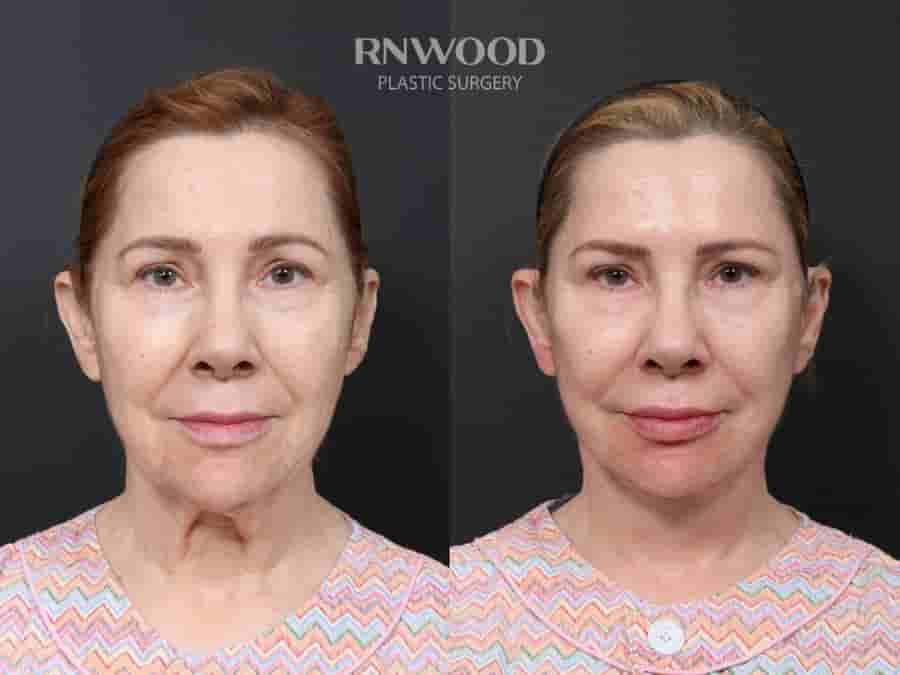
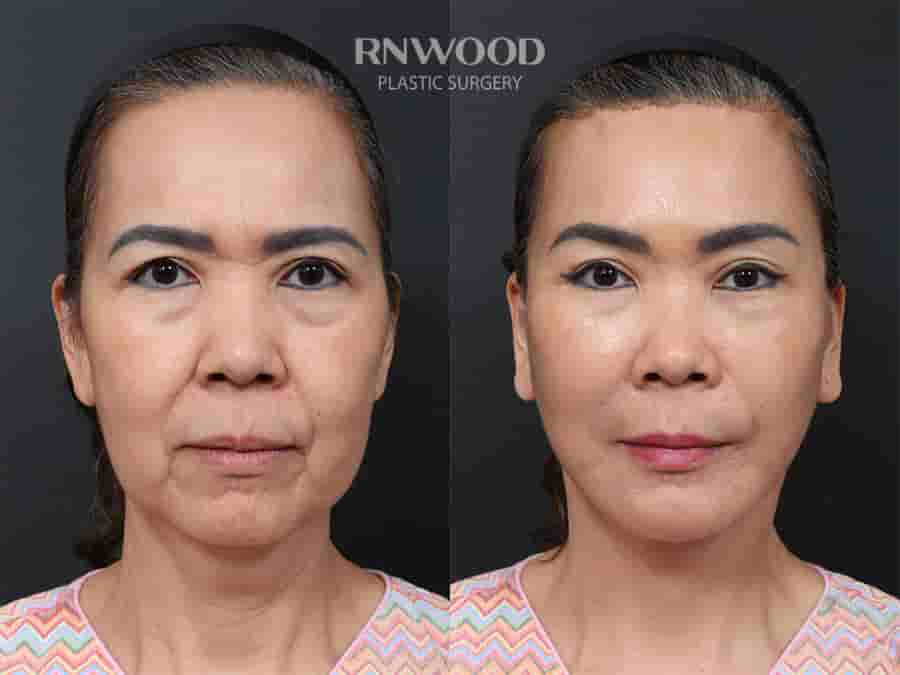
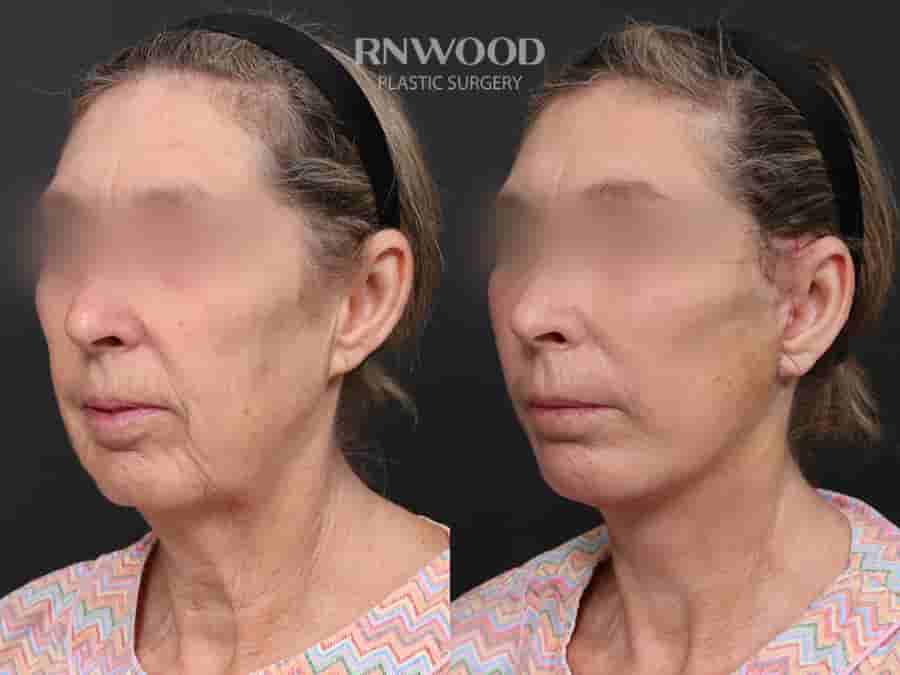
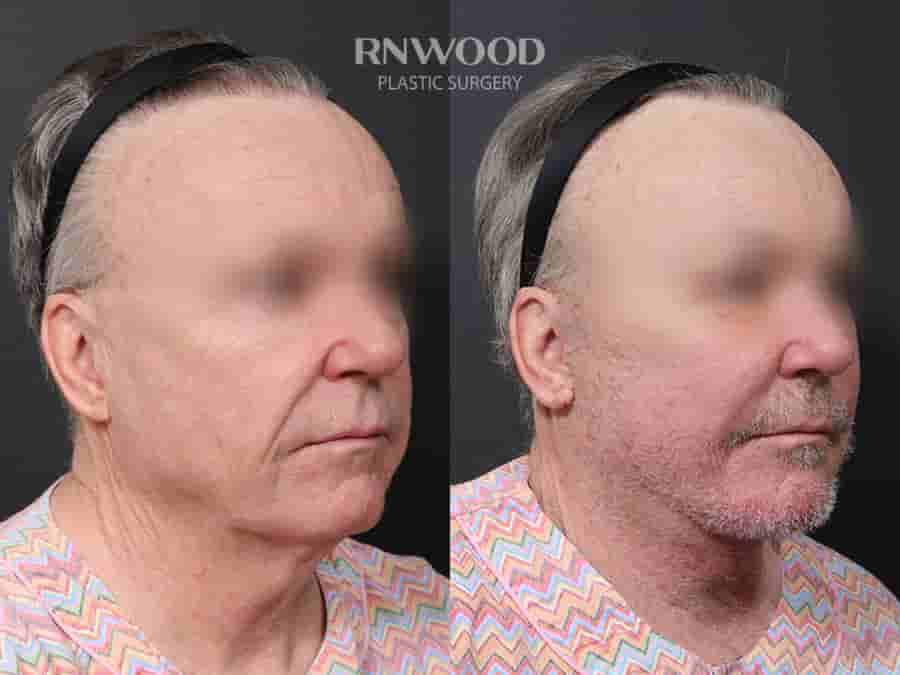
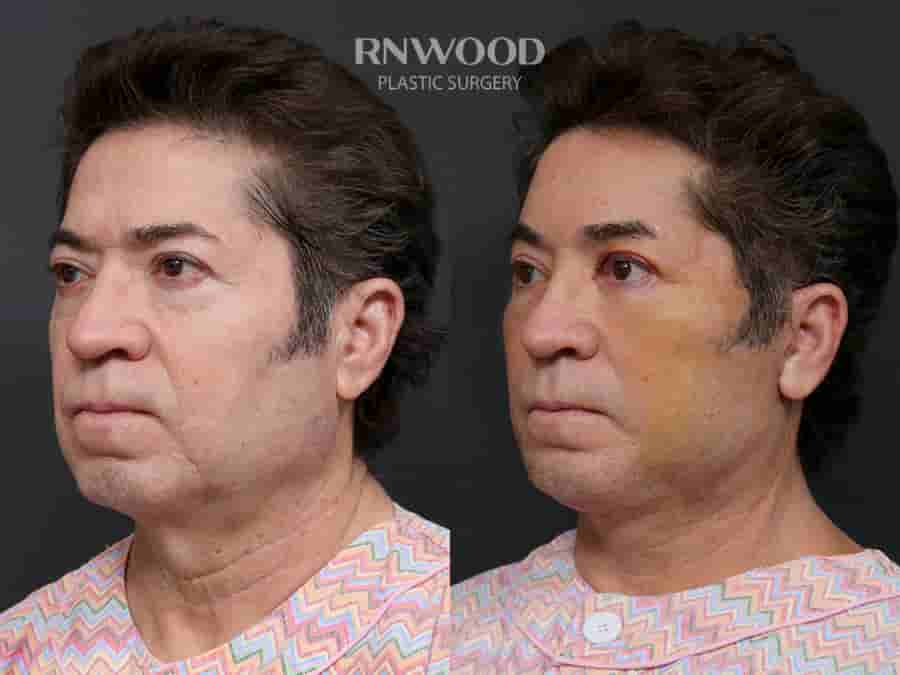
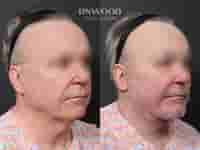
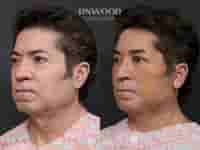
Starting from $32,000, this facial rejuvenation package in Seoul, South Korea combines a deep plane facelift, deep neck lift, and facial fat grafting in one surgical plan at RNWOOD. It may be considered by medically suitable adults concerned about facial laxity, neck contour changes, and age-related volume loss. Think of it as coordinated facial restoration rather than three unrelated procedures. International patients should generally plan around 10–14 days in Seoul, although eligibility, the exact surgical plan, travel clearance, and final price must be determined after medical assessment.

Key Facts
- Starting package price: $32,000, based on the information supplied for this package; your final quotation may change after examination and surgical planning.
- Core procedures: deep plane facelift, deep neck lift, and autologous facial fat grafting.
- Typical candidate: an adult with lower-face or neck laxity, volume loss, realistic expectations, and health suitable for elective surgery and anesthesia.
- Expected Seoul stay: approximately 10–14 days is a practical planning range for international patients, but your surgeon decides when you are medically fit to fly.
- Regulatory context: South Korea operates a foreign-patient healthcare framework, and its Ministry of Health and Welfare describes registration, compensation-insurance requirements, and the Korean Accreditation Program for Hospitals Serving Foreign Patients.
- Accreditation check: no specific RNWOOD institutional accreditation is claimed here without independent confirmation. Ask for current medical-institution registration, foreign-patient registration, surgeon licensing, and any named accreditation certificate before paying a deposit.
How Much Does the RNWOOD Seoul Facelift Package Cost?
The package starts from $32,000. Because combined facial surgery varies considerably by anatomy, previous procedures, operative time, anesthesia requirements, and the amount of fat grafting needed, the final figure should be confirmed through an itemized written quotation after assessment.
International Cost Comparison
| Country / Benchmark | Published Cost Reference | Important Comparison Note |
|---|---|---|
| South Korea – RNWOOD package | From $32,000 | Combined deep plane facelift, deep neck lift, and fat graft package based on the supplied package information. |
| United States | $11,395 average facelift surgeon fee | ASPS states this is only the surgeon-fee average and excludes anesthesia, facility costs, neck surgery, fat grafting, and other expenses. |
| United Kingdom | Up to about £10,000 for a face and neck lift | The NHS notes consultation or follow-up expenses may be additional; this is not necessarily a deep plane procedure or a package including fat grafting. |
Cost comparison note: These figures are not equivalent quotations. Surgical technique, surgeon fees, anesthesia, hospital charges, postoperative care, and included services vary, so international patients should compare itemized totals rather than headline prices alone.
Estimated Package Cost Breakdown
| Procedure Item | Estimated Cost | What It Covers |
|---|---|---|
| Deep plane facelift | Included in bundle | Repositioning deeper facial tissues of the mid and lower face. |
| Deep neck lift | Included in bundle | Surgical treatment of selected neck tissues to improve contour. |
| Facial fat grafting | Included in bundle | Harvesting, processing, and transferring your own fat to selected facial areas. |
| Anesthesia, facility and routine postoperative items | Confirm in quotation | These costs are procedure-dependent and should be listed individually in writing. |
| Total starting package price | $32,000 | Starting figure; final cost depends on medical assessment. |
What Is Included in the Seoul Facial Rejuvenation Package?
The services that can be confirmed from the package description are:
- Deep plane facelift surgery
- Deep neck lift surgery
- Autologous facial fat grafting
Do not assume that accommodation, airport transfers, medications, anesthesia, laboratory testing, interpreters, garments, nursing, or extended aftercare are included unless each appears in your written quotation. Request an itemized inclusion sheet before making travel arrangements.
What Expenses May Be Outside the Package Price?
- International and domestic airfare
- Passport, visa, and entry-related expenses where applicable
- Hotel accommodation unless specifically confirmed
- Meals and personal expenses
- Travel or medical-complication insurance
- Preoperative testing performed outside the agreed package
- Treatment for unrelated medical problems
- Additional nights in Seoul caused by delayed travel clearance
- Revision procedures or treatment of complications unless covered by a written clinic policy
- Companion travel and accommodation costs
Who May Be Suitable for a Deep Plane Face and Neck Lift?
Your age alone does not determine candidacy. A surgeon evaluates your anatomy, skin quality, health history, goals, and whether surgery can reasonably address the changes that concern you.
- Adults with noticeable lower-face, jawline, cheek, or neck laxity
- Patients with facial volume loss who may benefit from carefully planned fat grafting
- People in generally stable health who can undergo elective surgery safely
- Patients with realistic expectations about scars, swelling, recovery, and normal future aging
- People willing to follow nicotine, medication, activity, and wound-care instructions
- Patients able to remain in Seoul until postoperative review and medical travel clearance
What Medical Records Are Usually Needed Before Surgery?
- Recent clear photographs of the face and neck from requested angles
- Complete medical and surgical history
- List of prescription medicines, over-the-counter drugs, and supplements
- Known allergies and previous anesthesia reactions
- History of smoking, vaping, nicotine use, alcohol, or recreational substances
- Details of previous facial surgery, fillers, threads, lasers, or fat grafting
- Relevant blood-test, cardiovascular, or medical-clearance results when requested
- Information about anticoagulants, bleeding disorders, hypertension, diabetes, or other conditions that may affect surgery
How Are the Deep Plane Facelift, Neck Lift and Fat Graft Performed?
The precise operation is individualized. A deep plane facelift works beneath the skin within deeper facial tissue layers so selected tissues can be repositioned rather than relying on skin tension alone. A neck lift addresses appropriate neck structures, while fat grafting restores volume using your own fat.
- Surgical planning: The surgeon examines facial proportions, tissue descent, neck anatomy, scars from previous procedures, and areas of volume loss.
- Anesthesia: The anesthesia approach is selected according to the procedure, your health, and the surgical facility.
- Facelift access: Incisions are generally positioned around the ear and hairline. Their exact length and location depend on the planned technique.
- Deep tissue repositioning: Selected deeper facial tissues are released and repositioned to address midface, lower-face, and jawline changes.
- Neck correction: The surgeon may address skin, fat, platysma muscle, or other neck structures when medically and anatomically appropriate. More extensive deep-neck procedures are not automatically required for every patient.
- Fat harvest and transfer: A small amount of fat is removed from a donor area, processed, and carefully injected into selected facial regions.
- Closure and dressings: Incisions are closed and dressings applied. Temporary drains may be used depending on the surgeon's technique.
Typical Treatment Timeline for International Patients in Seoul
- 2–4 weeks before travel: remote assessment, records review, medication instructions, medical clearance, and written quotation.
- Arrival in Seoul: ideally allow time for an in-person examination and any requested testing before surgery.
- Surgery day: final markings, anesthesia, operation, and monitored postoperative recovery.
- Days 1–3: swelling and bruising are expected; dressings and drains are reviewed according to the surgeon's protocol.
- Days 4–7: follow-up focuses on healing, swelling, wounds, and signs of complications.
- Days 7–14: some sutures may be removed and the surgeon assesses whether you are fit to travel.
- After returning home: remote or local follow-up continues as arranged.
- Following months: swelling gradually settles and scars mature; facial appearance continues evolving.
How Long Should You Stay in South Korea?
A practical planning range is approximately 10–14 days in Seoul, but this is not a guaranteed discharge or flight date. NHS guidance advises avoiding air travel for about 7–10 days after facial cosmetic surgery because major surgery and flying can both increase blood-clot risk.
- Book flexible travel where possible.
- Do not schedule sightseeing as part of early recovery.
- Stay close enough to return promptly for postoperative review.
- Fly only after the treating surgeon confirms your recovery is suitable for travel.
Deep Plane Facelift Recovery and Aftercare
First Week
Swelling, bruising, tightness, numbness, and moderate discomfort are common. You may be advised to sleep with your head elevated, protect the incisions, avoid bending and strenuous activity, and take prescribed medicines exactly as directed.
Weeks 2–4
Bruising and visible swelling usually improve, although you may still look or feel swollen. NHS guidance indicates that overall facelift recovery commonly takes about two to four weeks, while individual recovery from combined surgery may be longer.
Months 1–3
Tissues gradually soften and residual swelling continues to decrease. Numbness and firmness can take additional time to resolve. Fat-grafted areas may also change as swelling subsides and some transferred fat is naturally reabsorbed.
Months 6–9
The NHS notes that facelift results may take six to nine months to fully settle. Scar maturation can continue longer, and your face will continue changing naturally with aging, weight changes, sun exposure, and other factors.
Risks and Possible Complications You Should Discuss
No surgery is risk-free, and this list is not exhaustive. Your surgeon and anesthesia team should explain your individual probability of complications and how the clinic would manage them before you consent.
- Bleeding or hematoma
- Infection
- Temporary or permanent changes in facial sensation
- Temporary or, rarely, permanent facial nerve weakness
- Visible, widened, raised, or poorly positioned scars
- Delayed wound healing or skin circulation problems
- Hair loss near incision areas
- Persistent swelling, firmness, pain, or asymmetry
- Anesthesia-related complications
- Deep vein thrombosis or pulmonary embolism
- Fat-graft irregularity, lumps, oil cysts, fat necrosis, or unpredictable fat retention
- Rare but serious vascular complications associated with facial fat injection
- Need for additional treatment or revision surgery
What Results Can You Reasonably Expect?
- A deep plane facelift may improve sagging in selected areas of the cheeks, lower face, and jawline.
- A neck lift may create a more defined neck and jaw contour when the underlying anatomy is suitable.
- Fat grafting may restore volume in areas affected by age-related deflation.
- Early swelling can temporarily distort the result, so appearance should not be judged immediately after surgery.
- Transferred-fat survival varies between patients, and additional treatment may occasionally be considered.
- Surgery does not stop aging and cannot guarantee symmetry, a specific appearance, or a particular duration of results.
About RNWOOD Plastic Surgery in Seoul
RNWOOD Plastic Surgery is the Seoul, South Korea medical center identified for this package. For international-patient decision making, verification should focus not only on the clinic name but on the specific surgeon, facility registration, anesthesia arrangements, complication management, and postoperative access.
- Location: Seoul, South Korea.
- Package focus: facial rejuvenation involving deep plane facelift, deep neck lift, and fat grafting.
- South Korean oversight: the Ministry of Health and Welfare operates a framework governing medical institutions that serve international patients.
- Insurance: the Ministry states that medical institutions treating foreign patients are required to maintain compensation insurance for adverse events.
- KAHF: the Korean Accreditation Program for Hospitals Serving Foreign Patients is a government-recognized accreditation framework; this page does not state that RNWOOD currently holds KAHF accreditation without independent certificate verification.
- Before booking: request the clinic's current foreign-patient registration, surgeon license details, anesthesia credentials, emergency-transfer plan, complication policy, and any current accreditation certificates.
Frequently Asked Questions
Is the $32,000 price guaranteed?
No. It is a starting package figure. Your final price can change after the surgeon reviews your anatomy, medical history, previous surgery, neck anatomy, amount of fat grafting required, anesthesia needs, and any additional procedures. Request a complete written quotation before booking flights.
Can the facelift, neck lift, and fat graft be done together?
They can be combined in appropriately selected patients, but combining procedures increases operative complexity. Your surgeon must decide whether the combined approach is suitable based on your health, anatomy, expected operating time, and individualized risk profile.
What makes a deep plane facelift different?
A deep plane approach works with deeper facial tissue layers rather than relying mainly on skin tightening. The precise dissection varies by surgeon and patient. It is one of several established facelift approaches, and no technique is automatically the right choice for every face.
How long should I stay in Seoul after surgery?
International patients should consider planning roughly 10–14 days, with flexible travel arrangements. The exact stay depends on healing, postoperative appointments, suture management, and the surgeon's assessment. Do not fly simply because a planned return date has arrived.
Will I have visible scars?
Facelift and neck-lift surgery requires incisions, commonly placed around the ears and hairline and sometimes beneath the chin. Surgeons aim to position scars discreetly, but scars are permanent and their final appearance varies with healing, skin characteristics, technique, and postoperative care.
When can I return to work?
Many patients need approximately two to four weeks before returning comfortably to normal work and social activities. Jobs involving physical exertion may require longer. Swelling, bruising, numbness, and visible incision healing can persist after you otherwise feel well.
How much of the transferred facial fat will remain?
Fat retention is variable, so a surgeon cannot accurately guarantee that a specific percentage will survive for every patient. Some transferred fat establishes a lasting blood supply, while some is naturally reabsorbed. Final volume should be assessed only after swelling and fat-graft changes have stabilized.
When will I see the final facelift result?
You will see changes earlier, but they are initially affected by swelling, bruising, tightness, and tissue healing. NHS patient guidance notes that the full effect of facelift surgery can take approximately six to nine months to become apparent.
Can I fly home as soon as the stitches are removed?
Not automatically. Suture removal does not by itself establish fitness to fly. Air travel and recent surgery can increase blood-clot risk, so travel should be based on postoperative examination, your medical risk factors, flight duration, mobility, and explicit clearance from your treating physician.
What should I verify before paying a deposit?
Confirm the treating surgeon's license and relevant training, facility registration, anesthesia provider, exactly what the package includes, cancellation terms, postoperative appointments, emergency arrangements, complication costs, revision policy, insurance coverage, and who will provide follow-up after you return home.
Discuss Your Facial Rejuvenation Plan Before Traveling
If you are considering a deep plane facelift, neck lift, and fat grafting in Seoul, start with a medical review rather than a travel booking. Share your health history, photographs, previous facial procedures, and goals so the treating team can determine whether the package is appropriate and prepare an individualized quotation.
Request Free QuoteThis content is for general informational and educational purposes only and does not replace evaluation, diagnosis, or advice from a qualified medical professional. Eligibility, risks, treatment details, recovery, travel clearance, and final costs must be determined by the treating medical team.
References
- American Society of Plastic Surgeons – Facelift Cost: https://www.plasticsurgery.org/cosmetic-procedures/facelift/cost
- NHS – Facelift (Rhytidectomy): https://www.nhs.uk/tests-and-treatments/cosmetic-procedures/cosmetic-surgery/facelift/
- NHS – Surgical Fat Transfer: https://www.nhs.uk/tests-and-treatments/cosmetic-procedures/cosmetic-surgery/surgical-fat-transfer/
- NHS – Cosmetic Surgery Abroad: https://www.nhs.uk/tests-and-treatments/cosmetic-procedures/advice/cosmetic-surgery-abroad/
- Ministry of Health and Welfare, Republic of Korea – International Patient Services and Global Cooperation: https://www.mohw.go.kr/menu.es?mid=a20204000000














Share this listing