
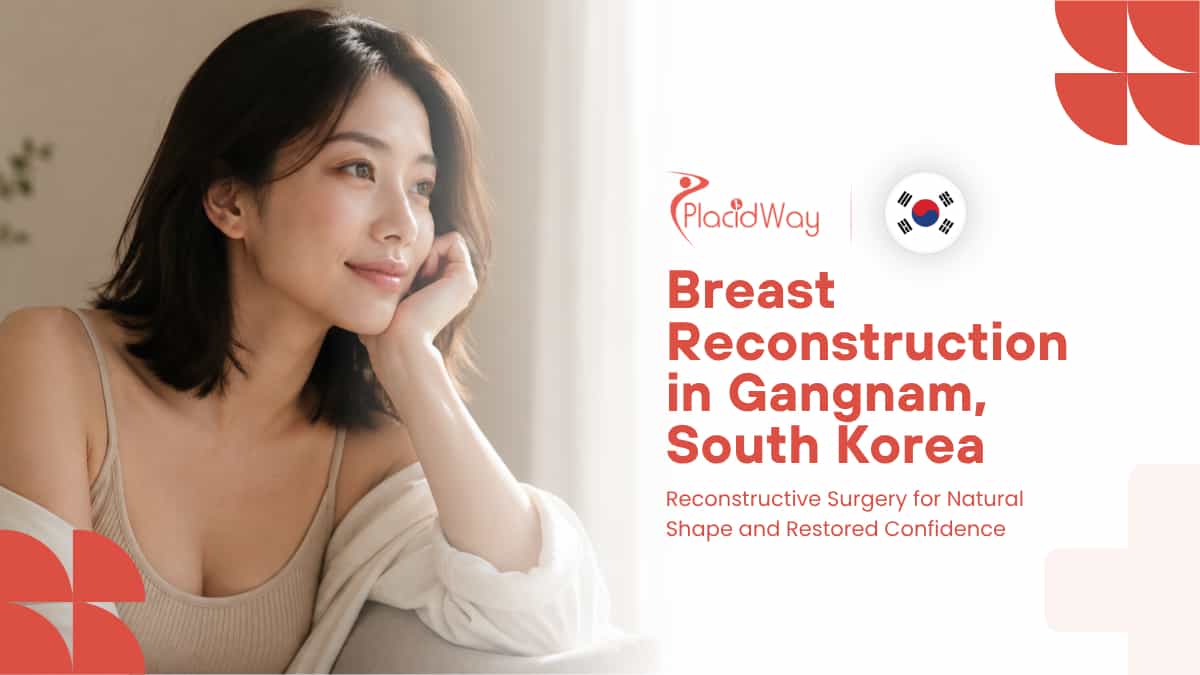
Reclaiming your body after a mastectomy is a deeply personal journey, and choosing to undergo breast reconstruction in Gangnam, South Korea, combines world-class restorative microsurgery with meticulous K-beauty precision. Patients traveling from the United States, Japan, Taiwan, Singapore, and China are choosing Seoul for this procedure because Korean plastic surgeons are renowned for blending advanced medical safety with an intense focus on natural, aesthetically balanced results. Instead of simply focusing on restoring volume, Gangnam's approach to post-cancer breast restoration prioritizes symmetry, soft tissue texture, and emotional healing, offering a uniquely holistic recovery experience.
Key Insights: Breast Reconstruction in South Korea
- • Estimated Cost: The package ranges from $6,000 to $11,500, depending on whether you require implant-based reconstruction or autologous (your own tissue) flap surgery.
- • Global Accreditations: Surgeries are performed in top-tier facilities holding Joint Commission International (JCI) accreditation and Korean Accreditation Program for Healthcare Hospitals (KAHF) certifications.
- • The K-Beauty Advantage: The procedure goes beyond basic clinical reconstruction by utilizing K-beauty principles—focusing on minimal scarring, natural teardrop draping, and precise body proportion matching.
- • Advanced Techniques: Access to cutting-edge microsurgery, including DIEP flap procedures, Latissimus Dorsi (LD) flap techniques, and the latest generation of cohesive gel implants.
- • Dedicated Recovery Support: Packages typically include specialized aftercare services like hyperbaric oxygen therapy and lymphatic massage to speed up healing before your flight home.
Why Choose Breast Reconstruction in Gangnam, Seoul?
Seoul’s Gangnam district is recognized globally not just for cosmetic enhancements, but for highly complex reconstructive surgeries. Women from across East Asia, the US, and Singapore frequently travel here because the surgical expertise available provides a balance of oncology-safe practices and superior aesthetic outcomes. Here is why this medical hub stands out for reconstructive patients:
- Expertise in Asian and Western Anatomy: Surgeons in Gangnam are highly experienced in operating on diverse body types, ensuring that whether you are traveling from Japan, Taiwan, or the United States, the surgical approach is tailored to your specific anatomical structure.
- High-Precision Microsurgery: Autologous tissue reconstruction (using your own belly or back tissue) requires incredibly delicate microsurgery to reattach blood vessels. Gangnam’s surgeons are globally respected for their high success rates in these complex procedures.
- Cost-Effective Quality: Compared to the skyrocketing healthcare costs in the United States or Singapore, South Korea offers premium, board-certified surgical care at a significantly more accessible price point, without compromising on safety or technology.
- Seamless Medical Tourism Infrastructure: Clinics in Seoul are built to accommodate international patients, offering in-house translators for Mandarin, Japanese, and English, making the consultation and recovery process completely stress-free.
- 3D Imaging and Planning: Before you even enter the operating room, advanced 3D scanning technology allows you and your surgeon to visualize the expected outcome, ensuring you are on the same page regarding volume, shape, and symmetry.
How the K-Beauty Trend Elevates Reconstructive Surgery
When you hear "K-Beauty," you might think of skincare routines, but this philosophy deeply influences Korean reconstructive surgery as well. The trend in breast reconstruction has shifted from simply "replacing a breast" to restoring a woman's natural, aesthetic silhouette. The Korean aesthetic approach focuses heavily on harmony, meticulous detail, and invisible healing.
- Hyper-Focus on Symmetry: K-Beauty aesthetics demand balance. Surgeons often perform minor adjustments or fat grafting on the non-affected breast to ensure both breasts look perfectly symmetrical and natural together.
- Advanced Scar Management: Korean clinics treat scar management as an integral part of the surgery, not just an afterthought. They utilize specialized lasers, silicone gels, and meticulous suturing techniques to ensure scars fade as much as surgically possible.
- Natural Teardrop Shaping: The trend heavily favors a natural slope rather than an artificial, overly rounded look. Surgeons use specific implant placements or precise tissue molding to recreate a soft, natural teardrop shape.
- Holistic Healing Therapies: The K-Beauty approach incorporates soothing aftercare treatments. Patients often receive specialized dermatological care for their skin over the reconstructed area to maintain elasticity and health.
- Nipple and Areola Artistry: The final stage of reconstruction—restoring the nipple and areola—is treated like fine art. Korean specialists use advanced 3D medical tattooing techniques to create incredibly realistic coloration and texture.
Global Cost Comparison: Breast Reconstruction
Understanding the financial aspect of your medical journey is crucial. Here is how the cost of breast reconstructive surgery in South Korea compares to other popular home countries for international patients.
| Country / Location | Estimated Cost Range (USD) |
|---|---|
| Gangnam, South Korea | $6,000 - $11,500 |
| United States | $15,000 - $30,000+ |
| Singapore | $12,000 - $25,000 |
| Japan | $10,000 - $18,000 |
| China | $8,000 - $15,000 |
| Taiwan | $7,500 - $14,000 |
*Note: The prices listed above for Gangnam are an estimated cost pending a full medical assessment. Final pricing depends on your specific anatomy, whether you require implants or flap surgery, and if you need bilateral or unilateral reconstruction.
Package Inclusions
- Comprehensive pre-operative consultations and 3D surgical planning.
- Surgeon fees, anesthesiologist fees, and operating room charges.
- FDA-approved or CE-marked breast implants (if choosing implant-based reconstruction).
- Standard hospital stay required immediately following the procedure (typically 1-3 nights).
- Standard post-operative medications (antibiotics, pain relief) provided before discharge.
- Medical translation services during clinic visits (English, Mandarin, Japanese).
- Post-surgical compression garments and surgical bras.
- Routine follow-up appointments while you remain in South Korea.
Package Exclusions
- International flights and local airport transfers.
- Hotel accommodation for the duration of your recovery in Seoul.
- Specialized oncology treatments (chemotherapy, radiation therapy).
- Treatment for unexpected, complex medical complications arising from pre-existing conditions.
- Comprehensive medical travel insurance.
- Additional cosmetic surgeries not related to breast reconstruction.
- Meals and personal expenses outside of the hospital stay.
Required Medical Records for Preliminary Assessment
To ensure your absolute safety and to allow the surgical team to create a highly personalized treatment plan, you will need to provide specific medical records before traveling. Having these ready will fast-track your online consultation.
- Oncology Clearance: A formal letter or report from your primary oncologist stating you are medically cleared for reconstructive surgery.
- Previous Surgical Reports: Detailed operative notes from your mastectomy or lumpectomy, including how much tissue was removed and the type of incisions made.
- Recent Imaging: Up-to-date mammograms, breast MRIs, or ultrasound images to assess the remaining tissue and chest wall structure.
- Pathology Reports: Documentation outlining the specific type of breast cancer, stage, and receptor status, which helps surgeons understand your tissue health.
- Current Medication List: A complete list of any ongoing treatments, including hormone therapies, blood thinners, or herbal supplements, which might affect anesthesia or healing.
International Travel Logistics: Getting to Gangnam
Traveling abroad for surgery might feel daunting, but South Korea has streamlined the process for international patients. Whether you are flying in from New York, Tokyo, or Taipei, the logistics are designed to be smooth and comfortable.
- Flight Accessibility: Incheon International Airport (ICN) is a major global hub, offering direct flights from the US, Japan, Taiwan, China, and Singapore, keeping travel fatigue to a minimum.
- Visa Requirements: Many countries, including the US, Japan, and Singapore, enjoy visa-free entry for short medical stays. For longer treatments, Korean clinics assist with securing a G-1 Medical Visa.
- Airport Transfers: Most premium medical packages can coordinate a private medical taxi or VIP van to pick you up directly from Incheon Airport and take you straight to your hotel in Gangnam.
- Accommodation Proximity: Gangnam is packed with comfortable, recovery-friendly hotels and serviced apartments located just minutes away from the major plastic surgery and reconstructive centers.
- Language Support: You do not need to worry about the language barrier. Clinics provide dedicated medical coordinators who are fluent in English, Mandarin, and Japanese to guide you through every appointment.
Timing Your Surgery: Immediate vs. Delayed Reconstruction
One of the biggest decisions you will make alongside your surgical team is when to have the procedure. Reconstructive surgery is entirely dependent on your cancer treatment timeline and personal readiness.
- Immediate Reconstruction: This is performed at the same time as your mastectomy. It offers the psychological benefit of waking up with a breast mound and typically requires fewer total surgeries.
- Delayed Reconstruction: Often recommended for patients who need post-mastectomy radiation therapy. Delaying allows the skin and chest wall time to heal from radiation before introducing new tissue or implants.
- Tissue Expansion Phase: If you do not have enough skin remaining after a mastectomy, your surgeon may place a temporary tissue expander, which is gradually filled with saline over a few months before the final surgery.
- Coordinating with Oncology: Your Gangnam surgeon will collaborate closely (often via digital correspondence) with your home-country oncologist to ensure the timing does not interfere with your cancer treatments.
- Emotional Readiness: Some patients prefer to focus solely on beating cancer first, opting for delayed reconstruction months or even years later when they feel emotionally and physically stronger.
Surgical Options: Implants vs. Autologous Flap Surgery
There is no one-size-fits-all approach to rebuilding a breast. During your virtual and in-person consultations, your Korean surgeon will help you choose the best method based on your body type, lifestyle, and medical history.
- Implant-Based Reconstruction: The most common method, using saline or highly cohesive silicone gel implants. It is generally a shorter surgery with a faster initial recovery time compared to flap procedures.
- Autologous (Flap) Reconstruction: This technique uses your body’s own tissue—often fat, skin, and muscle transferred from the abdomen (DIEP flap) or the back (Latissimus Dorsi flap)—to create a breast that looks and feels remarkably natural.
- Hybrid Reconstruction: A modern approach that combines both methods. Surgeons use a smaller implant to provide projection and volume, surrounded by your own fat (via fat grafting) for a soft, natural outer feel.
- Weight Fluctuations: It is important to know that a reconstructed breast made from your own tissue will grow or shrink if you gain or lose weight, just like a natural breast. Implants, however, remain a constant size.
- Longevity of Results: While flap reconstruction is a more complex surgery with a longer recovery, the results are typically lifelong. Implants, on the other hand, may need to be replaced or revised 10 to 15 years down the line.
Post-Operative Care and Recovery in South Korea
Recovery is just as important as the surgery itself. Gangnam clinics are famous for their intensive, supportive aftercare programs designed to reduce swelling, manage pain, and ensure you are fit to fly home safely.
- In-Patient Monitoring: For the first 1 to 3 days, you will stay in the clinic or hospital where nurses will monitor your vitals, manage any surgical drains, and ensure optimal blood flow to the newly reconstructed tissue.
- Advanced Healing Therapies: Your package may include sessions in a hyperbaric oxygen chamber, which infuses your body with pure oxygen to dramatically speed up tissue healing and reduce infection risks.
- Lymphatic Drainage Massages: Specially trained therapists gently massage the surrounding areas (avoiding the direct surgical site) to help your body process fluid build-up, significantly reducing post-op swelling.
- Custom Compression Wear: You will be fitted with a medical-grade surgical bra that supports the new breast structure, minimizes swelling, and helps contour the chest during the crucial first few weeks of healing.
- Fitness to Fly: Depending on the complexity of your surgery, you will typically need to stay in Seoul for 10 to 14 days. Your surgeon will conduct a final assessment to officially clear you for international air travel.
Frequently Asked Questions: Patient Concerns Answered
1. Is it safe to fly after breast reconstruction surgery?
Yes, but timing is crucial. Most surgeons require you to stay in South Korea for 10 to 14 days post-surgery. You will be cleared to fly once the surgical drains are removed and the initial risk of blood clots has passed. You will be advised to get up and walk around the cabin during your flight home.
2. How long do I need to stay in Seoul for the entire process?
You should plan to be in Seoul for roughly two to three weeks. This covers pre-operative consultations, the surgery day, your brief hospital stay, and the mandatory follow-up appointments to ensure your incisions are healing beautifully before you depart.
3. Will my reconstructed breast feel natural to the touch?
Autologous flap reconstructions (using your own tissue) feel incredibly similar to a natural breast in terms of warmth and softness. If you opt for implants, today's cohesive silicone gels are much softer than older models, especially when paired with fat grafting, though they may feel slightly firmer than natural tissue.
4. Do I need to finish radiation therapy before getting this surgery?
Generally, yes. Radiation can damage the skin and reduce its elasticity, which can complicate reconstruction or cause implants to harden (capsular contracture). Most surgeons recommend waiting 6 to 12 months after your last radiation session before undergoing reconstructive surgery.
5. Are breast implants safe after surviving breast cancer?
Yes, extensive clinical research shows that breast implants do not increase the risk of breast cancer recurrence. They are perfectly safe for cancer survivors. Your surgeon will use FDA-approved or CE-marked implants to ensure the highest safety standards.
6. What happens if I experience a complication after returning home?
Before you leave, you will receive a detailed medical report summarizing your surgery. Clinics maintain open lines of communication via messaging apps and video calls for post-op support. However, it is highly recommended to establish a connection with a local doctor or your primary care physician back home for routine checks or in case of urgent issues.
7. Will I have feeling or sensation in my reconstructed breast?
Because a mastectomy removes breast tissue and severes nerves, sensation is usually significantly reduced or lost completely. However, some patients regain partial sensation over several years, and certain advanced nerve-grafting techniques being utilized by elite microsurgeons are beginning to improve these outcomes.
8. How does the consultation process work if I live overseas?
The process begins online. You will submit your medical history, oncology clearance, and photographs via a secure portal. The surgeon will review these and conduct a video consultation to discuss your options, set expectations, and provide a detailed cost estimate before you ever book a flight.
9. Does this package include nipple and areola reconstruction?
Nipple reconstruction is usually performed as a secondary, minor outpatient procedure 3 to 6 months after the initial breast reconstruction to ensure the main breast mound has settled into its final position. This is typically priced separately from the main reconstruction package.
10. How long does the actual reconstructive surgery take?
The duration heavily depends on the technique. Implant-based reconstruction typically takes 2 to 4 hours. Complex autologous tissue flap surgeries, like the DIEP flap, are highly intricate microsurgeries that can take anywhere from 6 to 10 hours to complete.
Ready to Take the Next Step in Your Recovery?
We know that thinking about breast reconstruction is a big decision, and you deserve a supportive, pressure-free environment to explore your options. Reach out to our dedicated patient coordinators today. We can help answer your questions, review your medical history, and connect you with top reconstructive experts in Gangnam.
Request Free QuoteMedical Disclaimer: The content provided on this page is for general informational and educational purposes only and does not constitute professional medical advice. Always consult with a qualified healthcare provider or board-certified oncologist and plastic surgeon regarding any medical conditions, treatments, or surgical interventions.
Patient Education References
- Mayo Clinic: Breast Reconstruction with Flap Surgery Explanation
- Breastcancer.org: Types of Breast Reconstruction
- American Cancer Society: Breast Reconstruction Options After Mastectomy
- NHS (UK): Overview of Breast Reconstruction Procedures
- American Society of Plastic Surgeons: Safety and Risks in Breast Reconstruction
.png)
.png)
.png)
.jpg)
.jpg)
.jpg)








Share this listing