
What Is an Upper GI Endoscopy in Gangnam?
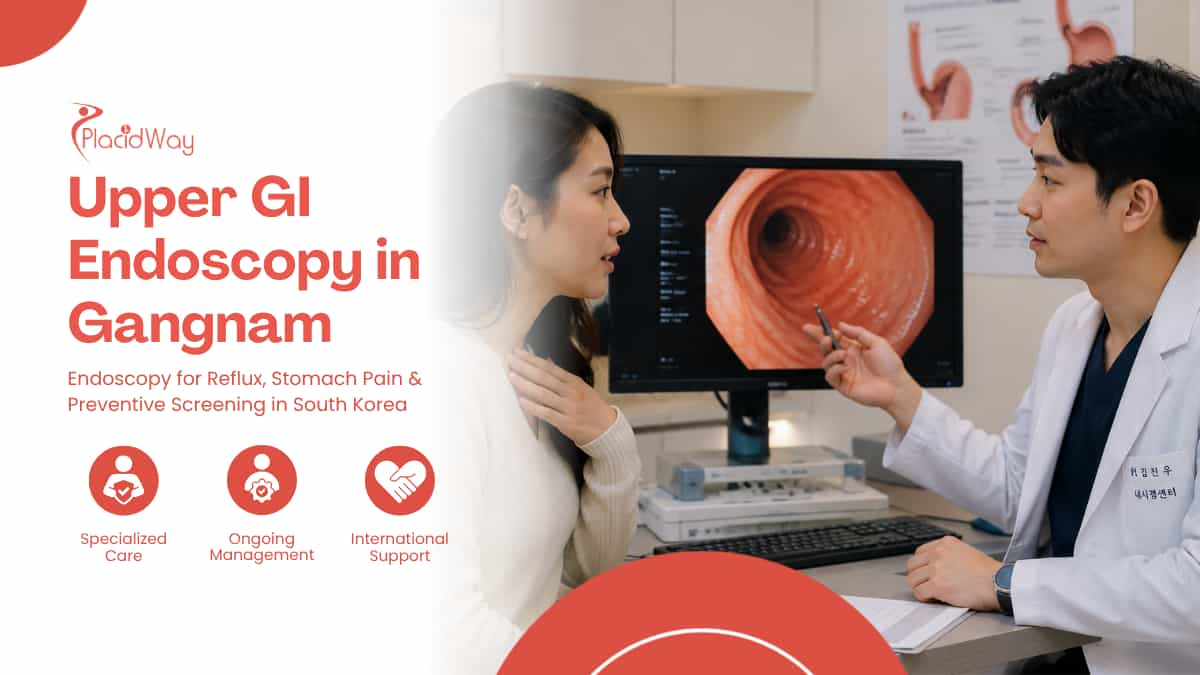
Waking up with a burning sensation in the chest or a persistent metallic taste in the back of the throat is an exhausting way to start the day. For many individuals experiencing these symptoms, chronic upper digestive discomfort simply becomes a frustrating routine managed with daily over-the-counter antacids and cautious diet adjustments. Eventually, however, symptom management loses its effectiveness, and the need for a definitive, structural answer becomes impossible to ignore.
The decision to undergo an upper gastrointestinal endoscopy, widely known as a gastroscopy, is rarely made on a whim. It usually follows months or even years of guessing what might be causing persistent abdominal pain, chronic acid reflux, or alarming difficulty swallowing. When long wait lists at home or prohibitively high out-of-pocket costs complicate access to this vital diagnostic tool, many patients begin researching international options, frequently discovering the comprehensive health screening centers in Gangnam, South Korea.
The Daily Reality of Upper GI Symptoms
The human upper digestive tract is a complex, highly sensitive system designed to move food smoothly while protecting the rest of the body from highly corrosive stomach acids. When this system begins to malfunction, the resulting symptoms can range from a mild, annoying ache to severe, sharp chest pain that mimics a cardiac event. Because the esophagus lacks a protective mucosal layer comparable to the stomach, prolonged exposure to acid causes significant inflammation, leading to a condition known as esophagitis.
When to Stop Waiting: Recognizing Alarm Symptoms
Professional gastroenterology guidelines generally recommend an upper GI endoscopy when symptoms do not respond to initial medical therapy, or when specific diagnostic red flags appear. These "alarm symptoms" may include unexplained weight loss, difficulty or pain when swallowing, evidence of gastrointestinal bleeding, persistent vomiting, or a direct family history of upper digestive cancers. If these signs are part of your situation, formal diagnostic evaluation should take priority over continued symptom masking.
For those who have reached this threshold, the primary emotion is often a mixture of exhaustion and anxiety. The physical discomfort is draining, but the psychological burden of not knowing the exact cause is often worse. Patients frequently cycle through various primary care visits, receiving different empirical prescriptions without ever seeing the internal reality of their own anatomy.
The Anatomical Pathway
To understand why this procedure is so valuable, it helps to map the anatomy the scope actually travels through. The upper digestive tract is divided into three distinct zones, each vulnerable to its own specific conditions:
- The Esophagus: The muscular tube that relies on rhythmic contractions to propel food downward, highly susceptible to acid burns from a weakened lower sphincter.
- The Stomach: A highly acidic environment lined with a robust mucosal barrier that can sometimes be compromised by common bacteria or prolonged use of anti-inflammatory drugs.
- The Duodenum: The first part of the small intestine, acting as the primary mixing chamber for stomach contents and digestive enzymes, where peptic ulcers frequently form.
The Limits of Empirical Treatment
In many healthcare systems, the first line of defense for indigestion or reflux is empiric therapy. This involves prescribing acid-reducing medications, such as proton pump inhibitors (PPIs), to see if the symptoms improve without formally diagnosing the underlying cause. While this approach is often effective for simple, temporary heartburn, it becomes highly problematic when utilized as a long-term solution for chronic pain.
| Diagnostic Approach | What It Offers | What It Misses |
|---|---|---|
| Empiric Therapy (Guessing) | Provides temporary symptom relief and tests a hypothesis by using acid-reducing medication. | Cannot confirm structural causes, identify precancerous cellular changes, or detect active bacterial infections. |
| Barium Swallow (Imaging) | Highlights the outline of the digestive tract on an X-ray to show strictures or large hernias. | Cannot show mucosal color changes, cannot detect microscopic inflammation, and cannot take tissue biopsies. |
| Upper GI Endoscopy (Seeing) | Provides direct high-definition visualization of the tissue and allows for immediate biopsy and intervention. | Focuses primarily on structure rather than motility function; functional nerve disorders may require additional specific testing. |
By merely turning off the acid pumps in the stomach, medication can successfully mask the pain while allowing the actual disease process to continue unchecked. If a patient is simply treating the symptom, they remain completely blind to the microscopic changes occurring in their cellular tissue. This is a critical distinction for patients to understand when deciding whether to pursue a formal endoscopic evaluation.
The Endoscopic Technology
An endoscope is far more than a simple tube. Modern gastroscopes are highly sophisticated instruments equipped with high-definition digital sensors, powerful light sources, and internal channels that allow the physician to wash the tissue, inflate the stomach with air for a clearer view, and pass tiny instruments down into the digestive tract. This real-time feedback allows the endoscopist to meticulously examine the mucosal architecture for the slightest irregularities.
Beyond standard white-light cameras, many advanced screening centers now utilize digital enhancement technologies. By altering the specific wavelengths of light used during the examination, doctors can highlight different layers of the tissue to catch abnormalities sooner.
- High-Definition White Light: Provides a natural color view of the mucosa, allowing the doctor to spot obvious ulcers, areas of active bleeding, and larger polyps.
- Narrow Band Imaging (NBI): Uses specific blue and green light wavelengths that are heavily absorbed by hemoglobin, creating stark visual contrast that makes microscopic blood vessels and early abnormal cell clusters stand out vividly.
- Chromoendoscopy: Involves applying specialized safe dyes to the stomach lining during the procedure to highlight abnormal tissue architecture, though digital NBI has largely replaced this in many modern clinics.
This level of technological precision changes the entire nature of the procedure, evolving from a simple visual check into a comprehensive micro-mapping of the upper digestive system. However, a high-definition screen is only valuable if the specialist knows exactly what subtle patterns to look for, which is why diagnostic volume becomes a critical factor in medical travel.
Why Gangnam? The South Korean Screening Ecosystem
Geography matters in healthcare, particularly when it comes to diagnostic repetition. Historically, East Asia, and South Korea in particular, has experienced some of the highest rates of stomach cancer in the world. This public health challenge was largely driven by dietary factors, high sodium intake, and the prevalent spread of the Helicobacter pylori bacteria across the population.
Evidence and Public Health Impact
In response to high gastric cancer rates, South Korea launched one of the most aggressive and comprehensive national cancer screening programs globally, making routine gastroscopies a standard part of adult healthcare. Published research has consistently demonstrated that this widespread implementation of endoscopic screening significantly reduces gastric cancer mortality in the population.
For a medical traveler visiting a health screening center in Gangnam, this data represents deep, systemic expertise. The gastroenterologists in these high-volume centers perform and analyze these exams constantly, honing their ability to detect subtle mucosal abnormalities that might be easily overlooked elsewhere.
This unique environment makes Seoul, and specifically well-resourced medical districts like Gangnam, incredibly suited for patients seeking diagnostic clarity. Rather than waiting months for a referral back home, a patient can often access a state-of-the-art screening center that integrates advanced imaging, immediate biopsy capabilities, and expert interpretation into a single, seamless appointment.
Confronting the Procedure: The 15-Minute Reality
Despite knowing the value of the procedure, many patients delay booking their appointment due to fear. The idea of having a camera passed down the throat triggers a very primal vulnerability. People worry about gagging, a feeling of suffocation, or waking up during the examination. Acknowledging these fears is a necessary part of the patient journey, but breaking down the actual timeline helps shift the perspective from dread to practical preparation.
Immediate Answers: Biopsies and H. pylori
One of the most profound advantages of an endoscopy is that it is not merely a passive observation; it is an active, investigative tool. If the gastroenterologist sees an area of inflammation, an unusual growth, or a patch of tissue that looks slightly altered under Narrow Band Imaging, they can immediately pass tiny forceps through the scope to collect a microscopic biopsy. Because the lining of the digestive tract does not have pain receptors in the same way skin does, taking a biopsy causes no localized pain to the patient.
Helicobacter Pylori Testing
This common bacteria burrows into the stomach lining, causing chronic inflammation and vastly increasing the risk of ulcers and gastric cancer. A rapid urease test performed on a biopsy sample during the endoscopy can confirm its presence almost immediately, allowing doctors to prescribe a targeted antibiotic eradication protocol.
Barrett’s Esophagus Monitoring
For patients with years of chronic acid reflux, the cells in the lower esophagus can mutate to resemble intestinal cells in an attempt to protect themselves from the acid. A biopsy is the definitive way to confirm this precancerous condition, which requires careful, routine monitoring.
Hearing that a biopsy was taken can cause a brief moment of panic for patients when they wake up. It is vital to understand that in the context of upper digestive health, biopsies are routine. They are frequently used to confirm benign conditions, check for microscopic healing, or test for common bacterial infections, rather than solely hunting for malignancies.
The Financial Landscape of Screening in Seoul
When evaluating medical travel for an endoscopy, price transparency helps frame the decision. In Gangnam, the cost for an upper GI endoscopy generally ranges from $300 to $2,000. This wide variance is not typically based on the quality of the camera, but rather on whether the procedure is included in a broader health screening package in Gangnam, South Korea.
| Country | Typical Price (USD) | Why Patients Travel From Here |
|---|---|---|
| South Korea (Gangnam) | $300 – $2,000 | The baseline price referenced throughout this article. |
| United States | $1,500 – $4,000 | Upper GI endoscopy in the US is commonly billed as a facility procedure, which pushes cash-pay pricing well above Korea's range even for routine screening. |
| Russia | $1,000 – $3,500 | Internal-medicine screening is one of the categories where Russian patients most consistently travel to Korea, per Korean medical-tourism reporting. |
| Mongolia | $800 – $2,800 | Mongolian patients are a recognized source market for Korean internal medicine and screening services, reflecting more limited advanced endoscopy access at home. |
Figures are general market ranges compiled from multiple clinics and medical-travel sources as of 2026; individual quotes vary by clinic, technique, and case complexity.
Understanding what drives this pricing spectrum helps patients align their booking with their actual diagnostic needs:
- The Standalone Diagnostic ($300 - $600): Patients are typically paying for a standalone gastroscopy with conscious sedation. This usually includes the pre-consultation, the procedure, and a basic review of the visual findings. Biopsy pathology fees may occasionally be billed separately if tissue is actually sent to the lab.
- The Comprehensive Health Checkup ($1,000 - $2,000): Higher-tier prices almost always indicate that the endoscopy is bundled into a comprehensive, multi-day health screening package. These packages frequently include a full colonoscopy, comprehensive blood panels, abdominal ultrasounds, and cardiac stress tests.
- Translation and Concierge Services: Specialized international clinics embed the cost of a dedicated medical interpreter, translated medical records, and logistical coordination directly into their fees, ensuring a frictionless experience for travelers.
For many patients coming from regions with highly privatized medicine, this spectrum represents significant value, especially when factoring in the speed of access. The ability to secure a comprehensive screening without fighting through months of tiered referrals is a major logistical advantage.
Travel Logistics and Continuity of Care
Undergoing a medical procedure abroad is different from a standard vacation, even for something as routine as a gastroscopy. The primary variable that changes the travel experience is the use of sedation. The medication used to ensure patient comfort takes time to fully metabolize, meaning the 24 hours surrounding the appointment require a dedicated focus on rest rather than tourism.
Travel Planning for the 24-Hour Window
- Companion Responsibilities: The clinic will typically require a designated adult to help the patient navigate a taxi or transport back to their hotel. The companion should also be prepared to listen to post-procedure instructions, as the patient may be groggy immediately upon waking.
- Post-Procedure Diet: After waking up, the throat may feel slightly scratchy. Patients are usually advised to start with gentle, soft foods—like a warm Korean porridge (juk)—before returning to a normal diet. Heavy, spicy, or highly acidic foods should be avoided on the first day.
- Flight Timing: Medical teams universally advise against taking a long-haul flight immediately after receiving intravenous sedation. Patients should plan to rest in Seoul for at least 24 to 48 hours following the procedure to ensure the medication has cleared their system entirely.
The final step in the medical travel journey is ensuring continuity of care. A diagnosis made in Seoul is only useful if it can be acted upon when the patient returns home. Reputable international screening centers in Gangnam will provide patients with high-quality digital copies of their endoscopic images, along with translated, formal medical reports detailing any biopsy findings so local doctors can prescribe appropriate care.
The Decision to Stop Guessing
Living with chronic upper digestive symptoms requires a tremendous amount of mental energy. The daily calculations regarding what to eat, when to sleep, and which medications to take eventually become exhausting. While empirical treatments and lifestyle changes are valid first steps, they cannot provide the structural certainty required to manage long-term health effectively.
Choosing to undergo an upper GI endoscopy is a decision to prioritize clarity over comfort, and truth over assumption. For those who choose to pursue this clarity in Gangnam, the journey offers access to a healthcare ecosystem built on the principles of high-volume precision, advanced imaging technology, and streamlined preventative care. It transforms a daunting medical hurdle into a manageable, highly controlled step toward reclaiming a comfortable, ordinary life.
Frequently Asked Questions
How long does a gastroscopy procedure take?
The actual endoscopic examination usually takes only 10 to 15 minutes. However, the entire appointment, including preparation, sedation administration, and recovery in the observation area, generally requires about two hours at the clinic.
Will I be awake during the endoscopy?
Most international patients in South Korea opt for conscious or deep sedation, meaning they are completely asleep or deeply relaxed during the procedure. Patients typically remember nothing about the examination itself and wake up comfortably in the recovery room.
What is the difference between an endoscopy and a gastroscopy?
Endoscopy is a broad medical term for any procedure that uses a lighted camera to look inside the body. A gastroscopy, also formally known as an upper GI endoscopy, is a specific type of endoscopy focused entirely on evaluating the esophagus, stomach, and duodenum.
How soon can I fly after having an endoscopy in Seoul?
If you receive sedation, clinical teams generally recommend waiting at least 24 hours before taking a long-haul flight to ensure the medication has fully cleared your system. If biopsies are taken, your doctor may suggest a slightly longer observation window depending on your specific situation.
Does the procedure hurt?
Because the procedure is typically performed under sedation, patients do not experience pain during the examination. Following the procedure, you may feel mild bloating from the air used to inflate the stomach, or experience a minor, temporary sore throat.
Why are biopsies taken during the examination?
Biopsies are routine samples of tissue used to check for microscopic inflammation, precancerous cellular changes (like Barrett's esophagus), or the presence of the Helicobacter pylori bacteria. Taking a biopsy is a standard diagnostic protocol and does not automatically mean cancer is suspected.
Ready to Stop Guessing?
Connect with comprehensive health screening centers in Gangnam to clarify your diagnosis, compare package options, and coordinate your medical travel schedule safely.
Request InformationReferences
https://pubmed.ncbi.nlm.nih.gov/28109822/
https://pubmed.ncbi.nlm.nih.gov/36183307/
https://pubmed.ncbi.nlm.nih.gov/22624976/
https://pubmed.ncbi.nlm.nih.gov/26601217/
https://pubmed.ncbi.nlm.nih.gov/34353846/
https://pubmed.ncbi.nlm.nih.gov/34293997/
This content is for educational purposes only and is not medical advice. Diagnosis, treatment suitability, risks, recovery, travel timing and outcomes vary by individual and procedure. Decisions should be made with appropriately qualified healthcare professionals after an individual assessment. PlacidWay provides healthcare information and facilitation services and is not the treating physician, clinic or hospital.












Share this listing