
What Is Endoscopic Polyp Removal in Gangnam?
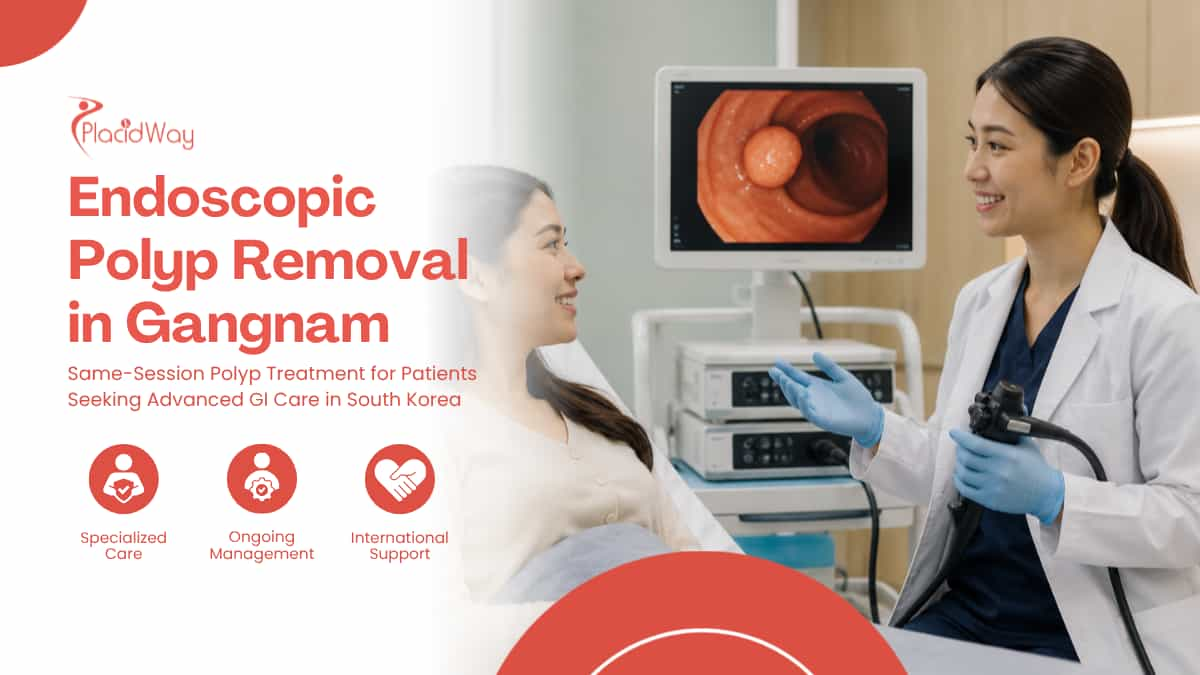
You schedule an endoscopy for peace of mind, but discovering a polyp can quickly raise concerns about cancer risk and further procedures. With endoscopic polyp removal in Gangnam, selected polyps may be removed during the same session, potentially avoiding a second procedure and another round of bowel preparation.
The Core Decision: Diagnostic vs. Therapeutic Screening
The profound relief of waking up to hear, "We found a polyp, and we have already removed it," is the primary reason international patients seek out specialized screening centers. Same-session therapeutic treatment eliminates the agonizing wait between discovery and intervention, fundamentally changing the psychological and practical experience of preventive care.
Understanding Polyps and Endoscopic Removal
A polyp is an abnormal growth of tissue projecting from the mucosal lining of the gastrointestinal tract, most commonly found in the colon or the stomach. While the word itself often causes immediate fear, the vast majority of these growths are entirely benign and take years to develop into anything medically dangerous. Endoscopic removal, clinically known as a polypectomy, is the definitive preventive measure that severs and retrieves the abnormal tissue before it can undergo malignant changes.
During the procedure, a flexible tube equipped with a high-definition camera and precise lighting is navigated slowly through the digestive tract. When an anomaly is spotted on the monitor, the gastroenterologist passes specialized micro-instruments through a hollow channel in the endoscope to safely detach the tissue from the healthy organ wall. The severed tissue is then carefully withdrawn and sent for precise laboratory analysis to determine its exact cellular composition and confirm that the margins are clear.
Hyperplastic Polyps
These are very common, typically small growths that carry almost no risk of turning into cancer. They are often removed simply to confirm their benign nature under a microscope.
Adenomatous Polyps
Considered precancerous, adenomas have the potential to become malignant over several years if left untouched. Identifying and removing them is the primary goal of routine colonoscopies.
Malignant Polyps
These are growths that already contain cancerous cells. Depending on the depth of cellular invasion, endoscopic removal might be sufficient, or subsequent surgery may be required.
The Reality of Bowel Preparation and Fasting
Regardless of where in the world an endoscopy is performed, the safety and accuracy of the procedure rely entirely on the strict quality of the patient's preparation. For a colonoscopy, this means adhering strictly to a clear liquid diet and consuming a specialized bowel-cleansing solution the evening before and the morning of the exam. For a gastroscopy, it requires a complete fasting period to ensure the stomach is entirely empty, allowing the high-definition cameras an unobstructed view of the mucosal lining.
Traveling internationally adds a unique layer of complexity to this preparation phase, as patients must navigate unfamiliar pharmacies, hotel accommodations, and local dietary options. Many premium screening centers in South Korea alleviate this burden by couriering the exact preparation medications directly to the patient's hotel, complete with detailed multilingual instructions. Having a dedicated resting space with a private bathroom is absolutely non-negotiable during the final twenty-four hours leading up to the appointment.
Techniques: From Standard Snare to Mucosal Dissection
Not all gastrointestinal lesions are identical, and the method used to extract them depends heavily on their precise size, shape, and depth within the tissue layers. Small, raised polyps that resemble tiny mushrooms are generally straightforward to capture and remove, while flat or broad-based lesions require a significantly higher level of technical expertise to lift away safely. The specific technique chosen by the gastroenterologist dictates both the overall safety of the procedure and the likelihood of the polyp returning in the future.
When growths are larger than a few millimeters or spread flat against the intestinal lining, standard wire loops are often insufficient, and therapeutic techniques become strictly necessary. This is where the distinction between different screening facilities becomes medically critical, as not all global centers are equipped or staffed to perform complex mucosal resections during a routine morning checkup. Understanding the difference between these interventions helps clarify why certain clinics require highly specialized physicians.
| Removal Technique | How It Works | Best Suited For | Complexity Level |
|---|---|---|---|
| Standard Snare Polypectomy | A thin wire loop is placed around the base of the polyp and tightened to cut the tissue, sometimes using mild electrocautery to seal vessels. | Small, raised, or pedunculated (stalked) polyps easily visible during a routine scan. | Low. Standard practice in nearly all global screening centers. |
| Endoscopic Mucosal Resection (EMR) | Fluid is injected under the polyp to lift it away from the deeper muscle wall, creating a safe cushion before a snare removes the raised tissue. | Larger polyps (typically over 10-15mm) or flat lesions confined to the superficial mucosal layer. | Moderate to High. Requires specialized training to ensure the entire lesion is removed cleanly. |
| Endoscopic Submucosal Dissection (ESD) | After fluid injection, a specialized microscopic knife is used to painstakingly carve the lesion away from the submucosal layer in one single piece. | Complex, very large, or heavily flat lesions that carry a high suspicion of early-stage, localized cancer. | Very High. A highly specialized skill requiring dedicated therapeutic endoscopy facilities. |
Why Gangnam? The Culture of Comprehensive Diagnostics
When international patients search for healthcare options in Gangnam, they are often anticipating the district's famous aesthetic clinics, but the area is equally renowned for its hyper-efficient, technology-equipped health screening centers. Facilities such as those affiliated with major university hospitals operate massive diagnostic hubs designed specifically to evaluate the entire body in a single morning. This distinct environment has fostered a standard of care where finding and treating gastrointestinal issues happens seamlessly within the same visit, without administrative delays.
The medical philosophy in these centers prioritizes immediate therapeutic intervention over prolonged diagnostic staging. Because gastric and colorectal cancers have historically been significant public health concerns in South Korea, the national medical infrastructure has heavily invested in early detection programs and endoscopic training. As a result, the gastroenterologists performing these screenings are typically high-volume specialists who encounter and successfully remove complex lesions daily.
The Same-Session Workflow
- High-Definition Visualization: Centers utilize high-definition scopes and Narrow Band Imaging (NBI), which uses specialized light wavelengths to highlight the microscopic vascular structure of the tissue, making flat anomalies much easier to detect.
- Immediate Assessment: Once a polyp is identified, the endoscopist instantly evaluates its size, border, and surface pattern to determine if it can be safely removed on the spot.
- On-the-Spot Intervention: Rather than withdrawing the scope, the physician switches to therapeutic instruments, performing a snare polypectomy, EMR, or occasionally an ESD while the patient remains comfortably sedated.
- Post-Procedure Clarity: The patient wakes up in recovery and is informed of the removal, eliminating the need to schedule a separate surgical date and immediately beginning the pathology waiting period.
Navigating the Evidence: Risks and the Travel Reality
While endoscopic removal is overwhelmingly safe and minimally invasive, it is still a surgical procedure performed inside the body, and it carries distinct statistical risks that must be carefully planned for. The two primary clinical concerns following any polypectomy are delayed bleeding at the internal resection site and, far more rarely, microscopic perforation of the gastrointestinal wall. The likelihood of these events increases substantially if the removed polyp was exceptionally large, deeply rooted, or located in the thinner right side of the colon.
According to published clinical literature, the overall risk of post-polypectomy bleeding across all procedures is generally around one percent, but this figure can rise toward five to ten percent for complex lesions removed via endoscopic mucosal resection. Perforation is highly uncommon, typically occurring in less than one in a thousand standard cases, though the risk profile changes appropriately with submucosal dissections. Understanding these variables is not meant to cause alarm, but rather to inform how long a patient must realistically remain near their treating facility before boarding a long-haul flight home.
Crucial Travel Implication: Flying After Polypectomy
For healthcare travelers, the greatest risk of delayed bleeding occurs between days three and seven after the procedure. The atmospheric pressure changes inside an airplane cabin can theoretically disrupt the delicate scab forming over the internal resection site.
If a routine screening finds nothing, patients can generally fly within 24 hours. However, if a large polyp is removed using EMR or ESD techniques, medical guidelines often strongly suggest delaying commercial air travel for one to two weeks. You must build flexibility into your Seoul travel itinerary in case an unexpected intervention requires a longer recovery stay.
The Caregiver’s Role and Continuity of Care
Traveling for a medical screening frequently involves a companion, and their supportive role becomes unexpectedly vital if a routine diagnostic checkup turns into a therapeutic procedure. Because the patient will be slowly recovering from systemic sedation, they will not be legally or physically permitted to navigate Seoul’s busy transportation system or make complex medical decisions immediately after discharge. The companion must be fully prepared to receive the postoperative instructions, monitor the patient’s initial dietary intake, and understand the warning signs of potential complications.
Once the initial recovery period has safely passed, the focus shifts to long-term continuity of care and managing the official pathology results. Even if a removed polyp is completely benign, its specific cellular type will dictate exactly when the patient needs their next colonoscopy or gastroscopy, which could be anywhere from one to ten years later. Ensuring that the South Korean medical team provides all imaging data, operative reports, and accurately translated pathology findings is crucial so that the patient's local doctor back home can seamlessly take over their future surveillance.
Companion Checklist for Discharge
- Transportation: Securing a taxi or private transfer back to the hotel, as the patient cannot walk long distances or take complex public transit post-sedation.
- Dietary Management: Ensuring access to soft, easily digestible foods (such as Korean rice porridge, known as juk) for the first 24 to 48 hours to protect the healing mucosa.
- Emergency Contacts: Keeping the direct hotline for the screening center’s international desk readily available in the event of unexpected abdominal pain or bleeding.
- Record Collection: Verifying that all digital imaging (often provided on a USB or secure portal) and English-translated pathology reports are secured before leaving the country.
A Clearer Path Forward
Deciding to undergo a comprehensive health screening abroad is fundamentally about taking proactive control over your personal baseline of health. The true value of choosing a destination specifically equipped for same-session treatment lies in the profound peace of mind it offers, ensuring that if an anatomical anomaly is found, it is addressed immediately and skillfully. By eliminating the agonizing wait times and fragmented care models common in other systems, patients can return home with definitive answers rather than lingering, anxiety-inducing questions.
Ultimately, the overarching goal of any endoscopic procedure is to intercept disease well before it has the opportunity to develop into a systemic threat. Whether you choose to incorporate a screening into a broader leisure trip to Seoul or travel specifically to access the specialized gastroenterology infrastructure of Gangnam, the most critical step is simply ensuring the evaluation takes place. With careful logistical planning, clear communication with the treating facility, and an understanding of the necessary recovery windows, you can confidently navigate this vital aspect of preventive medicine.
Frequently Asked Questions
What is the difference between a screening endoscopy and a therapeutic endoscopy?
A screening endoscopy is primarily diagnostic, meant to visually inspect the gastrointestinal tract and perhaps take small biopsies. A therapeutic endoscopy involves active treatment during the same session, such as removing a discovered polyp using a snare, EMR, or ESD technique while the patient remains sedated.
How long do I need to stay in South Korea after a polyp is removed?
The required stay depends heavily on the size of the polyp and the removal technique used. While a standard screening with no findings allows for normal travel almost immediately, the removal of a large polyp via EMR or ESD may require you to delay flying for one to two weeks due to the risk of delayed bleeding associated with cabin pressure changes.
Are all polyps cancerous?
No, the vast majority of polyps are benign. However, certain types, such as adenomatous polyps, are considered precancerous and have the potential to develop into cancer over several years if they are not removed. Endoscopic removal is the primary preventive measure to ensure they do not become malignant.
Does polyp removal hurt?
Because the mucosal lining of the gastrointestinal tract lacks pain receptors for cutting or burning, the actual removal of a polyp is generally painless. Patients are typically under conscious sedation or deep sleep during the procedure and may only experience mild bloating or cramping afterward due to the air introduced into the tract for visibility.
Why do patients travel to Gangnam for routine health screenings?
Gangnam is home to numerous high-volume health screening centers that specialize in hyper-efficient, comprehensive evaluations. Patients travel there for the ability to undergo whole-body diagnostics, including highly specialized same-session endoscopic treatments, utilizing high-definition imaging technologies in a streamlined timeframe.
Ready to Explore Your Screening Options?
Compare comprehensive health screening packages, clarify clinical protocols, and connect with specialized endoscopic centers to plan your preventive care journey.
Request InformationReferences
https://pubmed.ncbi.nlm.nih.gov/34450667/
https://pubmed.ncbi.nlm.nih.gov/22089297/
https://www.ncbi.nlm.nih.gov/pmc/articles/PMC8706313/
https://pubmed.ncbi.nlm.nih.gov/24477363/
https://www.ncbi.nlm.nih.gov/pmc/articles/PMC11710915/
https://pubmed.ncbi.nlm.nih.gov/25839689/













Share this listing