
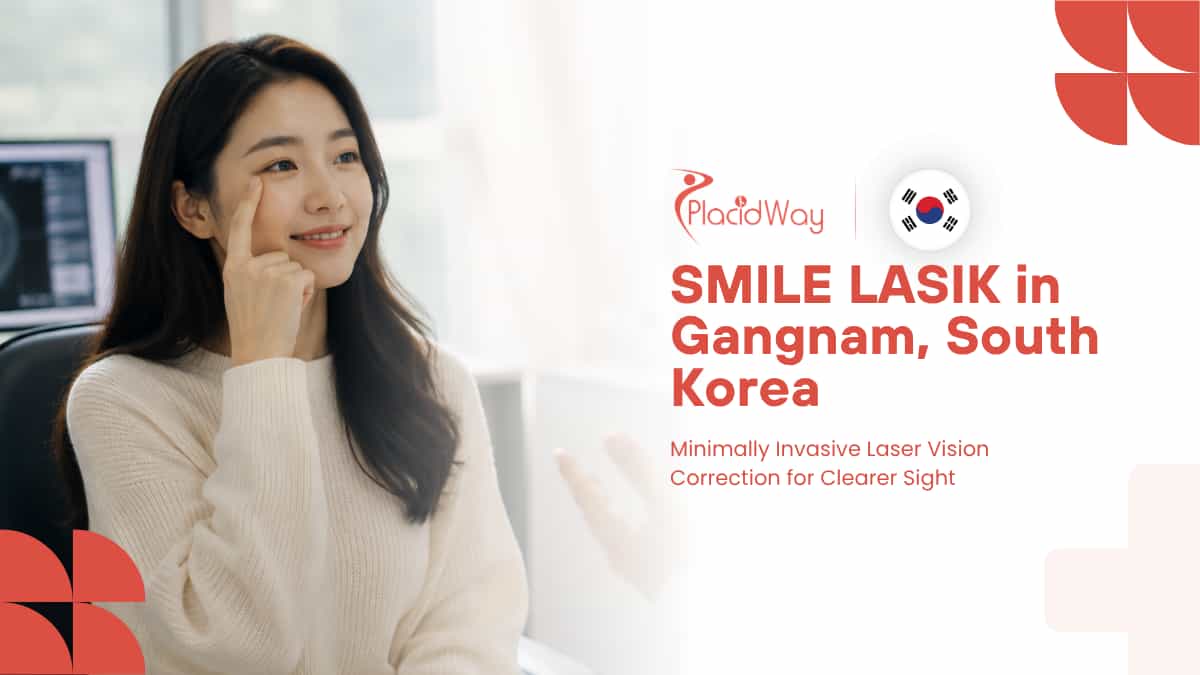
Ditch the heavy glasses and step into the vibrant streets of Seoul with crisp, clear vision thanks to the advanced SMILE LASIK procedure in Gangnam. International patients from the United States, Japan, Taiwan, Singapore, China, and Thailand are flocking to South Korea's premier medical hub to combine world-class laser eye surgery with the iconic "K-Beauty" aesthetic trend of looking effortlessly flawless without frames. With cutting-edge laser technology and lightning-fast recovery times, this vision correction package offers a seamless blend of top-tier medical care and an unforgettable cultural getaway.
Essential Package Insights
- Estimated Package Cost: Competitively priced between $1,600 and $3,300 USD, depending on your specific visual acuity and custom surgical parameters.
- Clinic Accreditations: Procedures are performed in facilities meeting rigorous JCI (Joint Commission International) and KAHF (Korean Accreditation Program for Healthcare Hospitals) standards.
- The K-Beauty Connection: Achieving the famous "glass skin" and flawless K-Pop aesthetic starts with clear, unaided vision, eliminating the need for eye-obscuring frames.
- Advanced Technology: Utilizes the Carl Zeiss VisuMax femtosecond laser, allowing for a minimally invasive 2mm micro-incision that leaves the corneal surface largely untouched.
- Rapid Visual Recovery: Unlike traditional methods, most patients experience functional vision recovery by the very next day, letting you enjoy your Korean vacation immediately.
- International Patient Support: Clinics provide dedicated English, Mandarin, and Japanese speaking medical coordinators to guide you through every single step of your journey.
Why International Patients Choose Gangnam for Laser Eye Surgery
Gangnam isn’t just famous for its catchy pop anthems and high-end shopping; it is widely recognized as a global epicenter for ultra-precise laser vision correction. Medical tourists from the US, Japan, Taiwan, Singapore, China, and Thailand consistently bypass their local eye clinics for Gangnam’s unique combination of high surgical volume expertise, state-of-the-art equipment, and highly transparent pricing.
- Unmatched Surgeon Experience: Because South Korea has one of the highest rates of myopia in the world, Gangnam ophthalmologists perform thousands of vision correction surgeries annually, giving them unparalleled muscle memory and clinical expertise.
- Significant Cost Savings: Patients flying in from the United States and Singapore frequently note that even with the cost of flights and a luxury hotel, the total expense of their trip is still less than getting the procedure done at home.
- VIP Clinic Culture: In Gangnam, medical care is treated with the same hospitality as a luxury spa, meaning international patients receive personalized coordinators, private recovery lounges, and zero waiting times.
- All-in-One Diagnostic Tech: Clinics here invest heavily in the newest AI-driven corneal mapping tools, ensuring that your eyes are analyzed on a microscopic level before the laser ever powers on.
- The "Quick Vacation" Appeal: Asian travelers from Japan, Taiwan, and Thailand love that they can hop on a short 2-to-5 hour flight, have their procedure on Friday, shop on Saturday, and fly home with perfect vision on Sunday.
The K-Beauty Connection: Why Clear Vision is Trending
The modern K-Beauty philosophy revolves around looking fresh-faced, natural, and effortlessly put together, which is exactly why ditching thick glasses has become a massive aesthetic movement. SMILE LASIK aligns perfectly with the Korean beauty standard of highlighting your natural facial features without the heavy distraction of optical frames.
- Showcasing Eye Makeup: Without glasses casting shadows over your eyes, intricate Korean-style eye makeup, subtle eyeliners, and natural lash extensions can finally take center stage.
- No More Foundation Dents: Anyone who wears makeup knows the struggle of glasses leaving red marks and wearing away foundation on the bridge of the nose—vision correction eliminates this daily annoyance entirely.
- The K-Pop Idol Aesthetic: The bare-faced, clean-girl aesthetic popularized by Korean celebrities relies heavily on bright, clear, and unobstructed eyes, driving thousands to seek permanent vision correction.
- Complementing Other Treatments: Many medical tourists combine their eye surgery with non-invasive dermatological treatments in Gangnam, achieving a complete facial refresh in a single trip.
- Active Lifestyle Readiness: K-Beauty isn't just about looks; it's about a vibrant lifestyle. Whether doing pilates in Seoul or walking along the Han River, being free from glasses or drying contact lenses is the ultimate confidence booster.
Global Cost Comparison: SMILE LASIK Pricing
When evaluating your options for vision correction, understanding the global market is essential. Below is a realistic look at how Gangnam’s highly competitive pricing compares to other major global healthcare hubs.
| Country / Location | Estimated Cost (Both Eyes) |
|---|---|
| United States | $5,000 - $7,000 |
| Singapore | $4,000 - $5,500 |
| Japan | $3,500 - $4,500 |
| China | $3,000 - $4,500 |
| Taiwan | $2,500 - $4,000 |
| Gangnam, South Korea | $1,600 - $3,300 |
Note: The pricing listed above reflects an estimated cost range for informational purposes. Your final procedure price is pending a comprehensive in-person medical assessment and may vary based on your level of astigmatism or specific anatomical needs.
What’s Included in Your Gangnam Vision Correction Package
This package is designed to take the guesswork out of your medical journey, providing everything you need clinically from the moment you step into the clinic until you are discharged.
- Comprehensive pre-operative eye examinations (including corneal topography, pupil dilation, and tear film analysis).
- One-on-one consultation with your operating ophthalmologist to discuss your specific visual goals.
- The bilateral SMILE LASIK procedure utilizing the Carl Zeiss VisuMax laser system.
- Dedicated in-clinic medical translation services (available in English, Mandarin, and Japanese).
- Standard post-operative recovery kit, including protective eyewear, antibiotic drops, and steroid drops.
- Your first scheduled post-operative follow-up appointment (usually the day after surgery).
What is Not Included in This Eye Surgery Package
To help you budget accurately for your trip to Seoul, please be aware of the logistical and personal expenses that fall outside the clinical package.
- International flights and local airport transfers to your accommodation.
- Hotel stays or lodging during your time in South Korea.
- Premium or long-term dry eye treatments (such as punctal plugs or highly specialized lipid-based artificial tears) if deemed necessary later.
- Personal spending, tourism activities, and meals outside the clinic.
- Additional follow-up visits requested months or years after you return to your home country.
Required Medical Records for Your Preliminary Assessment
To ensure you are a safe and ideal candidate before you book your flight, your clinical coordinator will likely request a few basic details regarding your ocular history.
- Your most recent optometry prescription (glasses or contact lenses) to gauge the severity of your myopia and astigmatism.
- A detailed history of any previous eye surgeries, trauma, or ongoing ocular diseases (such as glaucoma or severe dry eye syndrome).
- A current list of any systemic medications you are taking, particularly immunosuppressants or oral acne medications like Accutane, which can affect healing.
- Information regarding known allergies, specifically to topical anesthetics or antibiotics.
Travel & Visa Logistics for International Patients
Planning your trip to South Korea is surprisingly easy, with Seoul’s Incheon International Airport serving as a major, highly connected hub for flights from the US, Japan, Taiwan, and Singapore. From straightforward entry requirements to ultra-fast transit, getting to your clinic is a breeze.
- Visa Requirements: Many target countries (including the US, Japan, and Singapore) benefit from visa-free entry to South Korea; you just need to apply online for a K-ETA (Electronic Travel Authorization) a few days before your flight.
- Getting to Gangnam: The Airport Railroad Express (AREX) combined with the Seoul Metro, or a direct Airport Limousine Bus, will drop you right in the heart of Gangnam within 60 to 90 minutes.
- Duration of Stay: For a comfortable and safe medical trip, plan to be in Seoul for at least 4 to 5 days. This covers pre-op checks, the surgery day, and the mandatory next-day check-up.
- Accommodation Proximity: Gangnam is densely packed with boutique and luxury hotels situated within a 5-minute walk of major eye clinics, meaning you won't have to navigate public transit with blurry vision post-surgery.
- Navigating the City: Download local apps like Naver Map or Kakao T for taxis, as Google Maps has limited walking directions inside South Korea.
The 72-Hour Medical Tourism Timeline in Seoul
You don’t need to spend your entire vacation sitting in a waiting room because the SMILE LASIK process is designed for maximum clinical efficiency. Most international patients complete their entire hospital journey within a tidy 48 to 72-hour window.
- Day 1 (The Assessment): Arrive at the clinic for a rigorous 2-hour diagnostic workup where over a dozen machines will map the topography of your eye to confirm your candidacy.
- Day 2 (The Procedure): You will return to the clinic for the surgery. The actual time under the laser is less than 30 seconds per eye, and you will be in and out of the operating room in under 15 minutes.
- Day 2 Afternoon (Immediate Recovery): You will head back to your hotel to sleep for a few hours. Your eyes will feel scratchy and teary, but this usually subsides by the evening.
- Day 3 (The Reveal): You will visit your surgeon for a quick 10-minute check-up. By this time, most patients are seeing 20/20 (or better) and are cleared to explore the city.
- Days 4 & 5 (Tourism): With your vision restored and medical appointments finished, you are free to hit the cafes of Seongsu-dong, shop in Myeongdong, or enjoy traditional palaces.
Pre-Flight Contact Lens Rules and Eye Preparation
To ensure the laser perfectly and accurately reshapes your cornea, your eyes need to be in their completely natural state before you arrive in Gangnam. Proper contact lens removal is the absolute most critical step you can take before boarding your flight to Seoul.
- Soft Lens Guidelines: Standard soft contact lenses must be completely removed at least 5 to 7 days prior to your initial consultation to allow your cornea to return to its natural shape.
- Astigmatism/Toric Lenses: If you wear soft lenses designed for astigmatism, you must keep them out of your eyes for a minimum of 10 to 14 days before your eye exam.
- Hard/RGP Lenses: Rigid gas permeable (RGP) lenses alter the cornea significantly; these must be removed at least 3 to 4 weeks prior to arriving in South Korea.
- Travel Hydration: Airplane cabins are notoriously dry. While flying to Seoul, do not wear contact lenses. Instead, wear your glasses and use preservative-free artificial tears every few hours to keep your ocular surface healthy.
- Avoid Eye Makeup: Stop wearing mascara and heavy eyeliner at least 24 hours before your first appointment to ensure your lash margins are clean and free of debris for the surgical prep.
Navigating Seoul During Your Post-Op Recovery
The best part about this minimally invasive procedure is that you can still enjoy the sights, sounds, and tastes of South Korea almost immediately. Just follow a few common-sense rules to protect your newly corrected eyes while exploring the city.
- Bring High-Quality Sunglasses: Your eyes will be highly sensitive to light for the first few days. A good pair of UV-blocking sunglasses is mandatory for walking around sunny Seoul districts.
- Skip the Saunas: While Korean Jjimjilbangs (traditional bathhouses) are famous, you must avoid hot tubs, saunas, and swimming pools for at least 2 to 3 weeks to prevent bacterial infections.
- Careful with K-BBQ: Nobody wants to deal with irritated eyes while enjoying a steaming bowl of Korean BBQ. Avoid smoky restaurants or sitting directly in front of the grill vent for the first week.
- Stick to Light Activities: Walking through Bukchon Hanok Village is perfectly fine, but avoid heavy lifting at a hotel gym or high-impact activities for the first week to allow your cornea to stabilize.
- Lube Drops are Your Best Friend: Keep your prescribed artificial tears in your pocket at all times. Use them frequently when walking through air-conditioned malls or taking the breezy subway.
Frequently Asked Questions About Laser Vision Correction
Is SMILE LASIK better than traditional LASIK?
It depends on your specific eye anatomy, but for many, it is a superior option. Because it uses a tiny 2mm incision rather than creating a large 20mm flap across the cornea, it significantly reduces the risk of post-operative dry eyes and preserves more structural integrity in the eye.
Does the laser procedure hurt?
Not at all. Your surgeon will apply powerful numbing drops before the procedure begins. You might feel a slight pressure sensation for a few seconds while the laser operates, but you will not feel any pain. The recovery period may involve a few hours of mild scratchiness, easily managed with a nap.
Am I a candidate if I have severe astigmatism?
Yes, modern femtosecond laser technology is incredibly adept at treating astigmatism alongside myopia (nearsightedness). However, extremely high levels of astigmatism might require a different technique. Your comprehensive assessment on Day 1 will definitively confirm your candidacy.
Can I fly back home immediately after the surgery?
You must wait for your Day 1 post-operative check-up to ensure your cornea is healing correctly. Once your doctor clears you, it is perfectly safe to board a flight. Just remember to use plenty of hydrating eye drops to combat the dry cabin air during your journey back to the US, Singapore, or Japan.
Why is the cost so much lower in South Korea compared to the US?
The affordability is driven by high surgical volume and a competitive free-market medical system, not by cutting corners. Because so many Koreans seek vision correction, clinics perform hundreds of procedures weekly. This efficiency allows them to lower the per-patient cost while still using top-tier, FDA-approved Zeiss lasers.
What if my vision changes years later?
The physical reshaping of your cornea is permanent. However, the human eye naturally changes as we age (such as developing presbyopia in our 40s and 50s). If minor regressions occur years down the line, touch-up procedures like PRK are often possible.
How long does the actual surgery take?
The time spent in the operating suite is about 10 to 15 minutes total. The actual time the laser is active on each eye is remarkably brief—typically between 25 and 30 seconds. You will be amazed at how quickly it is over.
Will language be a barrier during my consultation?
Not at top-tier Gangnam clinics. These facilities are designed for global medical tourism and employ full-time, highly trained medical translators. Whether you speak English, Mandarin, Japanese, or Thai, a coordinator will be by your side to translate complex medical terms clearly.
When can I wear makeup again?
You should avoid eye makeup (mascara, eyeliner, eyeshadow) for at least one full week following the procedure to prevent debris from entering the healing incision. Base face makeup like foundation can be worn after a few days, provided you apply and remove it carefully around the eye area.
Is the technology used in Gangnam safe and regulated?
Absolutely. The reputable clinics in Seoul utilize the exact same globally recognized, FDA-approved technology (like the Carl Zeiss VisuMax) found in premier hospitals in the United States and Europe, operated by heavily credentialed, board-certified ophthalmologists.
Ready to See the World Clearly?
Take the first step toward visual freedom and a seamless medical getaway in Seoul. Our care team is ready to answer your questions and help coordinate your journey.
Request Free QuoteMedical Disclaimer: The information provided on this page is for general educational and informational purposes only. It is not intended as a substitute for professional medical advice, diagnosis, or treatment; always seek the guidance of a qualified healthcare provider regarding any medical condition or proposed procedure.
Sources & Clinical References:
- American Academy of Ophthalmology (AAO): What is Small Incision Lenticule Extraction?
- U.S. Food and Drug Administration (FDA): What Should I Expect Before, During, and After Laser Eye Surgery
- National Institutes of Health (NIH): Clinical Outcomes and Innovations in Femtosecond Laser Vision Correction
- Johns Hopkins Medicine: Overview of LASIK and Refractive Eye Surgery
- Mayo Clinic: Refractive Surgery Risks, Preparation, and Patient Outcomes
.png)

.png)
.png)
.png)
.jpg)








Share this listing