
Who May Be a Candidate for Minimally Invasive Spine Surgery?
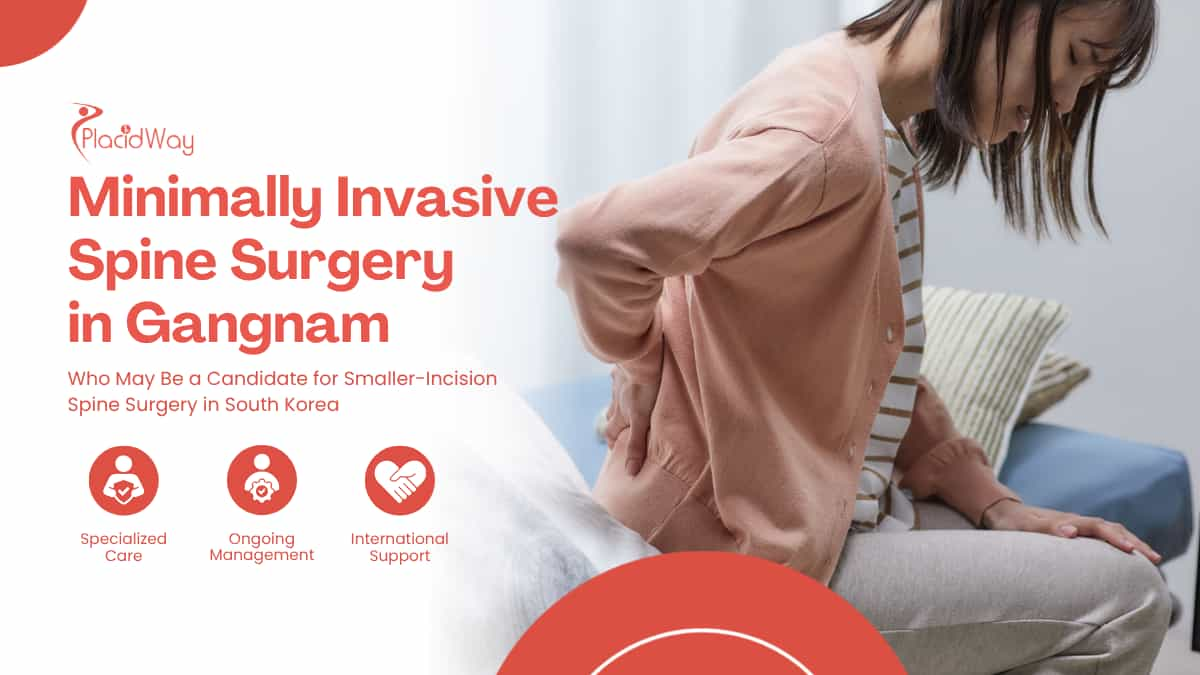
For individuals navigating chronic spinal nerve compression, the daily experience is a uniquely exhausting physical and emotional test. Many spend months or years cycling through physical therapy, modified activities, anti-inflammatory medications, and epidural steroid injections, only to find the functional relief diminishing over time.
This dread is historically rooted in the reputation of traditional open back surgery. For suitable patients, minimally invasive spine surgery in Gangnam may offer a smaller-incision alternative with less tissue disruption.
The Allure of a Smaller Surgical Footprint
It is entirely logical to seek a less destructive path forward, which is precisely when most individuals begin researching "minimally invasive spine surgery" (MISS). In the pursuit of highly refined, smaller-incision techniques, searches consistently point toward major international medical hubs.
Gangnam, South Korea, stands out prominently due to its high concentration of specialized spine centers and its widespread adoption of advanced endoscopic technologies. However, before considering a long-haul flight for spinal decompression, individuals must critically evaluate whether their specific anatomical pathology actually aligns with the physical limitations of a smaller surgical window.
The Anatomy of the Approach: Procedure vs. Access
When comparing spinal interventions, it is crucial to recognize that "minimally invasive" describes a surgical access philosophy rather than a single specific operation.
The underlying clinical objective—removing a herniated disc fragment, shaving bone to decompress a pinched nerve, or fusing unstable vertebrae together—remains exactly the same as in traditional open surgery. The fundamental difference lies entirely in how the surgical team separates the stabilizing soft tissues of the back to access the bony spinal column beneath.
| Surgical Parameter | Traditional Open Surgery | Minimally Invasive (MISS) |
|---|---|---|
| Soft Tissue Management | Muscles are systematically detached from the bone and heavily retracted, which can cause local scarring and denervation. | Muscle fibers are gently separated and sequentially dilated using inserted tubes, preserving their blood supply. |
| Incision Geometry | Requires a larger, continuous midline incision to expose multiple spinal levels at once for broad visual confirmation. | Utilizes small, targeted keyhole incisions dependent entirely on the diameter of the endoscopic camera or retractor tube. |
| Visualization Technique | Allows a direct, wide-angle, naked-eye view of the gross spinal anatomy and all surrounding nervous structures. | Relies heavily on inserted endoscopes, surgical microscopes, and real-time fluoroscopic imaging on operating room monitors. |
| Early Postoperative Phase | Immediate back pain is often significant due to the physical trauma inflicted on the paraspinal muscles during exposure. | Features vastly reduced muscular surgical site pain, though the timeline for resolving nerve-specific pain varies widely. |
Clinical Candidacy: Who Actually Fits the Profile?
While the prospect of reduced postoperative muscle pain and shorter hospital stays is universally appealing, clinical candidacy for an endoscopic or tubular approach is strictly dictated by an individual's spinal mechanics.
A highly skilled surgeon cannot safely deploy a small-incision technique if the underlying pathology demands a wider anatomical field to ensure structural stability and prevent accidental nerve injury. Minimally invasive surgery is a highly specialized tool, not a universal remedy for all spinal degeneration.
Highly Favorable for MISS
- Isolated Herniated Discs: A specific, localized piece of ruptured disc material pressing on a single traversing nerve root (sciatica).
- Localized Spinal Stenosis: Bone spurs or thickened ligaments choking the spinal nerves at one or two specific vertebral levels.
- Low-Grade Spondylolisthesis: Mild, single-level vertebral slippage that can be stabilized via a minimally invasive transforaminal lumbar interbody fusion (MIS-TLIF).
Generally Require Open Exposure
- Complex Deformities: Severe scoliotic or kyphotic curves requiring multi-level realignment and extensive hardware placement.
- Advanced Degenerative Disease: Pathology spanning three or more vertebral levels that necessitates broad anatomical visualization to fully decompress.
- Revision Surgeries: Cases complicated by dense, unpredictable scar tissue from previous open operations, which increases the risk of dural tears if performed through a restrictive tube.
The Gangnam Ecosystem: Biportal Endoscopy and Navigation
Seoul has established itself as a focal point in the global spine surgery landscape, driven by high-volume clinical centers that rapidly integrated advanced visualization tools into standard practice. Within districts like Gangnam, surgical teams frequently utilize advanced endoscopy, real-time intraoperative navigation, and robotic assistance.
For self-funded international patients, these technology-intensive procedures typically range between $7,000 and $15,000, varying significantly based on the number of spinal levels treated, facility fees, and whether expensive stabilizing implants are required.
A defining characteristic of many South Korean spine clinics is the mastery and continuous refinement of unilateral biportal endoscopic (UBE) surgery.
Unlike traditional single-port techniques that force both the camera and the surgical instruments through one restrictive tube, the biportal approach utilizes two distinct, millimeter-sized incisions. This fundamental geometric shift provides the surgical team with distinct mechanical advantages during intricate nerve decompression procedures.
Independent Triangulation
Because the camera and surgical drill are not locked in the same rigid tube, the surgeon can view the compressed nerve from one angle while removing the offending bone from another, increasing precision.
Continuous Fluid Irrigation
Two independent ports allow constant sterile saline to flow in and out of the surgical site. This instantly washes away minor bleeding, providing an exceptionally clear, magnified view of the nerve root.
Broader Decompression
The angled, uncoupled approach allows the surgeon to reach over the spinal cord (over-the-top decompression) to relieve pressure on the opposite side without removing vital stabilizing bone structures.
The Physical Paradox of Postoperative Air Travel
Choosing an international destination for spine surgery introduces a profound physical contradiction into the recovery process. The operative intervention is explicitly designed to relieve pain and restore structural mobility, yet returning home requires enduring a 10- to 15-hour international flight shortly after the spinal column has been mechanically manipulated.
Prolonged upright sitting places tremendous compressive loads on the healing lumbar spine, which can provoke severe localized discomfort and temporary nerve irritation in the early postoperative weeks.
Clinical Warning: Deep Vein Thrombosis (DVT)
Medical evidence strongly indicates that prolonged air travel naturally increases the risk of DVT due to venous pooling in the lower extremities. When a patient combines the hypercoagulable state of recent major surgery with decreased mobility inside an aircraft cabin, this clotting risk compounds significantly. Any plan to fly internationally after spine surgery requires strict clearance from the operating surgeon, a personalized risk assessment, and active prophylactic measures such as graduated compression stockings, targeted hydration, and occasionally prescribed chemical blood thinners.
Structuring the Transpacific Journey
Required Travel Logistics
- Extended Local Observation: Patients must expect to stay in a hotel in Seoul for 7 to 14 days following hospital discharge. The surgeon must evaluate early wound healing, remove sutures if necessary, and formally clear the patient for aviation stress.
- Cabin Positioning Restraints: Upgrading to a lie-flat seat or business class is frequently viewed as a medical necessity rather than a luxury. Sitting rigidly at a 90-degree angle in an economy seat for 14 hours is generally contraindicated shortly after lumbar decompression or fusion.
- In-Flight Circulation Movement: Patients will be instructed to stand, carefully walk the aircraft aisles, and perform specific calf-pump exercises at regular intervals to maintain blood circulation and prevent lower extremity pooling.
- Absolute Luggage Restrictions: Postoperative patients are placed on strict lifting restrictions (often capped at 5 to 10 pounds). Patients absolutely cannot maneuver heavy suitcases off luggage carousels or hoist carry-on bags into overhead bins independently.
Post-Surgical Reality: Care Continuity and the Companion’s Role
The technological precision of the procedure in Seoul is merely the first phase of an extended healing timeline. Once the flight lands, the responsibility for monitoring wound integrity, managing pain medication transitions, and executing physical rehabilitation transfers completely to the patient and their local healthcare infrastructure.
Traveling abroad naturally breaks the continuity of medical care, requiring proactive coordination before departure to ensure a local spine specialist or primary care physician is willing to absorb postoperative monitoring and handle any delayed complications.
Because the patient will be under strict bending, lifting, and twisting restrictions (commonly known as BLT precautions), undertaking this international surgical journey alone is highly discouraged. The person accompanying the patient must be prepared to transition immediately from a casual travel companion to a dedicated medical advocate and physical surrogate in a fast-paced urban environment.
Physical Logistics
The companion will be responsible for entirely managing all luggage, coordinating airport and hotel transportation, and running daily errands for food or pharmacy items while the patient rests and strictly avoids spinal exertion.
Medical Advocacy
They must diligently track pain medication schedules, communicate with English-speaking clinic coordinators regarding post-discharge symptoms, and ensure the patient adheres to prescribed walking protocols without dangerous overexertion.
Next Steps in Your Decision
Deciding to pursue minimally invasive spine surgery requires weighing the genuine physical benefits of advanced endoscopic visualization against the objective physical demands of an international recovery. The widespread integration of biportal techniques and 3D navigation in Gangnam offers a highly precise surgical pathway, provided the patient’s localized pathology truly fits a smaller operative corridor rather than demanding traditional open exposure.
The most critical next step is securing a remote anatomical review using recent, high-quality MRI imaging. Only after a specialized clinical team formally confirms that the specific nerve compression can be safely resolved through an endoscopic or tubular approach can a patient accurately weigh the overseas procedural advantages against the rigorous logistics of the journey home.
Frequently Asked Questions
Is minimally invasive spine surgery always a substitute for open surgery?
No. Minimally invasive surgery is highly dependent on your specific anatomy. Complex spinal deformities, severe multi-level degeneration, and cases requiring extensive structural correction generally require the broader visualization and access provided by traditional open surgery.
What is biportal endoscopic spine surgery (UBE)?
Biportal endoscopy is an advanced technique that utilizes two separate small incisions rather than a single tube. One port holds the high-definition camera while the other is used for independent surgical instruments, allowing for greater surgeon mobility and continuous fluid irrigation.
How long is the typical local recovery in South Korea before flying?
Most international patients are advised to remain in Seoul for 7 to 14 days following their hospital discharge. This localized recovery period allows the surgical team to monitor early wound healing and eventually provide medical clearance for the physical stress of aviation.
Why does flying after spine surgery increase medical risk?
Combining the physiological aftermath of recent major surgery with prolonged immobilization during a long-haul flight significantly increases the risk of deep vein thrombosis (DVT), a dangerous blood clot. Furthermore, prolonged upright sitting places heavy compressive stress on the healing lumbar spine.
Are surgical implants included in the estimated Gangnam spine surgery costs?
Not always. While estimated price ranges ($7,000 to $15,000) cover standard facility and surgical fees for decompressions, the addition of titanium rods, screws, or interbody cages required for spinal fusion can significantly increase the final cost. Always request a comprehensive, itemized quote.
Who is responsible for my physical therapy after returning home?
You are entirely responsible for establishing localized care before traveling. You will need to take the postoperative rehabilitation protocol provided by your South Korean surgeon and present it to a local physical therapist to guide your long-term functional recovery.
Clarify Your Next Steps
If you need assistance comparing provider capabilities, understanding international clinic protocols, or requesting information on your surgical candidacy from specialists in Gangnam, we can help you coordinate those conversations.
Request InformationReferences
https://pubmed.ncbi.nlm.nih.gov/31718873/
https://pubmed.ncbi.nlm.nih.gov/32418579/
https://pubmed.ncbi.nlm.nih.gov/27798725/
https://pubmed.ncbi.nlm.nih.gov/30999820/
https://pubmed.ncbi.nlm.nih.gov/11756599/















Share this listing