


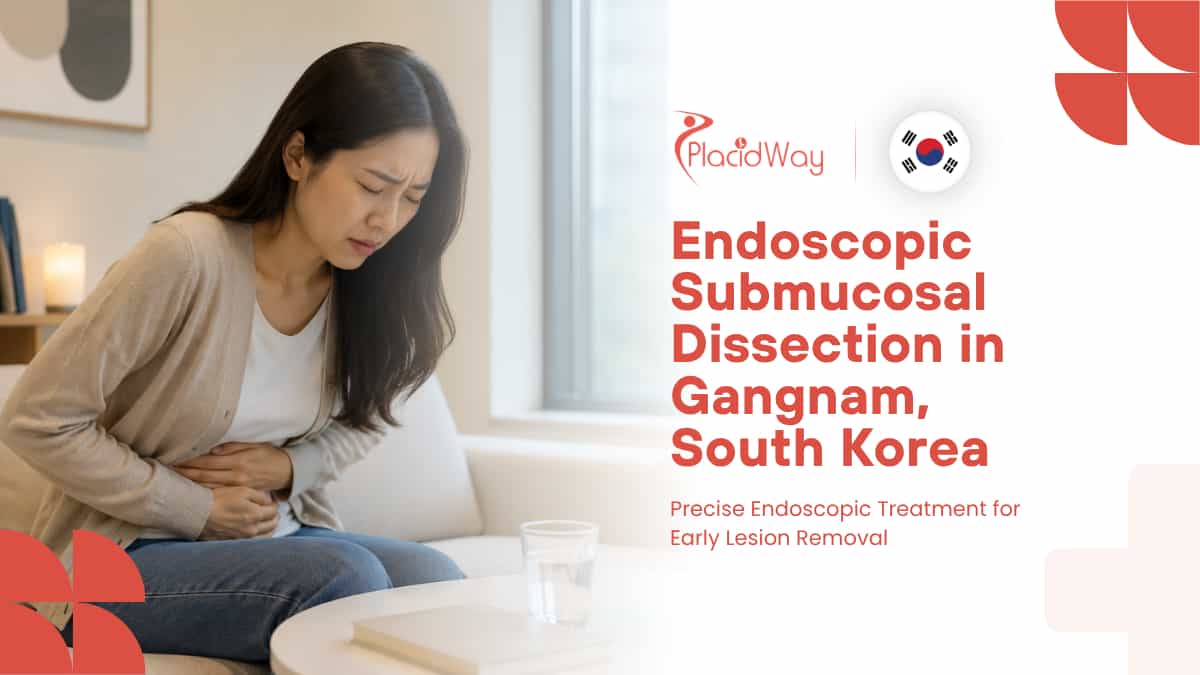
A healthy gut is the ultimate foundation for that famous Gangnam glow, making preventive screening and early lesion removal a massive part of the modern South Korean wellness journey. Endoscopic Submucosal Dissection (ESD) is a minimally invasive, ultra-precise procedure highly perfected in Seoul, designed to safely remove early-stage gastrointestinal tumors and polyps without the need for open surgery. Patients traveling from the United States, Japan, China, Taiwan, and Singapore are increasingly bundling their Gangnam K-Beauty itineraries with these advanced health interventions to ensure inside-out vitality and total peace of mind.
Key Treatment Insights
- Highly Competitive Cost: Packages range from $300 to $2,000, offering world-class care at a fraction of Western healthcare prices.
- Global Accreditations: Procedures are performed in facilities boasting JCI (Joint Commission International) accreditations and KAHF (Korean Accreditation Program for Hospitals Serving Foreign Patients) certifications.
- The Wellness-Beauty Link: ESD fits perfectly into the holistic K-Beauty trend, addressing the root of physical health so your external aesthetic treatments yield better, longer-lasting results.
- Minimally Invasive Recovery: No external incisions mean you typically return to normal activities or continue your travel itinerary within a couple of days.
- Pioneering Expertise: South Korea holds some of the world’s highest survival rates for early gastric cancers, driven by their unmatched daily volume and mastery of ESD techniques.
- Advanced Imaging Tech: Utilizing AI-assisted, high-definition Narrow Band Imaging (NBI) endoscopes to detect and remove even the flattest, most elusive lesions.
Why International Patients Choose Gangnam for Endoscopic Submucosal Dissection
When it comes to gastrointestinal health, South Korea isn't just participating in the global medical scene—it's leading it. Because gastric health is a major national priority in Korea, Gangnam's medical centers have evolved into high-tech hubs for preventive diagnostics and minimally invasive treatments. Here is why thousands of patients from across the globe fly into Seoul specifically for ESD.
- Unmatched Physician Volume: Doctors in Gangnam perform thousands of endoscopies and ESDs annually. This immense repetition leads to unparalleled precision, which is critical when peeling thin layers of abnormal tissue from the stomach wall.
- Appealing to the U.S. Market: American patients frequently travel to Seoul because an ESD in the United States can cost tens of thousands of dollars and often requires agonizingly long wait times for a specialist.
- Asian Neighbors Seeking Quality: Patients from China, Taiwan, and Singapore choose Gangnam to access next-generation AI endoscopes that might not yet be widely available in their local regional hospitals.
- Seamless Medical Tourism Infrastructure: Gangnam clinics offer dedicated international departments with in-house translators, VIP recovery rooms, and direct concierge services for a stress-free experience.
- The "One-Stop" Trend: Health-conscious travelers love the efficiency of landing in Seoul, getting a comprehensive health screening, having a detected polyp removed immediately via ESD, and recovering while enjoying the city's premium hospitality.
The K-Beauty Trend: Why Inner Gut Health is the New Outer Glow
You might be wondering, what does a gastrointestinal procedure have to do with K-Beauty? Everything. The modern South Korean beauty philosophy has fundamentally shifted from superficial fixes to holistic, cellular-level wellness. Here is how preventive procedures like ESD are reshaping the medical tourism landscape.
- The Gut-Skin Axis Connection: Korean dermatologists heavily emphasize that chronic inflammation or underlying gut issues manifest directly on the skin. By addressing internal anomalies early, patients create a healthier baseline for aesthetic treatments.
- Holistic Beauty Itineraries: It is now a massive trend for visitors from Japan, Singapore, and the U.S. to book "Inside-Out" packages, scheduling their ESD or comprehensive endoscopy right before their laser facials or skin boosters.
- Proactive Aging Prevention: True anti-aging means preserving your vital organs. Removing precancerous lesions safely ensures longevity, which is the ultimate, most powerful form of anti-aging.
- Minimal Downtime Synergy: Because ESD is minimally invasive and requires no abdominal incisions, patients can easily transition from their medical recovery right into their scheduled, non-invasive K-Beauty treatments during the same trip.
- The VIP Wellness Culture: Gangnam treats medical screenings with the same luxurious, spa-like reverence as high-end beauty treatments. You get comprehensive health care wrapped in premium Korean hospitality.
Global Cost Comparison for Endoscopic Submucosal Dissection
Healthcare costs shouldn't be a barrier to life-saving preventive care. Gangnam provides top-tier medical expertise at highly competitive rates. The table below illustrates the stark contrast in pricing for an ESD procedure across various popular origins.
| Location | Estimated Starting Cost (USD) | Technology & Expertise Level |
|---|---|---|
| Gangnam, South Korea | $300 - $2,000 | Exceptional (Global Pioneers) |
| United States | $5,500 - $15,000+ | High |
| Singapore | $3,500 - $6,000+ | High |
| China | $1,200 - $3,000 | Moderate to High |
| Taiwan | $1,000 - $2,500 | High |
| Japan | $800 - $2,200 | Exceptional (Co-Pioneers) |
Note: The quoted Gangnam pricing is an estimated base cost for the procedure. Final pricing is pending a thorough medical assessment, the exact size/location of the lesion, and any additional pathological testing required.
What’s Covered in Your Package
Everything you need for a safe, seamless procedure is built into your core package.
- Initial pre-procedure consultation with a GI specialist.
- Conscious sedation or anesthesia during the procedure.
- The Endoscopic Submucosal Dissection (ESD) procedure itself.
- Standard post-op recovery room usage for observation.
- Basic biopsy and initial pathology testing of removed tissues.
- Standard post-procedure medications (acid reducers, mucosal protectants).
- In-house medical interpretation and international patient coordination.
What’s Not Included
Please budget separately for travel and specific extended medical needs.
- International flights, transportation, and hotel accommodations.
- Advanced genetic testing or deep tumor profiling if cancer is confirmed.
- Treatment for complications requiring an extended hospital stay (rare, but possible).
- Meals outside of standard hospital nutrition during admission.
- Follow-up procedures or additional surgeries if the lesion cannot be fully cleared endoscopically.
- Travel insurance or medical complication insurance.
Medical Documentation Needed for Remote Assessment
To ensure your safety and determine if you are a candidate for ESD before you fly, your Gangnam specialist will need to review your current health status. Please prepare the following documents in English:
- Recent Endoscopy Reports: Videos or high-resolution images of the lesion from your most recent upper GI or colonoscopy.
- Pathology/Biopsy Results: Translated reports indicating the cellular makeup of the targeted polyp or early tumor.
- Current Blood Work: Complete Blood Count (CBC) and coagulation profiles (PT/INR) to ensure safe bleeding times.
- Complete Medication List: Especially highlighting any blood thinners (like Aspirin, Plavix, or Warfarin) which must be managed prior to the procedure.
- General Medical History: Notes on heart conditions, past abdominal surgeries, or allergies to anesthesia.
Navigating Your Medical Journey to Seoul from Overseas
Traveling abroad for a medical procedure takes a bit of planning, but Seoul’s infrastructure is built for ultimate ease. Here is how patients from various regions manage the logistics.
- Short-Haul Convenience: Patients from Japan, Taiwan, and coastal China enjoy brief 2-3 hour flights, making weekend medical trips incredibly practical and popular.
- Long-Haul Planning: U.S. and Singaporean patients usually plan a 7-10 day stay, allowing time to overcome jet lag before the procedure and comfortably recover afterward.
- Visas and Medical Entry: Many target nations enjoy visa-free entry to South Korea for short stays (K-ETA), though specialized medical visas are available if extended treatment is needed.
- Airport to Clinic Transit: Incheon International Airport is highly connected; luxury airport limousines and direct train lines drop you straight into the heart of Gangnam's medical district.
- Accommodation Proximity: Gangnam is packed with "recovery-friendly" boutique hotels and serviced apartments located just blocks away from major medical centers.
The Latest Technological Advancements in Korean Endoscopy
You are not just paying for a doctor’s time; you are accessing some of the most sophisticated diagnostic equipment on the planet. Here is what makes Gangnam's tech superior.
- AI-Assisted Diagnostics: Endoscopes equipped with Artificial Intelligence help doctors spot flat or hidden precancerous cells that the human eye might miss.
- Narrow Band Imaging (NBI): This special light filter enhances the visibility of blood vessels on the mucosal surface, allowing for ultra-precise margin mapping before making a cut.
- Ultra-High Definition Scopes: Magnification up to 100x means doctors can analyze the cellular structure of a lesion in real-time, dictating the exact depth of the dissection.
- Advanced Hemostatic Tools: Korean clinics utilize specialized clips and electrocautery knives that drastically minimize bleeding, making the procedure faster and safer.
- CO2 Insufflation: Instead of regular air, CO2 is pumped into the stomach during the procedure. It absorbs into the body 150 times faster, eliminating painful post-procedure gas and bloating.
What Your Dietary and Physical Recovery Looks Like in Seoul
Because ESD actually peels away a layer of your stomach or colon lining, you essentially have an internal scrape that needs gentle care. Recovering in Korea makes this diet surprisingly enjoyable.
- The Fasting Phase: You will likely need to fast entirely (no food or water) for the first 12-24 hours post-procedure to let the mucosal lining start healing without acid irritation.
- Juk (Korean Porridge): When it’s time to eat, Korea is famous for "Juk." This soothing, easily digestible rice porridge is available on every corner in Gangnam and is perfect for a healing stomach.
- Avoiding the Spicy Foods: As tempting as authentic Kimchi and Tteokbokki are, you must avoid spicy, highly acidic, or greasy foods for at least 2 weeks after an ESD.
- Physical Activity Limits: Light walking around Seoul’s shopping districts is perfectly fine, but heavy lifting or vigorous gym sessions should be paused for a week to prevent internal bleeding.
- Medication Adherence: You will be given Proton Pump Inhibitors (PPIs) to suppress stomach acid. Taking these exactly as prescribed is the key to preventing post-procedure ulcers.
Combining Comprehensive Health Screenings with Your Itinerary
If you are crossing an ocean for healthcare, it makes sense to maximize the value of your trip. Here is how international patients schedule their wellness journeys.
- The Grand Check-Up: Start your trip with a 3-hour comprehensive check-up, including MRI, CT, blood panels, and standard endoscopy to map your total health.
- Immediate Action: If a problematic polyp or early lesion is found during the check-up, clinics can often schedule your ESD within the same week.
- Dermatology Add-Ons: Schedule non-invasive skin treatments (like Ultherapy or Pico lasers) on the days leading up to your ESD, taking advantage of your time in Gangnam.
- Exploring Wisely: Plan your major sightseeing, like visiting Gyeongbokgung Palace or Nami Island, *before* your fasting prep days begin.
- Final Clearance: Book your return flight for 2-3 days post-ESD to allow for a final follow-up consultation where the doctor reviews your pathology results and clears you for high-altitude travel.
Frequently Asked Questions About ESD
1. Is Endoscopic Submucosal Dissection considered major surgery?
No, it is a minimally invasive procedure. Unlike traditional surgery, there are no cuts made on the outside of your body. The doctor operates entirely through a flexible tube passed down your throat or up through the colon, allowing for much faster recovery.
2. Does the procedure hurt?
You won’t feel a thing during the procedure because you will be under deep sedation or general anesthesia. Afterward, you might have a mild sore throat (if upper GI) or mild stomach cramping, but acute pain is very rare.
3. How long does the ESD procedure usually take?
The timeframe varies based on the size and location of the lesion, but it generally takes anywhere from 45 minutes to 2 hours. It requires meticulous precision to separate the lesion from the deeper muscle layers.
4. Can ESD completely cure early-stage gastric cancer?
Yes, in many cases, if the cancer is confined strictly to the mucosal or shallow submucosal layer and hasn't spread to lymph nodes, a successful, clean-margin ESD is considered a curative treatment. However, regular follow-up endoscopies are essential.
5. Will I need to stay overnight in the hospital?
While some small polyps can be handled as outpatient procedures, most Gangnam clinics require a 1 to 2-night hospital stay for observation to ensure there is no delayed bleeding or perforation.
6. How soon can I fly back home to the US or Singapore?
Doctors typically recommend waiting at least 3 to 5 days post-procedure before taking a long-haul flight. This is to ensure healing is progressing well and to attend your final check-up to receive pathology results.
7. Are there any risks I should be aware of?
Like any medical intervention, ESD carries risks. The most common are post-procedure bleeding and perforation (a small hole in the GI tract wall). Gangnam specialists are highly trained to manage these complications immediately during the procedure using endoscopic clips.
8. How is ESD different from a regular biopsy or snare polypectomy?
A standard polypectomy uses a wire loop (snare) to snip off small polyps. ESD uses a specialized microscopic knife to dissect beneath larger, flatter, or more complex lesions to remove them in one single, continuous piece (en bloc), which is crucial for accurate cancer staging.
9. Will a language barrier affect the quality of my care?
Not at all. Major medical centers in Gangnam cater specifically to foreign patients. Dedicated English, Japanese, and Mandarin interpreters stay by your side from the initial consultation until you are discharged.
10. Can I still do my planned K-Beauty skin treatments?
Absolutely. We usually suggest booking non-invasive aesthetic treatments before your ESD or waiting until you are discharged from observation. Just avoid treatments that require heavy sedation on the same day.
Ready to Prioritize Your Internal Wellness?
Take control of your health with South Korea’s pioneering endoscopic technology. Let our English-speaking coordinators review your medical records, create a personalized itinerary, and provide you with a transparent, obligation-free estimate.
Request Free QuoteMedical Disclaimer: The information provided on this page is intended for general informational and educational purposes only. It does not replace professional medical advice, diagnosis, or treatment; always consult with a qualified healthcare provider regarding your specific medical condition.
Evidence-Based References
- National Center for Biotechnology Information (NCBI) - Evolution of Endoscopic Submucosal Dissection
- Mayo Clinic - Understanding Endoscopic Resection Techniques
- American Society for Gastrointestinal Endoscopy (ASGE) - Clinical Guidelines on Advanced Endoscopy
- PubMed - Safety and Efficacy of ESD for Early Gastric Cancer
- World Health Organization (WHO) - Global Data and Prevention on Gastric Tumors
.png)

.png)
.png)
.png)
.png)


.png)








Share this listing